
The Aran Islands sit at the mouth of Galway Bay, three limestone outcrops where Irish is still the first language and stone walls carve the landscape into a patchwork older than most European cities. They’re not interchangeable — each has its own character, and which one you pick depends on how much time you have and what kind of experience you’re after.
Here’s how to choose, how to get there, and what to do once you step off the boat.
Inishmore: The Largest and Most Visited
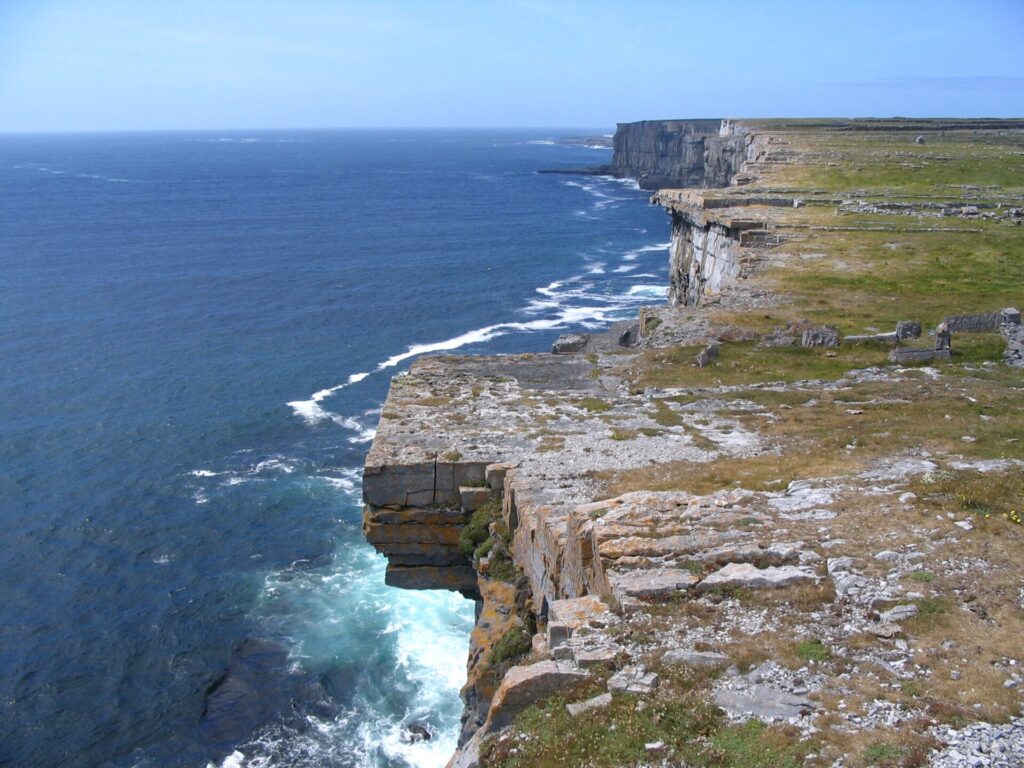
Inishmore (Inis Mór) is the biggest of the three islands, about nine miles long, and home to Dún Aonghasa, a prehistoric stone fort perched on a 300-foot cliff edge. It’s one of the most dramatic ancient sites in Ireland, and reason enough to visit on its own.
The island’s main village, Kilronan, is where the ferries dock. From there, most visitors hire a bike, take a minibus tour, or ride in a pony trap to reach Dún Aonghasa and the other sights scattered across the island. The ride takes about 20 minutes by van, longer by bike, and the fort itself requires a short uphill walk on uneven stone.
Beyond the fort, Inishmore has several early Christian sites, including the Seven Churches (Na Seacht dTeampaill), a cluster of stone ruins dating back to the 8th century. The island also has a small brewery, a handful of pubs with occasional trad sessions, and miles of stone walls that seem to go on forever.
Inishmore is the easiest island to visit as a day trip from Galway, and the infrastructure is set up for it. Expect crowds in summer, especially around Dún Aonghasa. If you want to stay overnight, there are guesthouses and hostels in Kilronan and around the island.
Inishmaan: The Quiet Middle Island
Inishmaan (Inis Meáin) is the least visited of the three, and that’s the main reason to go. It’s smaller, quieter, and feels more remote, even though it’s only a few miles from Inishmore.
The island has about 180 residents, one pub, one shop, and a scattering of heritage sites including Dún Chonchúir, a stone fort with sweeping views, and the remains of several ancient churches. Playwright J.M. Synge spent summers here in the early 1900s, and his cottage is now a small museum.
Inishmaan is best suited to travelers who want solitude and don’t mind a slower pace. There’s no organized transport once you arrive — you walk, or you arrange a lift. Ferries run less frequently than to the other islands, so check schedules carefully if you’re planning a day trip.
Inisheer: The Smallest and Closest
Inisheer (Inis Oírr) is the smallest island and the closest to the Clare coast, which makes it popular with day-trippers coming from Doolin. It’s compact enough to walk or bike in a few hours, and the main sights are all within easy reach of the pier.
The most photographed spot is the wreck of the Plassey, a cargo ship that ran aground in 1960 and now sits rusting on the rocky shore. Up the hill from the village, you’ll find the 15th-century O’Brien’s Castle, built on the site of an even older ringfort, and the sunken church of Teampall Chaomháin, half-buried in sand dunes.
Inisheer has a handful of pubs, a few cafés, and a relaxed, village feel. Trad sessions happen regularly in summer, especially at Tigh Ned’s. The island is small enough that you can see the main sites in half a day, but it’s worth staying longer if you want to slow down and soak in the atmosphere.
How to Get to the Aran Islands
Ferries run year-round from Rossaveal in Connemara (about 25 miles west of Galway city) and seasonally from Doolin in County Clare. Rossaveal is the most reliable option, with multiple daily sailings to all three islands. The crossing takes about 40 minutes to Inishmore, longer to the other two. Round-trip fares run around $30 to $35.
From Doolin, ferries run mainly to Inisheer, with less frequent service to Inishmore. The crossing is shorter — about 30 minutes — and can be combined with a visit to the Cliffs of Moher on some routes. Expect to pay around $25 to $30 round-trip.
If you’re short on time or prone to seasickness, Aer Arann Islands operates daily flights from Connemara Regional Airport near Inverin. The flight takes about 10 minutes and costs around $50 each way. It’s pricier, but the views are spectacular, and you skip the potential for rough seas.
Book ferries in advance during summer, especially in July and August. Weather can cancel sailings at any time of year, so build flexibility into your plans.
Want more stories like this? Subscribe to The Ultimate Ireland Travel Guide newsletter — one short story a week, straight to your inbox.