
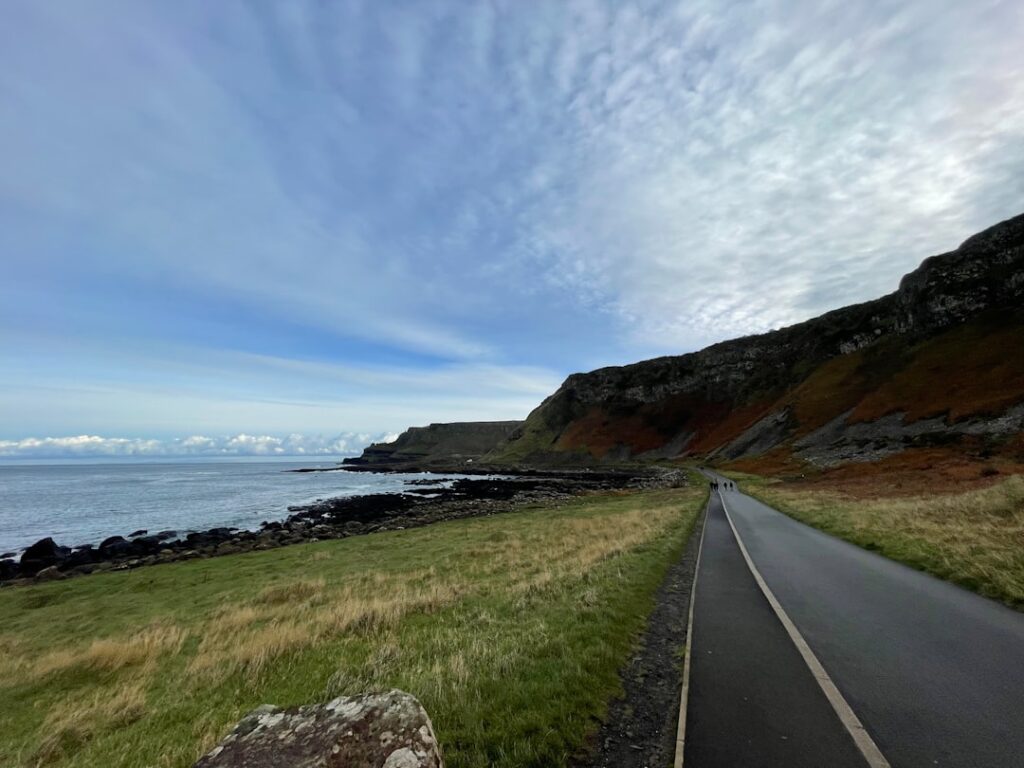
The Causeway Coastal Route doesn’t get the same buzz as the Wild Atlantic Way, but it should. This 120-mile stretch of coastal road between Belfast and Derry hugs some of the most dramatic shoreline in Ireland, threading past towering cliffs, ruined castles, rope bridges, whiskey distilleries, and the otherworldly basalt columns of the Giant’s Causeway.
You can drive it in a long day, but you’d be missing the point. Give it two or three days, stay in a seaside village, and take your time with the detours.
The Route: Belfast to Derry (or Vice Versa)
Most people start in Belfast and drive northwest along the Antrim Coast toward Derry (Londonderry). The route follows the A2 coastal road for most of the journey, with well-marked brown signs pointing you toward attractions.
Going west means the ocean is on your right—better for pulling over to take photos without crossing traffic. But if you’re starting from Donegal or Sligo, driving east from Derry works just as well.
The road itself is narrow in places, with tight turns and occasional farm traffic. Drive defensively, especially in summer when tour coaches crowd the popular stops.
What to See and Where to Stop
Carrickfergus Castle is your first landmark leaving Belfast, a massive Norman fortress right on the water. It’s worth a quick stop if you have time, but save your energy for what’s ahead.
The Glens of Antrim are nine lush valleys that slice inland from the coast. Most drivers skip them, but if you detour into Glenariff Forest Park, you’ll find waterfalls, walking trails, and barely another soul around.
Carnlough and Cushendall are small harbor villages perfect for a coffee break or an early lunch. Cushendall has a handful of good pubs, and the beach at Cushendun (just north) is one of the prettiest on the route.
Between Cushendun and Ballycastle, the road climbs and the views open up. On clear days, you can see across to Scotland, just 12 miles away.
Carrick-a-Rede Rope Bridge is the first major attraction. It’s a 66-foot-long rope bridge suspended 100 feet above the rocks, originally built by salmon fishermen. You need a timed ticket (around $15), and in peak season it books out days in advance. If you’re even slightly nervous about heights, skip it—the coastal walk to the bridge is the better part anyway.
Giant’s Causeway is the marquee stop. The hexagonal basalt columns are striking, and the site itself is free to walk (you only pay for parking, around $16). Arrive before 9 a.m. or after 5 p.m. to dodge the tour bus crowds. The clifftop walk east toward Dunseverick Castle is stunning and far quieter than the main causeway stones.
Bushmills, just inland, is home to the Old Bushmills Distillery, the oldest licensed whiskey distillery in Ireland. Tours run daily and cost around $18. Book ahead if you’re visiting on a weekend.
Dunluce Castle sits on a cliff edge just west of Bushmills, half-ruined and impossibly photogenic. It’s been used as a filming location more than once, and you’ll see why. Entry is about $8.
Further west, Portrush and Portstewart are lively seaside towns with good fish and chips, surf shops, and long sandy beaches. Portstewart Strand is one of the few beaches in Ireland you can drive onto (for a small fee).
The route ends in Derry, a walled city with a complicated history and some of the best restaurants in the North. Walk the 17th-century walls, visit the Guildhall, and have dinner in the Bogside.
Where to Stay
If you’re splitting the drive, Ballycastle is the best base. It’s central, has good pubs and guesthouses, and you’re close to both the rope bridge and the Giant’s Causeway.
Bushmills is quieter and works well if you want early-morning access to the causeway. Portrush has more restaurants and nightlife, but it gets crowded in summer.
Cushendall or Cushendun are lovely if you want a slower pace and don’t mind being farther from the main sights.
Practical Tips
Rent your car in Belfast—most major agencies are at the airport or city center. If you’re coming from the Republic, just drive north; there’s no border checkpoint.
Fuel stations are frequent along the route, but fill up in the larger towns (Larne, Ballycastle, Portrush) rather than counting on finding one in the smaller villages.
Pack layers. The coast is windier and cooler than inland, even in summer. Waterproofs are non-negotiable.
If you want to book tours at the Giant’s Causeway or Carrick-a-Rede in advance, Viator has good options that bundle both stops with hotel pickup from Belfast.
Most of the route has decent cell signal, but download offline maps just in case—some of the Glens lose coverage.
The Causeway Coastal Route is one of those rare drives where the road itself is as good as the destinations. Don’t rush it.
Want more stories like this? Subscribe to The Ultimate Ireland Travel Guide newsletter—one short story a week, straight to your inbox.
Heads up — some links in this article are affiliate links. If you sign up through them, we may earn a small commission at no extra cost to you. We only recommend tools we use ourselves.