
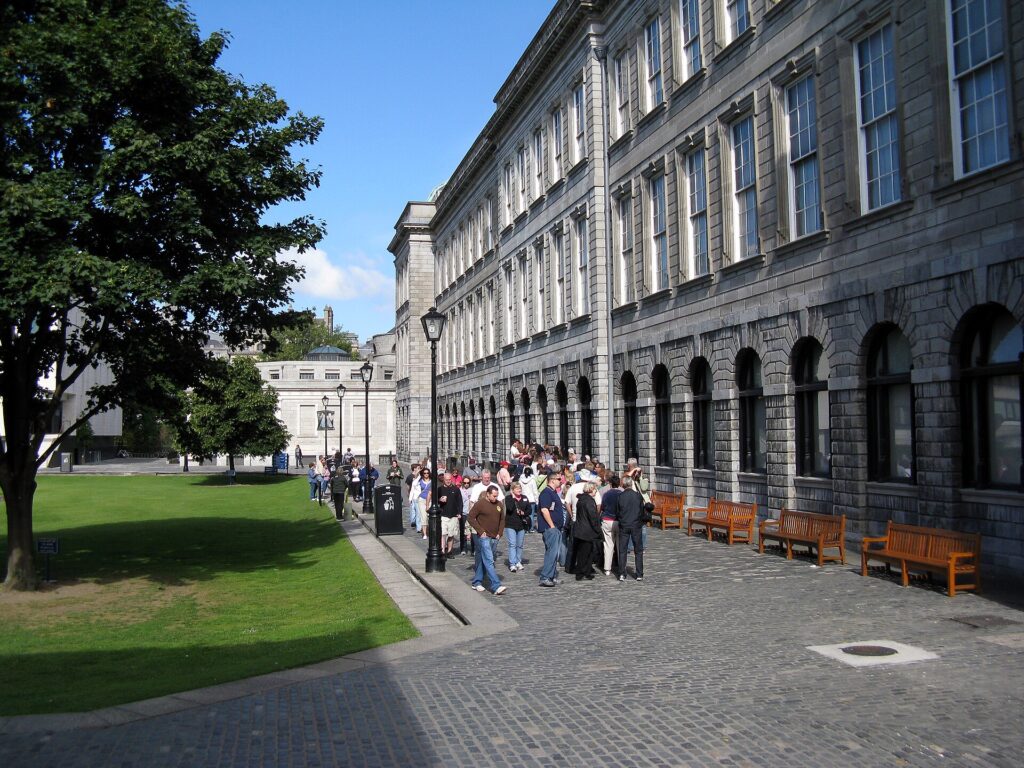
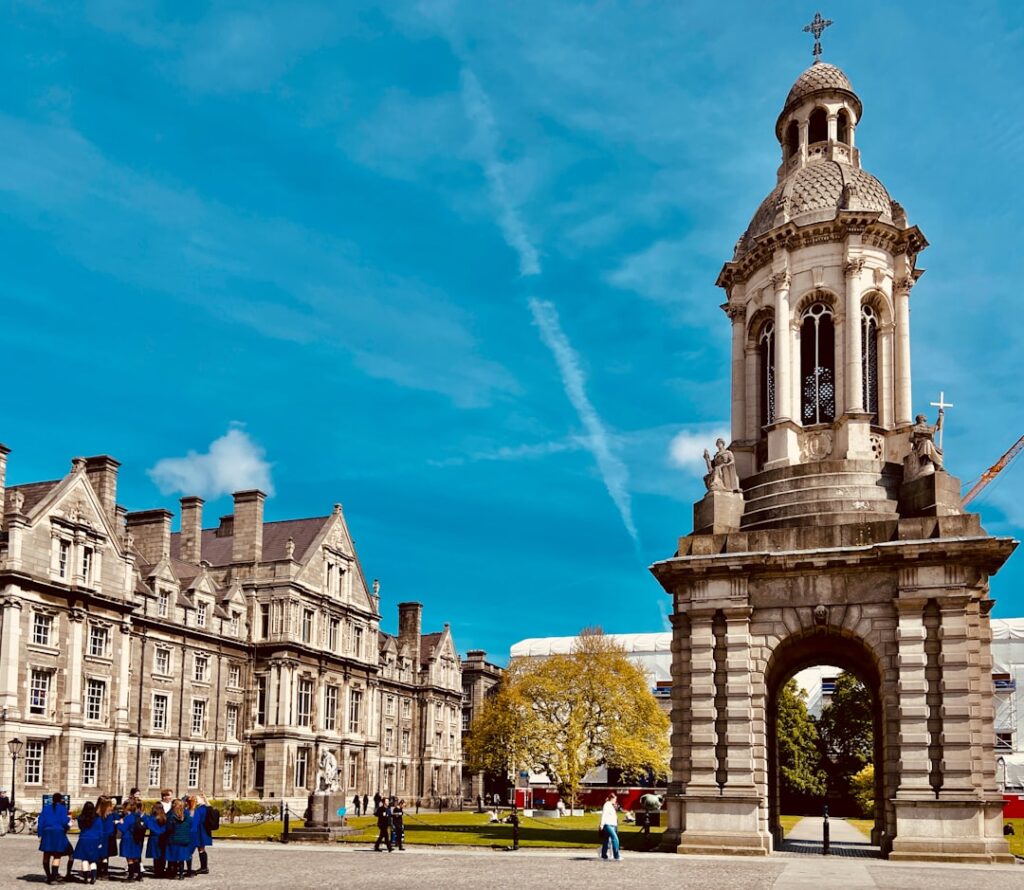
Trinity College Dublin sits right in the heart of the city, behind iron gates that open onto cobblestoned squares older than the United States. Founded in 1592, it’s Ireland’s oldest university and home to the Book of Kells, an illuminated manuscript that draws nearly a million visitors each year.
If you’re planning to visit, here’s what you need to know to make the most of it—and skip the frustrations that catch most first-timers off guard.
The Book of Kells: What You’re Actually Seeing
The Book of Kells is a gospel manuscript created by Celtic monks around 800 AD. It’s famous for its intricate illustrations—spirals, knots, animals, and human figures rendered in vivid pigments that have survived more than a millennium. The book is displayed in the Old Library’s Treasury exhibition, where you’ll see two pages under glass: one text page and one illuminated page. They’re rotated every few months to preserve the vellum.
The pages are small. The detail is astonishing, but you won’t get long to study them—crowds move through quickly, especially in summer. If you want to linger, go first thing in the morning or late afternoon.
Entry to the Book of Kells exhibition costs around $18 USD and includes access to the Long Room, the library’s stunning main chamber. Book tickets online in advance. Walk-up tickets often mean waits of an hour or more between May and September.
The Long Room: The Real Highlight
Most visitors come for the Book of Kells, but many leave saying the Long Room was the better experience. This 65-meter hall is lined floor to vaulted ceiling with 200,000 of the library’s oldest books. Marble busts of writers and philosophers—Swift, Socrates, Shakespeare—stand between the shelves. The smell of old leather and wood is exactly what you’d hope for.
One of the library’s treasures, a rare 15th-century harp (often called Brian Boru’s harp, though it’s centuries younger than the king), is displayed here. It’s the model for Ireland’s national symbol.
Take your time in the Long Room. It’s quieter than the Kells exhibition, and there’s no rush to move along.
Walking the Campus
Once you’ve finished with the library, spend half an hour wandering the campus. The cobbled squares—Front Square, Library Square, and Fellows’ Square—are peaceful, even when Dublin’s streets outside are packed. The Campanile, a bell tower erected in 1853, marks the center of Front Square and is the university’s unofficial icon.
The Douglas Hyde Gallery, tucked near the Nassau Street entrance, hosts rotating contemporary art exhibitions and is free to enter. The Science Gallery, on Pearse Street, focuses on interactive exhibits where science meets art and design—it’s worth a look if you have kids or an interest in something beyond the historic.
You’re free to walk the grounds without a ticket. The Book of Kells exhibition is the only part of Trinity that requires paid entry.
Practical Tips for Your Visit
Best time to visit: Weekday mornings before 10 a.m. or after 3 p.m. Weekends and midday in summer are the busiest times. If you’re visiting Dublin in winter, you’ll have the place practically to yourself.
Where to enter: The main entrance is on College Green, but if you’ve booked tickets online, follow the signs to the Nassau Street entrance—it’s closer to the Old Library and avoids some of the campus congestion.
How long to plan: An hour for the Book of Kells and Long Room, plus another 30 minutes if you want to explore the campus. If you’re tight on time, prioritize the Long Room over lingering in the Kells exhibition.
Photography: Not allowed inside the Old Library or Treasury. Enjoy it with your eyes.
Skip the tour: The self-guided exhibition does a fine job of explaining the manuscript’s history and significance. Guided tours are available but not necessary unless you want deep scholarly context.
Trinity is right in the middle of Dublin, so it’s easy to pair with a walk through Temple Bar, a visit to Dublin Castle, or lunch on Grafton Street. Viator offers combination tickets that bundle Trinity with other Dublin attractions if you’re planning a packed day.
Want more stories like this delivered to your inbox? Subscribe to The Ultimate Ireland Travel Guide newsletter—one short story a week, helping you explore Ireland beyond the guidebooks.
Heads up — some links in this article are affiliate links. If you sign up through them, we may earn a small commission at no extra cost to you. We only recommend tools we use ourselves.