
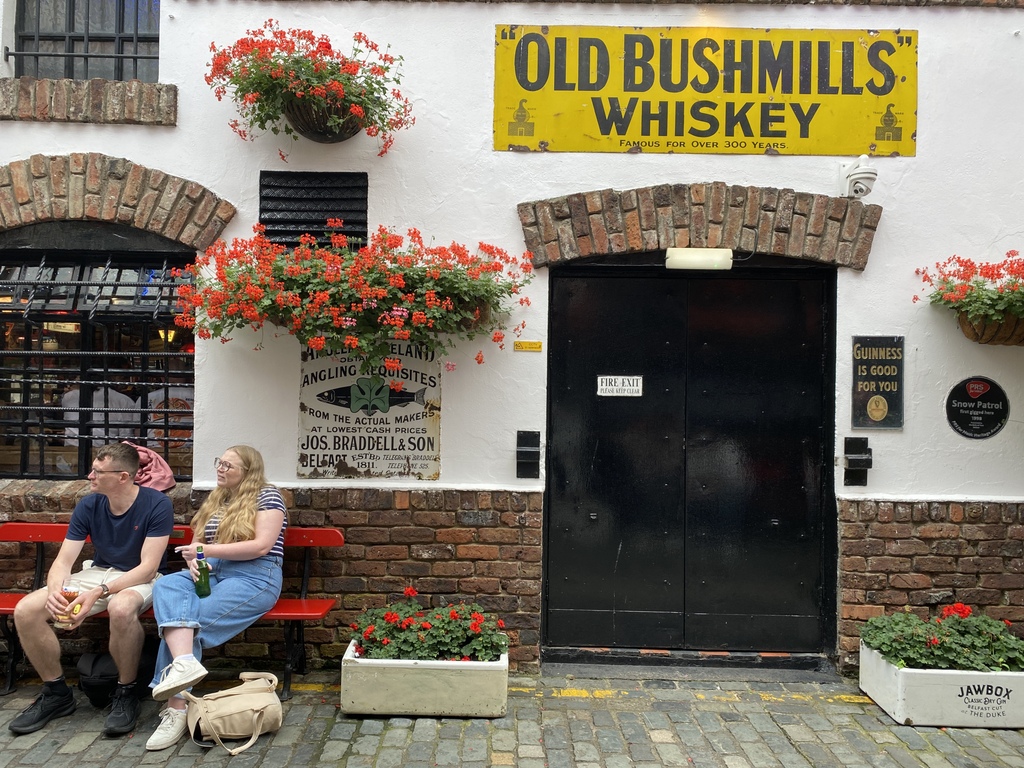
Belfast doesn’t look like the rest of Ireland. Its redbrick terraces, wide boulevards, and industrial bones feel more Victorian shipyard than Georgian town square. But that’s exactly what makes it worth the detour—especially if you’re tired of chasing postcard villages and want a city with grit, great food, and enough pubs to keep you busy for a week.
Most visitors skip Belfast or give it a rushed morning between the Causeway Coast and Dublin. That’s a mistake. The city has shed its rough reputation and quietly turned into one of the island’s best places to eat, drink, and dig into a different side of Irish history.
Where to Eat in Belfast
Belfast’s food scene rivals Dublin’s, and the prices are better. Start your morning at General Merchants on Skipper Street for sourdough toast, strong coffee, and a window seat overlooking the Cathedral Quarter. If you want a proper Ulster fry—soda bread, potato farls, black pudding, the works—head to Established Coffee on Hill Street.
For lunch, St. George’s Market on East Bridge Street is open Fridays through Sundays and packed with food stalls selling everything from smoked fish to Asian street food. The Friday Variety Market is the quietest; Saturday draws the crowds. Grab oysters from Mourne Seafood’s stand if they’re shucking.
Dinner options run deep. The Muddlers Club in Commercial Court is Belfast’s Michelin-starred darling—tasting menus run around $90 per person, and you’ll need to book weeks ahead. For something more relaxed, Ox on Oxford Street does nose-to-tail cooking in a former warehouse, or try Deanes Eipic on Howard Street for refined Irish ingredients without the fuss.
If you’d rather spend your money on pints, Holohan’s Pantry at the Beacon does excellent fish and chips, and Made in Belfast on Talbot Street serves massive plates of local beef and Strangford mussels for under $25.
The Best Pubs in Belfast
Belfast’s pub culture leans whiskey-forward and conversation-heavy. The Crown Liquor Saloon on Great Victoria Street is the tourist magnet—a Victorian gin palace with snugs, stained glass, and more carved wood than a church. It’s gorgeous, and yes, crowded, but worth one pint.
For something quieter, walk to The Duke of York in Commercial Court, a narrow alley pub where locals pack in shoulder-to-shoulder under strings of umbrellas. It’s one of the few places in Belfast where you’ll still catch spontaneous traditional music sessions midweek.
The Dirty Onion and Yardbird, both part of the same complex on Hill Street, offer live music most nights—trad, folk, and singer-songwriters. Upstairs at Yardbird feels like a Nashville honky-tonk transplanted to Ulster. Downstairs at The Dirty Onion is all stone walls and fiddlers.
If you want whiskey, The Merchant Hotel’s bar has one of Ireland’s best collections, though you’ll pay $15 to $20 per dram. For cheaper pours and zero pretense, try The Spaniard on Skipper Street or Kelly’s Cellars on Bank Street, Belfast’s oldest pub, operating since 1720.
Titanic Quarter and the Waterfront
You can’t avoid the Titanic in Belfast—the ship was built here in the Harland & Wolff shipyards, and the city wears that history proudly. Titanic Belfast, the angular museum on Queen’s Road, is genuinely excellent. Expect to spend two to three hours inside. Tickets cost around $28 for adults; book online to skip the ticket desk.
The museum sits in the revitalized Titanic Quarter, a formerly industrial waterfront now lined with new apartments, the SS Nomadic (Titanic’s tender ship, open for tours), and wide paths along the River Lagan. It’s a 20-minute walk from City Hall, or take the Glider bus G2 from Donegall Square.
Across the river, St. George’s Market is worth a second visit if you missed it earlier, and the Waterfront Hall hosts concerts and performances year-round.
Getting Around and Practical Tips
Belfast is compact and walkable. Most of what you’ll want to see—Cathedral Quarter, City Hall, the pubs, restaurants, and Victoria Square shopping center—sits within a 15-minute stroll. Black cabs offer historic tours of the murals and peace walls in West Belfast; these run around $40 for a private cab and offer context you won’t get wandering solo.
If you’re driving, parking downtown costs around $10 to $15 per day in multi-story car parks. The city center is easier without a car—save it for day trips to the Causeway Coast or the Mourne Mountains.
Belfast works any time of year, but May through September brings longer daylight and better odds of dry weather. November through February can be raw and wet, though the pubs feel cozier and the crowds thin out.
For day trips, the Causeway Coast is an hour north, Carrickfergus Castle is 20 minutes up the coast, and the Mourne Mountains are an hour south. Viator offers guided tours if you’d rather not drive.
Want more stories like this in your inbox? Subscribe to The Ultimate Ireland Travel Guide newsletter—one short story a week, straight from the island.
Heads up — some links in this article are affiliate links. If you sign up through them, we may earn a small commission at no extra cost to you. We only recommend tools we use ourselves.