
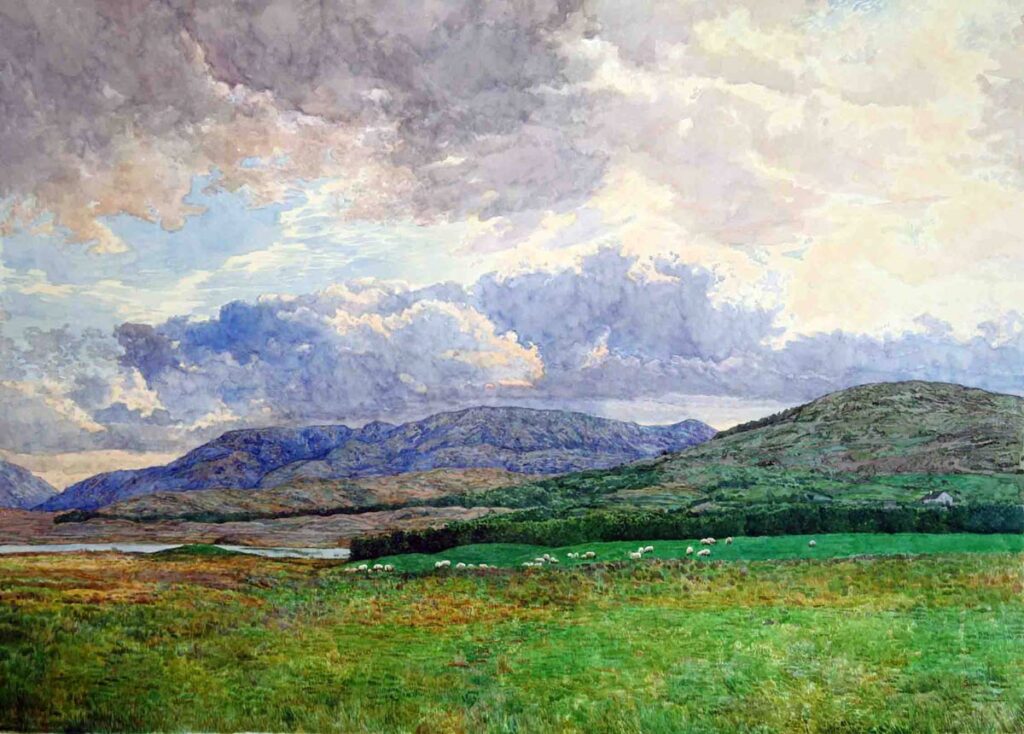
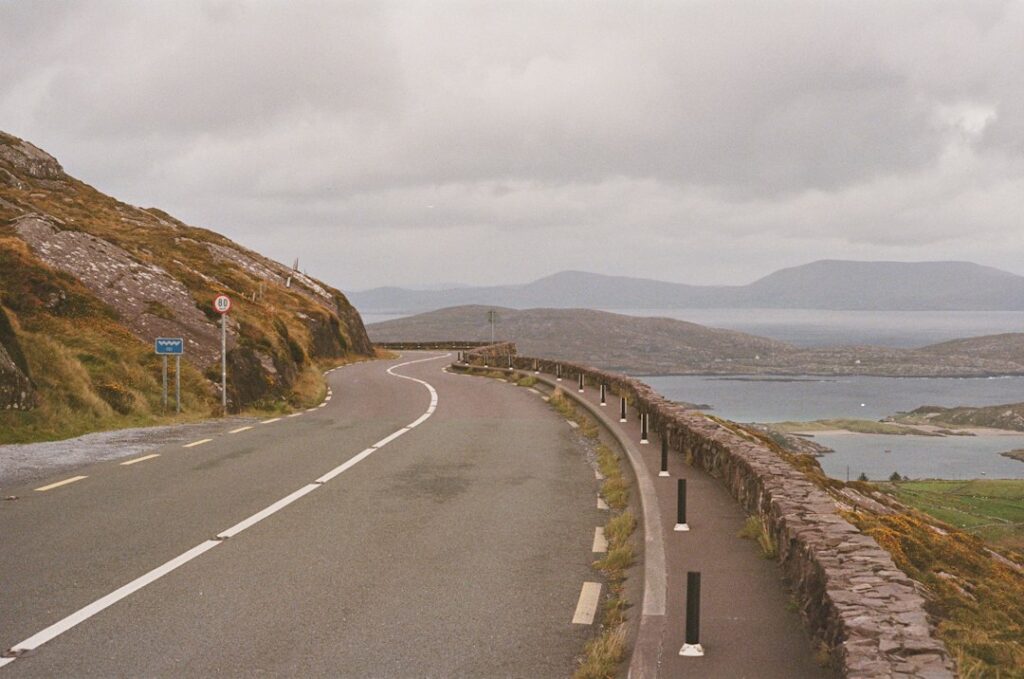
Connemara isn’t a single destination—it’s a sprawling jigsaw of bog, mountain, lake, and coast that spreads across western Galway. Most visitors treat it as a drive-through photo op on their way to Kylemore Abbey. But if you give it a full day and know where to stop, Connemara rewards you with some of the most haunting, empty beauty in Ireland.
This is where the Irish language still breathes in everyday conversation, where stone walls climb hillsides for no reason anyone remembers, and where sheep own the roads more confidently than tourists.
The Classic Loop: Galway to Clifden and Back
The standard Connemara loop runs west from Galway City on the N59 to Clifden, then back via the coastal R344 and R340 through Roundstone and Screeb. It’s roughly 110 miles and takes about three hours of pure driving—but you’ll want five or six hours minimum to actually see anything.
Start early. Galway traffic thins quickly once you pass Moycullen, and by the time you hit Oughterard, the landscape opens up into the kind of desolate grandeur that makes people pull over and stare.
Stop at the viewpoint just past Maam Cross where Lough Corrib stretches north and the Twelve Bens mountain range rises to the west. On clear mornings, the light here is sharp and cold, even in summer.
Where to Stop and What to See
Clifden is Connemara’s unofficial capital—a small market town with good cafes, pubs, and a handful of shops selling woolen goods that aren’t entirely made in China. It’s the natural lunch stop. Mitchell’s Restaurant on Market Street serves excellent seafood chowder and brown bread. For something lighter, try the smoked salmon sandwich at Lowry’s Bar.
South of Clifden, the coastal road through Roundstone is slower and more scenic than the inland N59. Roundstone itself is a tiny fishing village with a horseshoe harbor and one of Ireland’s best craft shops: Malachy Kearns’ bodhran workshop, where traditional Irish drums are still made by hand. You can watch him work if you visit midweek.
The bog road between Roundstone and Ballyconneely—officially the R341—cuts through a landscape so stark it feels lunar. This is blanket bog, dark and waterlogged, punctuated by turf stacks and the occasional whitewashed cottage. Pull over at the Coral Strand (Trá an Dóilín), where the beach isn’t sand but millions of tiny shell fragments that give the water an almost tropical turquoise glow.
On the return leg, stop at the Quiet Man Bridge in Leenaun if you’re a film buff, but don’t expect much—it’s more about the valley views than the small stone crossing itself. Skip the touristy visitor centers and save your money for a pint in one of the older pubs.
Where to Eat and Drink
Connemara isn’t packed with Michelin stars, but it does simple, local food better than most regions. In Clifden, Guy’s Bar on Main Street is an old-school spot with live trad music most nights and solid pub grub. For something more polished, try Ardagh Hotel & Restaurant south of town—lamb and seafood done well, with views over Ardbear Bay.
If you’re looping back through Cong (technically County Mayo, but close enough), stop at Ryan’s Hotel for a toasted special and a Guinness. It’s where the cast of The Quiet Man stayed during filming in 1951, and the bar still has the kind of worn-in charm that can’t be faked.
Don’t expect fast service anywhere. Connemara moves on its own clock.
Practical Notes
Gas stations are sparse once you leave Clifden, so fill up before heading south on the coastal loop. The roads are narrow, winding, and shared with sheep, tractors, and the occasional tour bus. Expect to reverse into a hedge at least once.
Spring and early summer are ideal—the wildflowers are out, the hills are green, and the tourist coaches haven’t yet arrived in full force. Autumn brings purple heather across the bogs and sharper light for photography. Winter is atmospheric but wet, and many smaller cafes close or reduce hours.
If you have time, consider staying overnight in Clifden or Roundstone rather than trying to cram Connemara into a day trip from Galway. The evening light here—especially in May and June—is worth the extra night’s accommodation.
Want one Ireland story a day in your inbox? Subscribe to The Ultimate Ireland Travel Guide newsletter—no clutter, just the good stuff.