
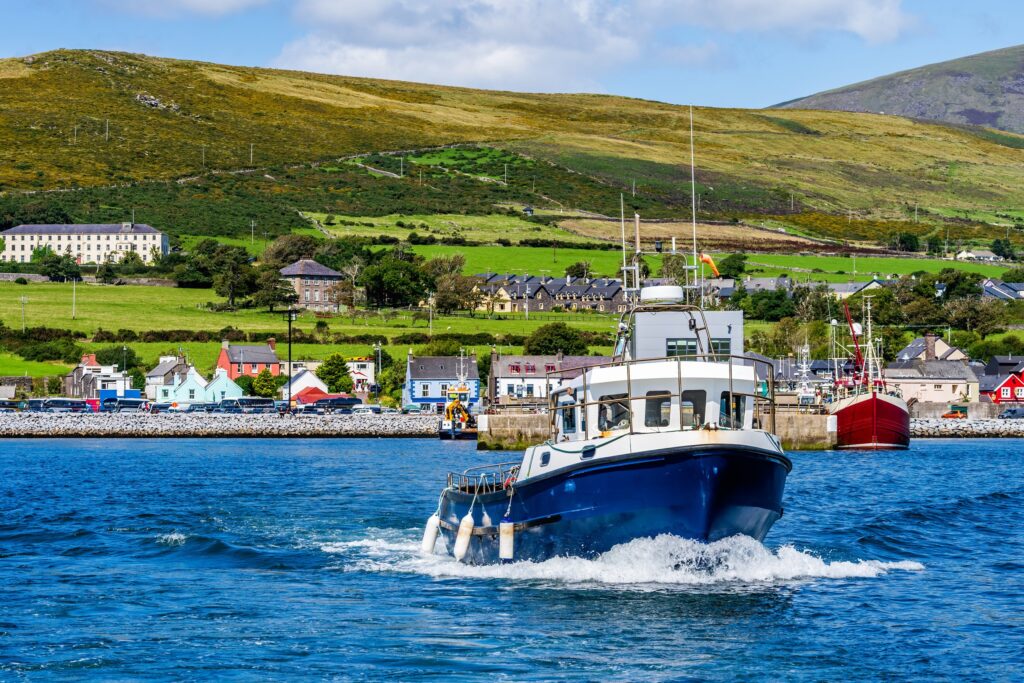
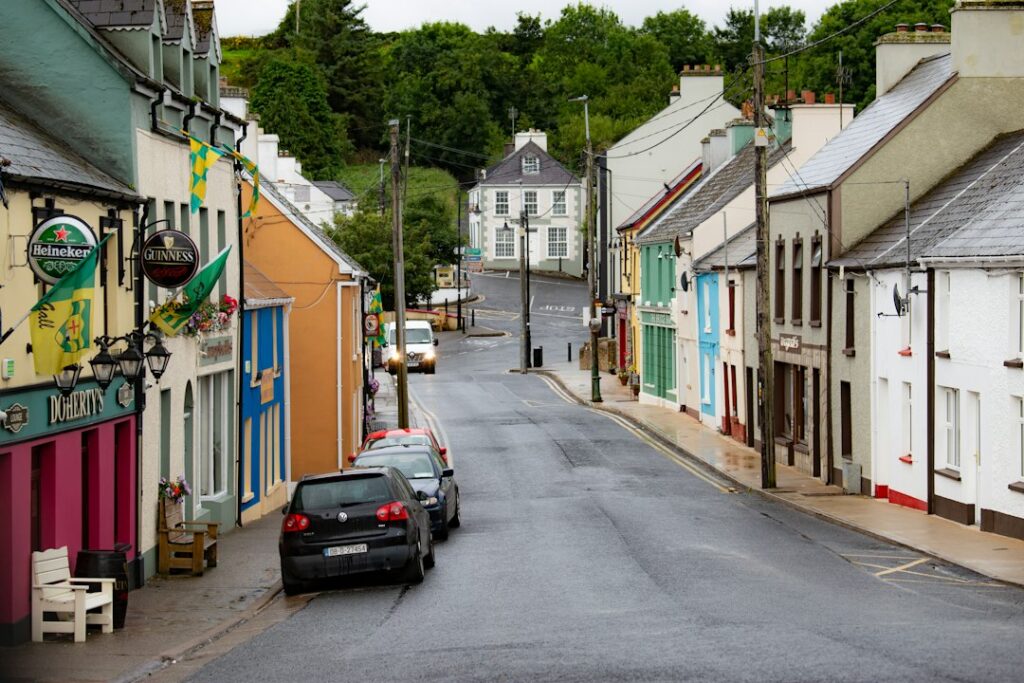
Dingle sits at the western edge of County Kerry, a compact harbor town where fishing boats still unload the day’s catch and the pubs fill with music every night. It’s the kind of place where you plan to stay one night and end up staying three — small enough to walk end to end in fifteen minutes, but full enough of good food, traditional music, and easy charm to hold your attention for days.
If you’re driving the Dingle Peninsula or the Wild Atlantic Way, this is your overnight base. But Dingle isn’t just a place to sleep between scenic drives. It’s worth slowing down for.
Where to Stay
Dingle’s accommodation spreads along the harbor and up into the narrow streets behind Main Street. For location and character, stay in the town center within walking distance of the pubs and restaurants.
Benners Hotel on Main Street is the classic choice — an old coaching inn with updated rooms, a cozy bar, and a central location. Dingle Skellig Hotel sits on the harbor with water views and a pool, popular with families. For something smaller, Greenmount House on John Street offers B&B rooms with harbor views and one of the best breakfasts in town.
Book ahead from May through September. Dingle fills quickly, especially on weekends and during festival weeks.
What to Eat
Dingle’s food scene punches above its size. The fishing boats tie up right in the harbor, and the restaurants know the fishermen by name.
Out of the Blue on the waterfront is Dingle’s seafood temple — no reservations, cash only, and they close when the fish runs out. The menu changes daily based on the catch. Expect grilled turbot, pan-fried scallops, and monkfish that was swimming that morning. It’s worth the wait in line.
Doyle’s Seafood Bar on John Street has been serving Dingle since 1974. The crab claws in garlic butter and the seafood chowder are local standards. The Chart House does modern Irish cooking — lamb from the hills behind town, local cheeses, and whatever came off the boats. Dinner runs about $40 to $60 per person.
For casual daytime eating, Bean in Dingle on Green Street serves excellent coffee and pastries. Murphy’s Ice Cream on Strand Street makes small-batch flavors using Kerry cream — the brown bread ice cream is a must.
Pubs and Music
Dingle has more than fifty pubs for a population under 2,000. Many host traditional music sessions nightly during summer, and several nights a week year-round.
Dick Mack’s on Green Street is half pub, half leather-working shop — locals still drink in the front room while the back displays vintage signs and old tools. Trad sessions happen most nights in summer. O’Flaherty’s on Bridge Street is a small, authentic spot with music every night and no tourists taking photos — just locals and musicians passing through.
Foxy John’s on Main Street is another hybrid — a pub in front, a hardware store in back. It’s quieter than Dick Mack’s but just as atmospheric. For a bigger room with guaranteed music, The Dingle Pub (also on Main Street) has nightly sessions and a younger crowd.
Sessions usually start around 9:30 p.m. There’s no cover charge, but buy a drink and settle in.
How to Spend Two Days
Arrive in the afternoon and check in to your accommodation. Walk the harbor, grab fish and chips from Reel Dingle Fish, and sit by the water. Have dinner at Doyle’s or The Chart House, then catch a trad session at Dick Mack’s.
The next day, drive or bike the Slea Head Loop — a 30-mile coastal circuit with views of the Blasket Islands, beehive huts, and Iron Age forts. It takes three to four hours by car with stops, longer by bike. Return to Dingle by late afternoon.
Spend your evening at Out of the Blue if they’re open (closed Mondays and in winter), followed by music at O’Flaherty’s. The next morning, have breakfast at your guesthouse or grab coffee at Bean in Dingle before heading east toward Killarney or west toward the Conor Pass.
Dingle works year-round, but June through August brings the longest days, warmest weather, and most reliable music sessions. September is quieter, with fewer visitors and still-decent weather. Winter is low season — some restaurants close, and music is less frequent — but the town stays open, and rates drop significantly.
Want more stories like this delivered to your inbox? Subscribe to The Ultimate Ireland Travel Guide newsletter — one short story a day, straight from the road.