
Cork City doesn’t announce itself the way Dublin does. Ireland’s second city unfolds gradually—along the River Lee, through narrow Georgian lanes, past the English Market’s food stalls, and into neighborhoods that feel more like distinct villages than urban districts. Choosing where to stay shapes your experience here, and each area offers something different.
Most first-time visitors anchor themselves in the city center, but Cork rewards those who look a little further. The right neighborhood puts you within walking distance of the city’s best pubs, restaurants, and galleries while giving you a quieter place to return to at night.
The City Center: Victorian Quarter and St. Patrick’s Street
The heart of Cork runs along St. Patrick’s Street, the city’s main shopping and dining corridor. Stay here and you’re steps from the English Market, where vendors have sold meat, fish, cheese, and produce since 1788. The covered market is worth visiting for breakfast—stop at the Farmgate Café upstairs for black pudding and coffee overlooking the stalls below.
Hotels in this area put you close to everything: the Crawford Art Gallery, Paul Street’s boutiques and cafés, and the Opera House. You’ll find a mix of Georgian buildings and Victorian red-brick facades, with plenty of traditional pubs tucked into side streets. The Mutton Lane Inn and Sin É are both within a ten-minute walk.
The downside is noise. Friday and Saturday nights bring crowds, especially around the Oliver Plunkett Street pub strip. Light sleepers should request rooms facing interior courtyards or quieter side streets.
Victorian Quarter and Shandon: North of the River Lee
Cross the River Lee’s north channel and you’ll find Shandon, Cork’s historic northside neighborhood. The butter-and-cream-colored tower of St. Anne’s Church dominates the skyline here—climb it for views across the city and a chance to ring the bells yourself.
Shandon feels residential and quieter than the city center, with steep hills lined by Georgian townhouses and corner pubs. It’s a ten-minute walk to St. Patrick’s Street, close enough to reach restaurants and shops easily but far enough to escape the weekend crowds.
This area suits travelers who want a neighborhood feel. You’ll find small guesthouses and B&Bs rather than chain hotels, and morning walks take you past bakeries, butchers, and the kind of local spots where regulars greet each other by name. The Idle Hour and The Castle Inn serve good pints and often host traditional music sessions mid-week.
The Quays and Victorian Docklands: Along the River
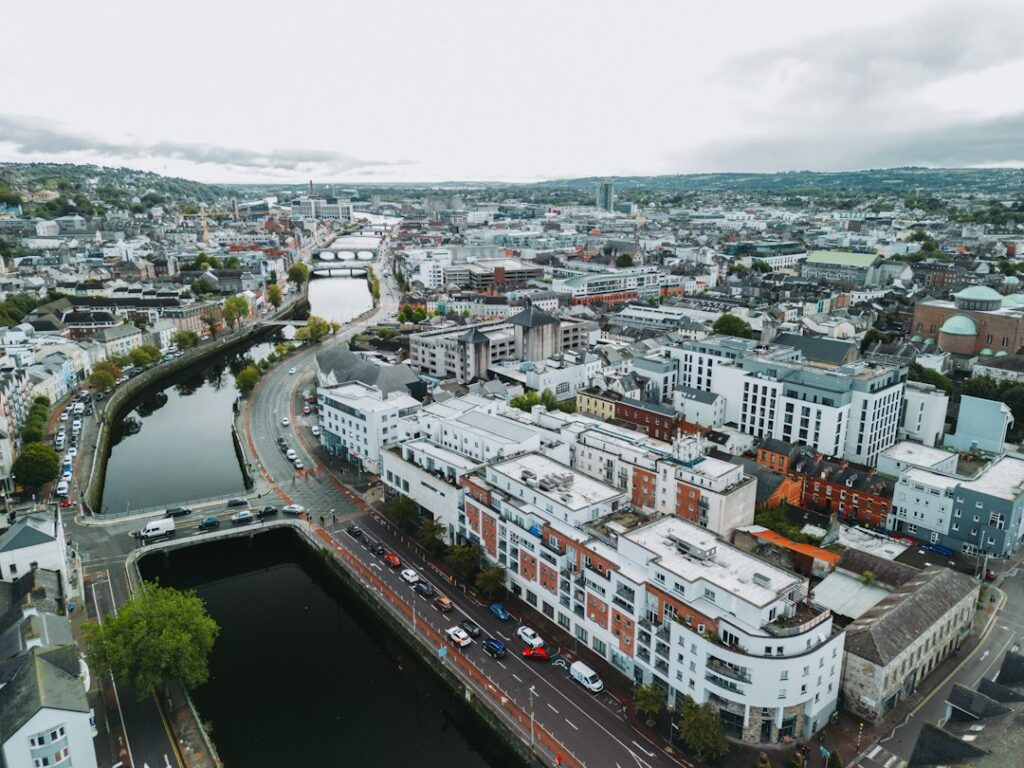
Cork’s quays run along both channels of the River Lee, offering waterfront walks and Georgian architecture. The South Mall and nearby streets are home to restored Victorian buildings, many now housing boutique hotels and apartments.
This area gives you proximity to the city center with slightly quieter evenings. It’s a good middle ground—you can walk to the English Market in five minutes, but you’re set back from the busiest streets. Many hotels here occupy historic buildings with original features: high ceilings, sash windows, and period details.
The western stretch of the quays, toward University College Cork, is especially pleasant for morning or evening walks. The university campus itself, with its Gothic Revival quadrangles and riverside grounds, is worth exploring. The nearby Gaol Walk follows the old city walls.
Montenotte and Tivoli: Hillside Views East of Center
For travelers with a car or those who don’t mind a short taxi ride, Montenotte offers elevated views over Cork City and the harbor. This residential area climbs the hill east of the center, where Victorian villas and newer guesthouses look out over the Lee Valley.
Staying up here means trading walkability for space, quiet, and often lower prices. Most accommodations include parking, which matters if you’re driving the Wild Atlantic Way or planning day trips to Kinsale, Cobh, or Blarney. It’s a fifteen-minute walk downhill to the city center, or a five-minute taxi ride.
Montenotte suits early risers who want to watch the city wake up from above, and travelers who prefer a base outside the urban core. You’ll need to plan your evenings—walking back uphill after dinner and pints isn’t for everyone.
Practical Notes for Choosing Your Base
Cork City is compact enough that location matters less than in Dublin or Galway. Most neighborhoods sit within a twenty-minute walk of each other, and taxis are plentiful and affordable (figure $8–12 for most cross-city trips).
If you’re planning to explore beyond Cork—Kinsale, the Beara Peninsula, West Cork’s villages—staying somewhere with parking saves hassle. The city center has paid parking, but it’s limited and expensive. Many city-center hotels charge $15–25 per night for parking.
Booking in advance matters during summer (June through August) and during the Cork Jazz Festival in late October, when the city fills up quickly. Prices rise during these periods, especially in the city center.
For longer stays, consider splitting your time. Spend a few nights in the center for easy access to restaurants and pubs, then move to Shandon or Montenotte for a quieter end to your visit.
Want more stories about where to stay, eat, and explore across Ireland? Subscribe to The Ultimate Ireland Travel Guide newsletter—one short story a day, straight to your inbox.