
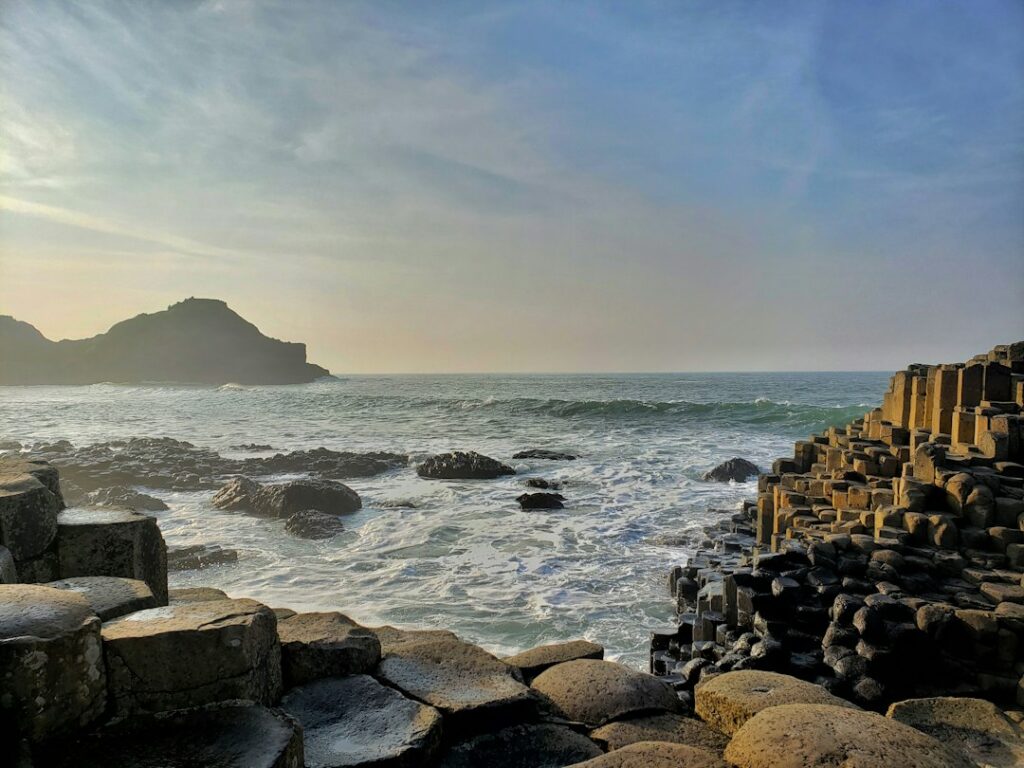
The Giant‘s Causeway is Northern Ireland’s only UNESCO World Heritage Site, and it earns that distinction honestly. Forty thousand interlocking basalt columns rise from the sea along the Antrim coast, forming geometric stepping stones that look more like architecture than geology. The science — a volcanic eruption 60 million years ago — is impressive enough. The mythology — that Irish giant Fionn mac Cumhaill built it to fight his Scottish rival — is better.
Most visitors see the Causeway on a day trip from Belfast or as part of the Causeway Coastal Route. Both work, but the site deserves more than a quick photo stop. Here’s how to visit it properly.
Getting There and Parking
The Giant’s Causeway sits two miles north of the village of Bushmills in County Antrim, about 60 miles northwest of Belfast. If you’re driving, follow the A2 Causeway Coastal Route — it’s well signposted. The official car park costs around $15 and includes access to the visitor center. Pay it. The unofficial lots along Causeway Road are cheaper but farther from the stones, and the walk down is steep.
If you’re not driving, the Causeway Rambler bus (Route 402) runs from Coleraine and connects to towns along the coast, including Bushmills and Ballycastle, from late March through October. From Belfast, take the train to Coleraine, then the bus. Viator runs guided day trips from Belfast and Dublin that include the Causeway, Carrick-a-Rede, and Dunluce Castle if you’d rather leave the logistics to someone else.
The visitor center opens daily at 9:00 a.m. The site itself is always open — arrive early or late to dodge the tour buses.
What to See and How to Walk It
From the visitor center, it’s a mile downhill to the stones. You can walk the paved path, take the shuttle bus (around $2 each way), or follow the clifftop trail for better views and fewer people. I recommend walking down and taking the bus back up if your knees prefer it.
The causeway itself is divided into three sections. The Grand Causeway is the main attraction — the broad apron of columns where everyone takes photos. The Middle Causeway is quieter and just as striking. The Little Causeway, farthest east, is often overlooked and worth the scramble if the tide is low.
Don’t stop at the first cluster of stones. Keep walking east along the coast. You’ll pass formations with names like the Organ (vertical columns that look like pipes), the Giant’s Boot (a lone basalt pillar shaped vaguely like footwear), and the Chimney Stacks (tall, thin columns rising from the sea). The best views are from the headland past the Organ — turn around there and you’ll see the entire causeway spread out below you.
If the tide and weather cooperate, walk as far as Port Noffer, a small bay about half a mile past the main stones. You’ll have it mostly to yourself.
When to Visit and What to Bring
Summer brings the crowds and the best chance of dry weather, but spring and autumn are quieter and still pleasant. Winter can be dramatic — low light, big waves, and almost no one around — but pack waterproofs and expect wind.
The basalt is slippery when wet, and it’s wet often. Wear boots or shoes with grip, not sandals or smooth-soled sneakers. Bring layers even in summer — the wind off the Atlantic is unforgiving. If you’re visiting in winter or after rain, waterproofs aren’t optional.
The stones themselves are free to walk on, but the visitor center charges around $18 for adults. It’s optional — you can bypass it entirely and walk straight to the causeway — but the exhibits on geology and mythology are well done, and the café makes a decent stop on the way back up.
Where to Stay and What Else Is Nearby
Bushmills, two miles south, is the logical base. It’s a small village built around the Old Bushmills Distillery, the oldest licensed whiskey distillery in Ireland. Stay at the Bushmills Inn if you want charm and a good restaurant, or book a guesthouse along Main Street for less. Portrush, seven miles west, has more options and a lively harbor, but it’s farther from the causeway.
If you’re driving the Causeway Coastal Route, combine the Giant’s Causeway with Carrick-a-Rede Rope Bridge (five miles east), Dunluce Castle (five miles west), and the Dark Hedges (15 miles south). All four in one day is doable but rushed — two days is better.
The Causeway is worth the trip, but don’t treat it like a checklist stop. Give it time, walk past the crowds, and stay long enough to understand why the myths feel more convincing than the science.
Want more Ireland travel stories like this delivered to your inbox? Subscribe to The Ultimate Ireland Travel Guide newsletter — one short story a day, no fluff, just the Ireland worth finding.
Heads up — some links in this article are affiliate links. If you sign up through them, we may earn a small commission at no extra cost to you. We only recommend tools we use ourselves.