
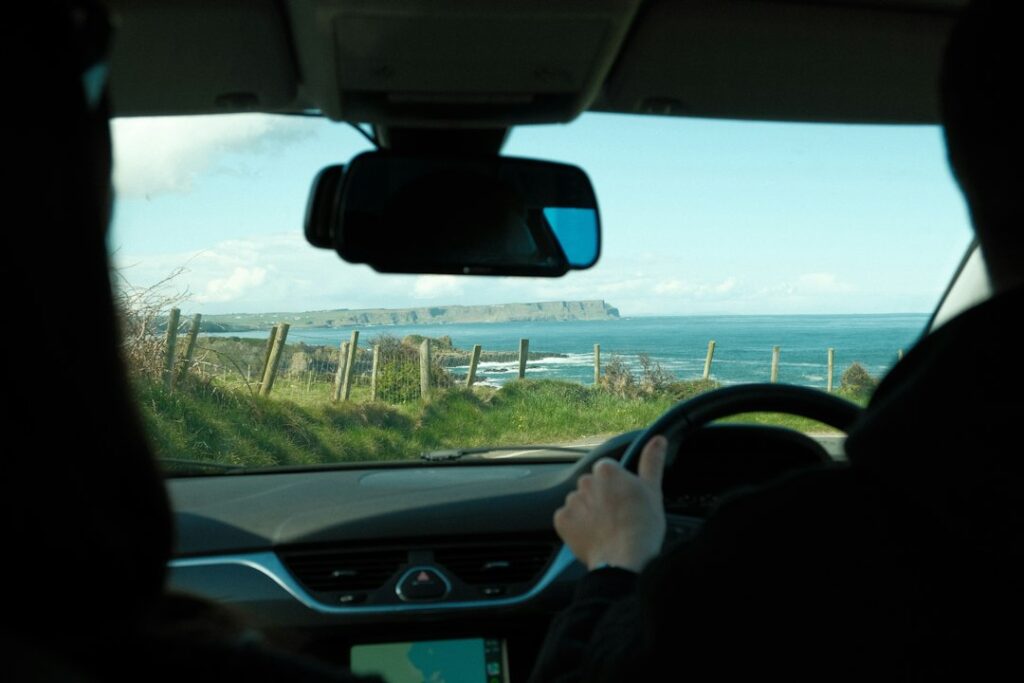
Renting a car is the best way to explore Ireland beyond the cities. The Wild Atlantic Way, the Causeway Coast, Connemara, and the peninsulas of Kerry and Cork are all accessible only by car. But car hire in Ireland comes with quirks that catch first-time visitors off guard—manual transmissions, narrow roads, unfamiliar insurance, and pricing that doesn’t work the way it does back home.
Here’s what you actually need to know before you book.
Book Early and Expect to Pay More Than You Think
Car rental in Ireland is expensive, especially in summer. A compact manual can run $50 to $80 per day in peak season, and automatics cost 20 to 40 percent more. Prices spike in July and August, so book as early as possible—ideally three to six months ahead.
Most travelers pick up at Dublin or Shannon airports, but Cork, Belfast, and Knock also have rental desks. If you’re flying into Dublin and heading west, consider a one-way rental to Shannon or Galway. One-way fees typically add $75 to $150, but you’ll save time and skip the drive back across the country.
Major international companies—Enterprise, Hertz, Budget, Europcar—operate at all airports. Local Irish companies like Dan Dooley and Sixt often offer lower rates but have smaller fleets. Compare rates through aggregators, but always read the fine print on insurance and mileage.
Manual vs. Automatic: Choose Wisely
The vast majority of rental cars in Ireland have manual transmissions. Automatics are available but limited, especially in smaller vehicle classes. If you can’t drive a manual, book an automatic months in advance—and expect to pay significantly more.
Even if you can drive stick, consider your route. If you’re tackling the steep, winding climbs of the Dingle Peninsula, the Beara Peninsula, or Connemara’s mountain passes, an automatic takes the stress out of hill starts on narrow roads with oncoming traffic.
The most common rental is a compact hatchback—think Volkswagen Golf or Ford Focus. They’re narrow enough for country lanes and have enough power for mountain roads. Avoid SUVs unless you need the space; they’re harder to maneuver on tight village streets and rural boreens.
Insurance: The Part Everyone Gets Wrong
This is where car rental in Ireland gets confusing. Your credit card’s rental insurance and your U.S. auto policy typically do not cover you in Ireland. Even if they do, Irish rental companies will not accept them as primary coverage.
You’ll need a Collision Damage Waiver (CDW), which is usually included in your rate but comes with a high excess—often $1,500 to $2,500. That means you’re on the hook for damage up to that amount. To reduce or eliminate the excess, you can buy Super CDW at the counter for $20 to $35 per day, or purchase a standalone policy from a third-party provider like Insurance4CarHire before you leave home. The standalone policies are cheaper—around $60 to $100 for a week—and cover the excess on most rentals.
Theft protection and third-party liability are also typically included. Read your rental agreement carefully and know what’s covered. Tires, windshields, and undercarriage damage are often excluded from CDW.
What to Bring and What to Expect at Pickup
You’ll need a valid driver’s license, a credit card in the driver’s name, and your booking confirmation. Most companies require drivers to be at least 25 years old; some allow younger drivers for an additional fee. If you’re over 70, check age restrictions—some companies cap rental age at 75 or require extra insurance.
At pickup, inspect the car carefully. Photograph any existing damage, especially scratches and dents, before you leave the lot. Irish roads are narrow, and rental cars accumulate scrapes. Make sure the damage is noted on your agreement.
Ask about fuel policy. Most rentals are full-to-full: you pick up with a full tank and return it full. Some companies offer prepaid fuel, but it’s rarely a good deal.
Rental cars in the Republic of Ireland display yellow license plates. In Northern Ireland, they’re white with a red letter “R” in a circle. These plates mark you as a tourist, so don’t leave valuables visible in the car.
Driving Tips for Renters
Ireland drives on the left. The biggest adjustment isn’t the side of the road—it’s the narrowness of the roads and the roundabouts. Take your time, especially on rural roads where stone walls and hedgerows crowd the tarmac. Wing mirrors will get clipped; it happens to everyone.
Roundabouts are everywhere. Yield to traffic already in the circle, which approaches from your right. If you’re navigating a multi-lane roundabout in Dublin or Cork, stay in the left lane unless you’re exiting more than halfway around.
Speed limits are in kilometers per hour in the Republic (50 km/h in towns, 80-100 km/h on rural roads, 120 km/h on motorways) and miles per hour in Northern Ireland. Road signs change at the border.
Parking in cities is expensive and often metered. In Dublin, Galway, and Cork, expect to pay $3 to $5 per hour. Many towns have free parking on the outskirts. Don’t park on double yellow lines—you will be ticketed or towed.
Returning the Car
Return the car with a full tank of fuel. Rental companies charge exorbitant rates—often double the pump price—if you return it empty. Most airports have gas stations within a mile of the rental return; fill up there.
Allow extra time at Dublin Airport. Rental return lots are off-site, and you’ll need to take a shuttle to the terminal. Shannon and Cork returns are faster.
Inspect the car with the agent if possible, or take photos showing the odometer, fuel level, and exterior condition. Keep your receipt and rental agreement until any deposits clear your card.
Renting a car in Ireland isn’t difficult, but it requires more planning than a rental at home. Book early, understand the insurance, and give yourself time to adjust to narrow roads and left-hand driving. Once you do, you’ll have the freedom to explore Ireland’s most beautiful places at your own pace.
Want more practical tips for traveling in Ireland? Subscribe to The Ultimate Ireland Travel Guide newsletter and get one short story a day—everything you need to plan the trip you’ve been dreaming about.