
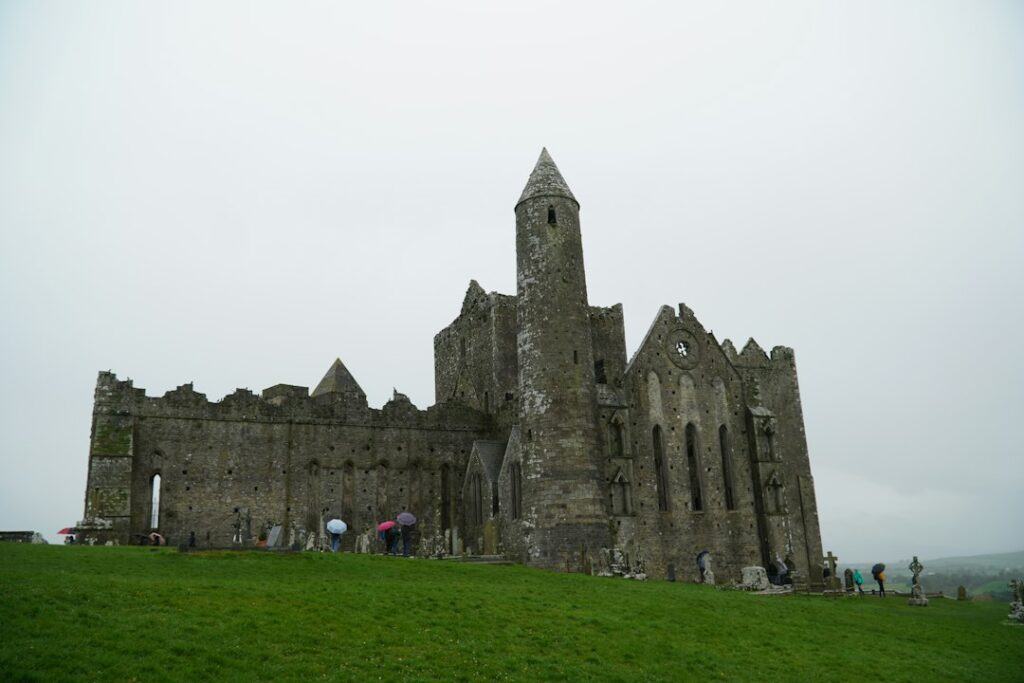
The Rock of Cashel sits on a limestone outcrop in County Tipperary, rising 200 feet above the Golden Vale’s patchwork fields. This extraordinary cluster of medieval buildings—cathedral, round tower, chapel, and high crosses—was the seat of Munster’s kings for more than 700 years before becoming an ecclesiastical center. It’s one of Ireland’s most photographed sites, and for good reason: few places marry architecture, history, and landscape quite so dramatically.
The Rock is an easy day trip from Cork, Kilkenny, or Limerick, and it rewards a full morning or afternoon of exploration. Here’s how to make the most of your visit.
What You’ll See on the Rock
The site is compact but layered with history. Cormac’s Chapel, built in 1127, is the jewel: a Romanesque gem with carved tympanum, twin towers, and faded frescoes that still cling to the interior walls. The craftsmanship is extraordinary, especially the ribbed barrel vault and the elaborate stonework around the doorway.
The Cathedral, roofless since the mid-1700s, dominates the summit. Built in the 13th century, its Gothic arches frame the sky, and you can climb the central tower for panoramic views over Tipperary and the Galtee Mountains. The Round Tower, dating to around 1100, is the oldest structure on the Rock and stands 90 feet tall. You can’t climb it, but its tapering form is iconic against the skyline.
Don’t miss the Hall of the Vicar’s Choral, a restored 15th-century building at the base of the Rock that houses St. Patrick’s Cross, a 12th-century high cross with biblical scenes carved into its weathered panels. The interpretive center here provides essential context before you ascend.
When to Visit and How Long You’ll Need
The Rock of Cashel is open year-round, though hours vary by season. In summer (June through August), it’s open from 9:00 a.m. to 7:00 p.m.; in winter, until 4:30 p.m. Admission is around $9 for adults. Buy tickets at the entrance—there’s no need to book ahead unless you’re visiting during peak summer weekends or the week around St. Patrick’s Day, when tour buses converge.
Plan for 90 minutes to two hours on-site. The walk up from the ticket office takes five minutes, and the complex itself rewards a slow, thoughtful visit. If you’re interested in architecture or early Christian history, allow more time to study the carvings and absorb the atmosphere. Early morning or late afternoon light is magical for photography, and you’ll have fewer crowds.
Weather matters here. The Rock is fully exposed to wind and rain, with no shelter once you’re on the summit. Bring layers, good walking shoes with grip (the stones can be slick), and a rain jacket. On clear days, the views stretch for miles; in mist, the place takes on an otherworldly, haunting quality.
Getting There and Where to Stay
Cashel town sits on the N8, the main road between Dublin and Cork, about 55 miles from Cork city and 100 miles from Dublin. If you’re driving, there’s free parking at the base of the Rock. The town itself is small but charming, with a handful of good cafés and pubs within a five-minute walk of the site.
If you’re relying on public transport, Bus Éireann runs services from Dublin, Cork, and Limerick to Cashel, but schedules are limited—check times in advance and plan for a half-day or overnight stay. The town has several guesthouses and small hotels; Baileys Hotel Cashel on Main Street is a reliable, comfortable choice within walking distance of the Rock.
Cashel pairs well with other Tipperary stops: Holycross Abbey, a restored Cistercian monastery 10 miles north, and the town of Thurles, birthplace of the GAA, are both worth a detour if you’re driving the region.
Insider Tips for Your Visit
Start at the Hall of the Vicar’s Choral to watch the short film and examine St. Patrick’s Cross up close before climbing the Rock. The interpretive exhibits give helpful background on the site’s transition from royal seat to religious center.
Photography is allowed throughout, and the Rock is one of Ireland’s most photogenic landmarks. For the classic postural shot—the entire complex rising against the sky—walk along the fields just east of town on the R505 toward the Hore Abbey ruins, a 13th-century Cistercian monastery that sits photogenically in the foreground.
If you’re visiting in summer, Bru Boru, the cultural center at the foot of the Rock, often hosts traditional music and dance performances in the evenings. Check their schedule if you’re staying overnight in Cashel.
For lunch, try Café Hans on Moor Lane, a local favorite for seasonal soups, quiches, and salads in a cozy, art-filled setting. It’s run by the same family as the upscale Chez Hans next door, which is worth booking for dinner if you’re spending the night.
Want more stories like this delivered to your inbox? Subscribe to The Ultimate Ireland Travel Guide newsletter—one short story a day, straight from the heart of Ireland.