
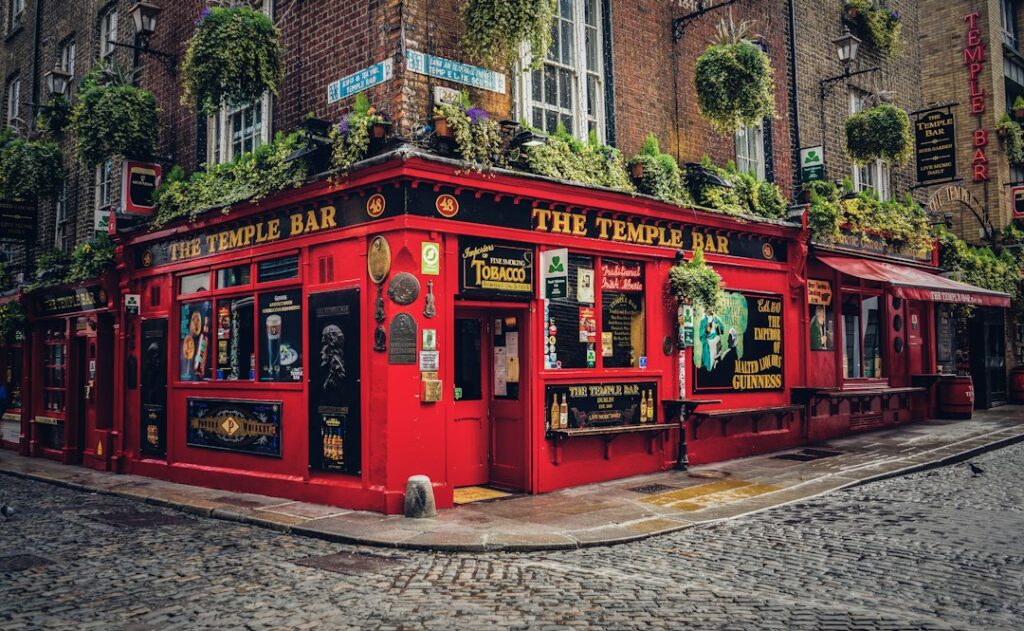
Dublin has more than 750 pubs, but not all of them are created equal. Between the tourist traps on Temple Bar and the chain gastro-pubs, finding an authentic traditional pub — one with character, a local crowd, and genuine warmth — takes some knowing. These are the places worth your time, spread across neighborhoods from the Liberties to Stoneybatter, where the spirit of old Dublin survives.
The Liberties: History in Every Corner
The Liberties, Dublin’s oldest neighborhood, is home to some of the city’s finest traditional pubs. The Brazen Head on Bridge Street Lower claims to be Ireland‘s oldest pub, dating to 1198. The low ceilings, open fires, and stone walls make it feel every bit its age. It draws tourists, yes, but locals still drink here, especially in the quieter front bar on weekday afternoons.
A few streets over, Fallon’s on The Coombe is a proper neighborhood local. It’s been run by the same family since 1946, with mahogany partitions, vintage Guinness mirrors, and a crowd that’s been drinking here for decades. No food, no frills, just conversation and pints poured right.
The Lord Edward on Christchurch Place sits across from the cathedral and has occupied the same spot since 1890. The bar downstairs is all dark wood and snugs, with a seafood restaurant upstairs if you’re hungry. It’s quieter than most and feels untouched by the years.
Stoneybatter and Smithfield: The North Side’s Gems
Stoneybatter has become one of Dublin’s most characterful drinking neighborhoods, and L. Mulligan Grocer on Stoneybatter Road is its anchor. Technically a gastropub, but one that respects tradition — craft beer and whiskey shelves share space with old grocer signage and a crowd that’s equal parts local and curious. The kitchen serves elevated pub food worth staying for.
Nearby, The Cobblestone on North King Street is the city’s most famous traditional music pub, and for good reason. The front bar is tiny, wood-paneled, and packed most nights. The back room hosts nightly sessions — some of the best free traditional music in Dublin. Arrive early or prepare to stand. It’s a neighborhood institution that fought off developers and won, and locals are fiercely proud of it.
Just across the Liffey in Smithfield, The Dice Bar on Queen Street isn’t old in the traditional sense, but it has the soul of a great Dublin local: unpretentious, music-loving, and filled with regulars who’ve been coming since it opened in the early 2000s.
City Centre: Literary Haunts and Victorian Beauties
In the heart of Dublin, Neary’s on Chatham Street is a Victorian gem tucked behind the Gaiety Theatre. The cast-iron arms holding lanterns outside, the marble bar, the mirrors — it’s Dublin pub architecture at its finest. Theatre crowds fill it before and after shows, but mid-afternoon it’s peaceful and perfect for a quiet pint.
Toner’s on Baggot Street has barely changed since it opened in 1734. W.B. Yeats drank here (reluctantly, according to legend — he preferred coffee). The original Victorian bar, wooden drawers that once held tea and whiskey, and a small snug make it one of Dublin’s most atmospheric pubs. It’s a favorite with after-work crowds from nearby offices, but never feels overrun.
For literary history, The Palace Bar on Fleet Street was the hangout of choice for Irish Times journalists and writers in the mid-20th century. Brendan Behan and Flann O’Brien were regulars. The wood-paneled interior and frosted glass are unchanged, and it still draws a crowd that appreciates good conversation over loud music.
When to Visit and What to Expect
Traditional pubs in Dublin are busiest Thursday through Saturday nights and Sunday afternoons. If you want space to talk and really see the place, visit mid-afternoon on a weekday — between 3 p.m. and 6 p.m. is ideal. Most don’t take reservations unless you’re booking a private snug or dining.
Expect to order at the bar. Table service is rare in traditional pubs. A pint of Guinness will cost around $6 to $7. Tipping isn’t required, but rounding up or leaving a dollar is appreciated if you’re being served regularly.
Many of these pubs don’t serve food, or only offer bar snacks. If you want a meal, check ahead or plan to eat elsewhere. The exception is pubs like L. Mulligan Grocer and The Lord Edward, where the kitchen is part of the draw.
Most importantly, these pubs survive because locals still drink in them. Be respectful, keep your voice down, and let the pub come to you. The best conversations in Dublin happen when you’re not trying too hard.
Want more stories like this delivered to your inbox? Subscribe to The Ultimate Ireland Travel Guide newsletter — one short story a day, and nothing you won’t use.