
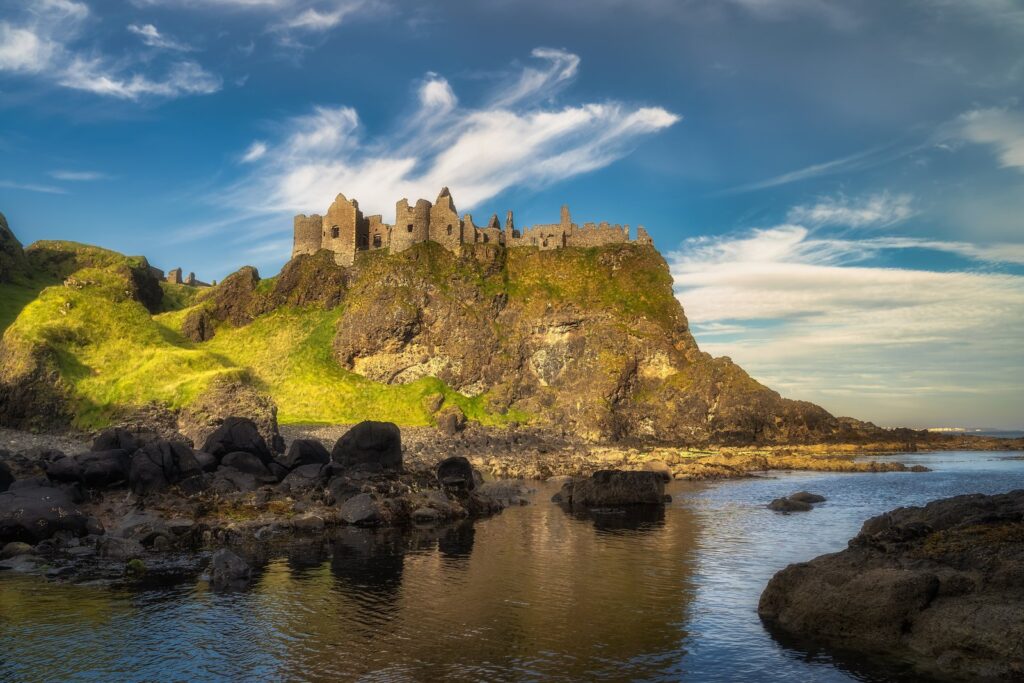
Dunluce Castle sits on a sliver of rock above the crashing Atlantic, connected to the mainland by a narrow bridge that replaced the original drawbridge centuries ago. Half of the kitchen famously collapsed into the sea during a storm in 1639, taking several servants with it. What remains is one of the most striking castle ruins in Ireland—and one of the most atmospheric.
The castle lies on the Causeway Coastal Route between Portrush and the Giant’s Causeway, making it an easy stop on any north coast itinerary. It’s managed by the Department for Communities and open year-round, though hours vary by season.
What You’ll See at Dunluce Castle
The ruins date primarily to the 16th and early 17th centuries, though the site was fortified much earlier. You’ll walk through the remains of the gatehouse, the Great Hall, and what’s left of the household quarters. The views from the clifftop are extraordinary—north toward Scotland on clear days, east and west along the basalt coast.
The kitchen that fell into the sea is gone, but you can still see the break in the rock where it once stood. Interpretive panels throughout the site explain the castle’s history, from its days as a seat of the MacDonnell clan to its gradual abandonment after the kitchen disaster convinced the lord’s wife to leave for good.
The site is exposed to wind and weather. Wear sturdy shoes and bring a jacket even in summer. The ground is uneven, with stone steps and narrow passages—not ideal for very young children or anyone with mobility concerns.
Getting There and Practical Details
Dunluce Castle is located on the A2 coastal road, about 3 miles east of Portrush and 5 miles west of the Giant’s Causeway. If you’re driving, there’s a small car park at the entrance. The castle is well-signposted from both directions.
The Causeway Rambler bus (route 402) connects Coleraine, Portrush, Dunluce, Bushmills, and the Giant’s Causeway from late March through October, making it possible to visit without a car during the warmer months. Check the schedule in advance, as service is seasonal.
Admission is around $7 for adults. The site is open daily, typically 10 a.m. to 4 p.m. in winter and until 5 or 6 p.m. in summer. Last entry is 30 minutes before closing. Budget 45 minutes to an hour for your visit, longer if you want to explore the small beach below the castle or linger for photos.
Combine It with Nearby Attractions
Dunluce fits perfectly into a day exploring the Causeway Coast. The Giant’s Causeway is just down the road, and the Old Bushmills Distillery—Ireland’s oldest licensed whiskey distillery—is a 10-minute drive inland. Portrush offers good lunch options and a lively seaside atmosphere, while the Carrick-a-Rede Rope Bridge is about 20 minutes east.
If you’re interested in Game of Thrones filming locations, Dunluce was used as inspiration for the exterior of House Greyjoy’s castle, Pyke. The Dark Hedges, another famous filming location, is a 30-minute drive southeast near Ballymoney.
For a quieter experience, visit early in the morning or late in the afternoon. Midday during summer can bring tour buses, especially when cruise ships dock in Belfast. Winter visits offer solitude and dramatic light, though you’ll contend with shorter days and rougher weather.
Where to Stay and Eat
Portrush and Bushmills are the closest towns with accommodation. Portrush has more dining options, from fish and chips on the harbor to upscale seafood restaurants. Bushmills is smaller and quieter, with a couple of good pubs near the distillery.
The Bushmills Inn is a well-regarded hotel and restaurant in the village center, known for its whiskey-focused menu and cozy atmosphere. In Portrush, Ramore Wine Bar offers excellent seafood and harbor views.
If you’re doing a longer tour of the north coast, consider basing yourself in Ballycastle to the east or even making a day trip from Belfast, which is about 90 minutes by car. Viator offers guided tours from Belfast that cover Dunluce, the Giant’s Causeway, and Carrick-a-Rede in a single day if you prefer not to drive.
For more stories like this—one a day from around Ireland—subscribe to The Ultimate Ireland Travel Guide newsletter. We’ll help you plan your trip, one short read at a time.
Heads up — some links in this article are affiliate links. If you sign up through them, we may earn a small commission at no extra cost to you. We only recommend tools we use ourselves.