
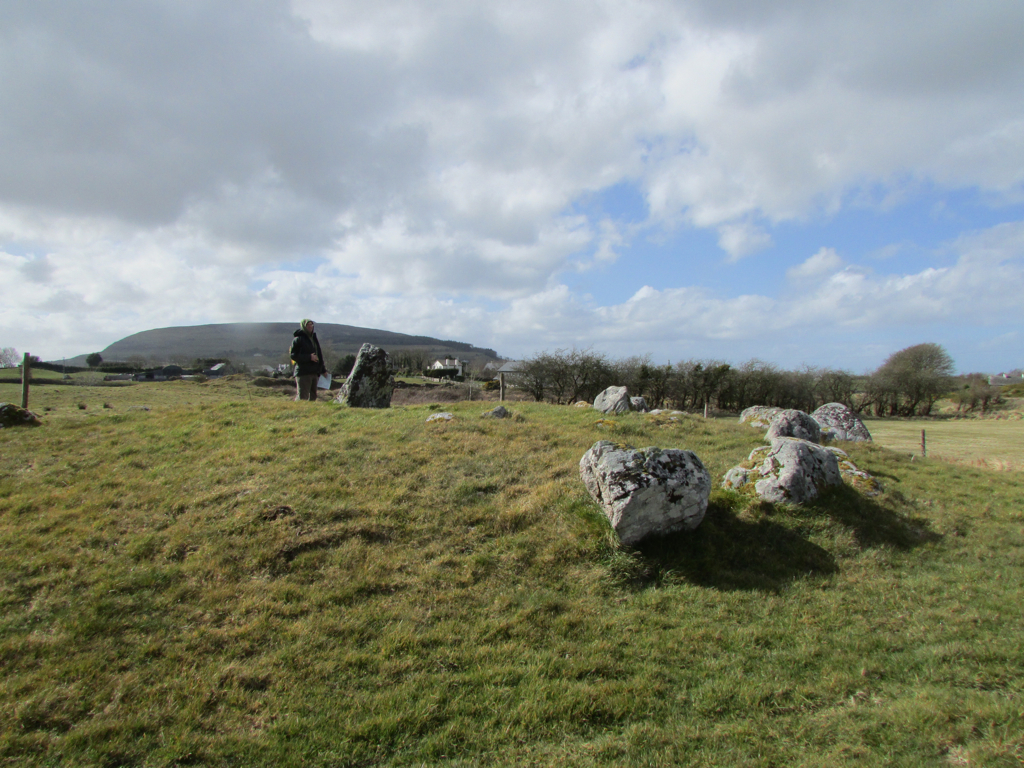
While Newgrange gets most of the attention, Carrowmore Megalithic Cemetery in County Sligo holds its own claim to fame as Ireland’s largest collection of megalithic tombs. Spread across rolling fields with the distinctive flat-topped mountain Knocknarea as a backdrop, this 5,000 to 6,000-year-old burial complex contains more than 60 passage tombs, stone circles, and dolmens—some predating the pyramids of Egypt.
The site feels less manicured than other heritage attractions, which adds to its atmosphere. You’ll walk among weathered stones that local farmers have worked around for generations, touching history that stretches back to Ireland’s earliest inhabitants.
What You’ll See at Carrowmore
The visitor center sits at the entrance and offers a short exhibition explaining the site’s significance and the different types of monuments you’ll encounter. From there, a walking trail loops through the main cluster of tombs, though many more scatter across private farmland beyond the official site.
The most impressive monument is Tomb 51, sometimes called Listoghil, which sits at the center of the complex. This large cairn contains a cruciform passage tomb similar in structure to Newgrange, though smaller in scale. During excavations, archaeologists discovered cremated remains, stone tools, and antler pins dating back millennia.
You’ll also find numerous boulder dolmens—simple but striking structures consisting of large capstones balanced on upright stones. Many of these tombs originally had earthen mounds covering them, but centuries of farming and weathering have exposed the bare bones of the structures. The result is hauntingly beautiful.
The site’s location is spectacular. Looking southwest, you’ll see the massive cairn atop Knocknarea, traditionally associated with Queen Maeve of Connacht. The folklore and landscape create a powerful sense of place that modern monuments rarely achieve.
Getting There and Practical Information
Carrowmore sits about 3 miles southwest of Sligo town center. Take the R292 Strandhill Road and follow signs for the megalithic cemetery. There’s a small parking area at the visitor center.
If you’re staying in Sligo town without a car, you can take a taxi for about $15 to $20 one way, or combine your visit with a walk or cycle out to Strandhill village, which is only another mile down the road.
The site is open daily from late March through October, typically from 10:00 a.m. to 6:00 p.m., with reduced hours in shoulder season. It’s closed from November through March, though you can still view some of the tombs from the roadside year-round. Admission runs about $5 for adults, with discounts for seniors and students. Children under 12 enter free.
Plan to spend at least an hour here, longer if you want to sit quietly among the stones or explore at a leisurely pace. The site is mostly flat and accessible, though paths can get muddy after rain—wear sturdy shoes.
Best Time to Visit
Early morning or late afternoon light creates the best atmosphere, casting long shadows across the stones and highlighting the textures of the ancient rock. The site sees far fewer visitors than Ireland’s more famous ancient monuments, so you’ll often have tombs to yourself, especially outside of peak summer months.
May and September offer the ideal combination of decent weather and thinner crowds. If you visit in spring, the fields surrounding the tombs burst with wildflowers. Autumn brings dramatic skies and moody light that suits the prehistoric landscape.
Avoid midday in summer if possible, as the flat, exposed terrain offers little shade. Winter visits aren’t possible through the official entrance, but the evocative quality of the stones under grey skies makes the seasonal closure frustrating for photography enthusiasts.
Combining Your Visit
Carrowmore pairs perfectly with a hike up Knocknarea, where Queen Maeve’s cairn crowns the summit. The trail starts from the car park at Glen Road and takes about 45 minutes to climb. The 360-degree views from the top are extraordinary, and you can look down on Carrowmore from above, seeing how the tomb complex relates to the broader landscape.
Strandhill village, just down the road, offers excellent surfing, coastal walks, and several good cafés and pubs for a post-visit meal. Try The Venue for coffee and cake, or grab fish and chips from the Strand Bar.
Sligo town itself deserves exploration. The Yeats connection runs deep here—the poet spent childhood summers in the area and drew constant inspiration from this landscape. The Model arts center and Sligo Abbey are both worth your time.
For those interested in ancient sites, County Sligo has several other megalithic monuments, including Creevykeel Court Tomb north of Sligo town and the Carrowkeel passage tombs in the Bricklieve Mountains. A guided tour can help you understand the archaeological context and connect these sites into a broader story of Neolithic Ireland.
Want more stories like this? Subscribe to The Ultimate Ireland Travel Guide newsletter and get one short story about Ireland delivered to your inbox every day—no crowds, no clichés, just the Ireland worth finding.