Glendalough — the Valley of the Two Lakes — is where Ireland’s ancient Christian heritage meets its wild mountain landscape. Founded by St. Kevin in the 6th century, this monastic settlement in County Wicklow became a center of learning and pilgrimage for centuries. Today, it’s one of the most visited sites in Ireland, and for good reason: nowhere else combines ruins this evocative with scenery this dramatic.
The valley sits about 30 miles south of Dublin, making it an easy day trip from the capital. But come early or late in the day to avoid the tour bus crowds, and you’ll find the kind of solitude that drew hermits here 1,500 years ago.
The Monastic Site and Round Tower
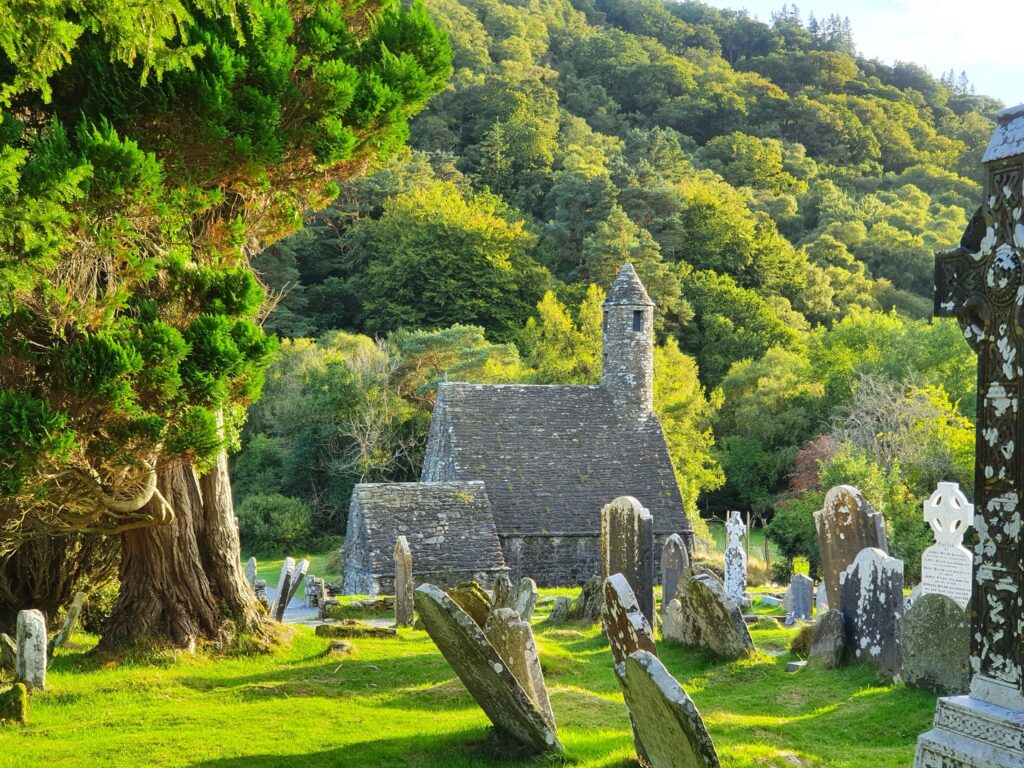
The main monastic settlement sits near the Lower Lake, and you can walk the entire complex in under an hour — though you’ll want longer to absorb the atmosphere. The centerpiece is the 110-foot round tower, perfectly preserved and still standing after more than a thousand years. These towers served as bell towers, treasuries, and refuges during Viking raids.
Walk through the stone gateway arch — one of the few surviving monastic entrances in Ireland — and you’ll find the roofless cathedral, several smaller churches, Celtic crosses, and hundreds of gravestones. The Priest’s House, a 12th-century reconstruction of an earlier church, shows the Romanesque stonework that defines the site’s later period.
St. Kevin’s Church, with its distinctive stone roof and miniature round tower, is the most photographed building here. Local lore calls it “St. Kevin’s Kitchen” because early visitors mistook the tower for a chimney.
Admission to the monastic site is free. The Visitor Centre charges $5 for adults and offers an excellent 20-minute film and exhibition that puts the ruins in context. It’s worth the modest fee, especially if you’re not traveling with a guide.
The Upper Lake and Walking Trails
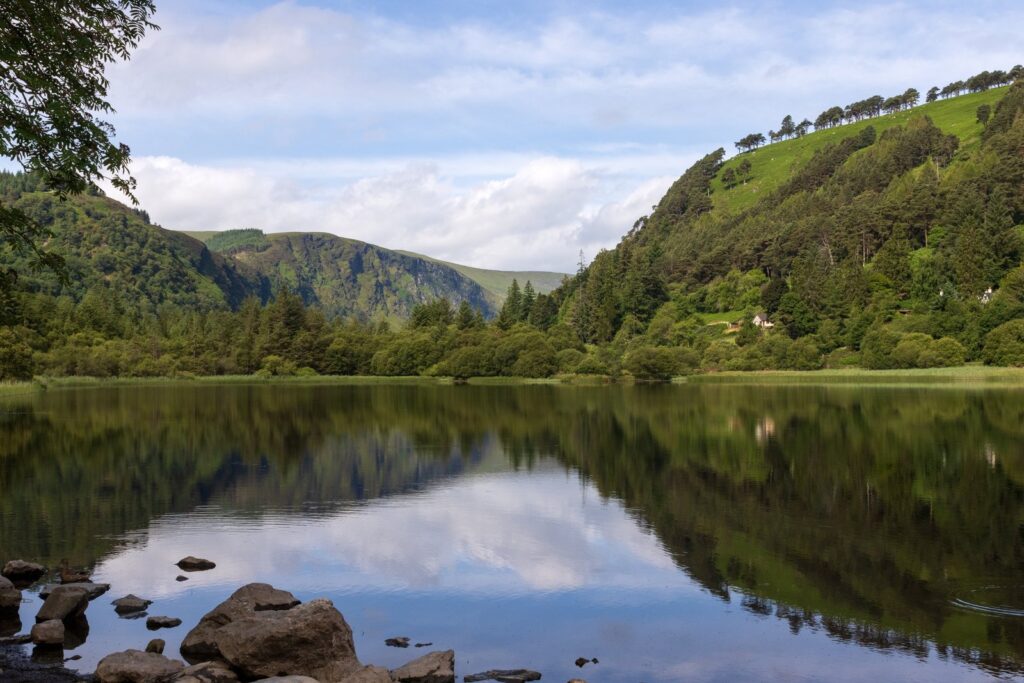
Most visitors stop at the monastic site, but the Upper Lake — a mile west along a paved path — is where Glendalough’s landscape truly shines. The walk follows the Glenealo River through oak and birch forest, with the Wicklow Mountains rising steeply on both sides.
At the Upper Lake, you’ll find the remains of Reefert Church and St. Kevin’s Cell, a stone beehive hut rebuilt on the site where the saint supposedly lived as a hermit. The lake itself is dark and glacial, surrounded by cliffs and scree slopes that turn golden in autumn.
Several hiking trails start from the Upper Lake car park. The Spinc and Glenealo Valley Loop (7 miles, moderate to challenging) climbs to a boardwalk with spectacular views over both lakes before descending through a hanging valley. The Miners’ Village Walk (3 miles, easy) follows old mining roads to the ruins of 19th-century lead mine workings.
For something shorter, the Green Road (2 miles, easy) is a nearly level track that runs west from the Upper Lake, following an old route that once connected Glendalough to the Glenmalure Valley.
Practical Information and Tips
Glendalough is about a 90-minute drive from Dublin via the M11 and R755, or the more scenic R115 Military Road through the Wicklow Mountains. There’s a large car park near the Visitor Centre (Lower Lake) that charges $4, and a smaller free car park at the Upper Lake — though it fills quickly on weekends and summer mornings.
Bus Éireann operates limited service from Dublin (route 133), but tours through Viator offer a more convenient option if you’re not renting a car, often combining Glendalough with Powerscourt Estate or the Wicklow Mountains.
The site is open year-round during daylight hours. The Visitor Centre operates daily from 9:30 a.m. to 5 p.m. (until 6 p.m. in summer). Spring and autumn offer the best combination of weather and fewer crowds, while winter brings atmospheric mist and the possibility of snow on the high ground.
Wear sturdy walking shoes even if you’re only visiting the monastic site — paths can be muddy after rain. If you’re hiking the longer trails, bring layers, waterproofs, and a map. Weather changes quickly in these mountains.
There’s a small café and gift shop at the Visitor Centre, but for a proper meal, drive 15 minutes south to the village of Laragh, where Wicklow Heather Restaurant serves excellent Irish food, or stop at Lynham’s of Laragh pub for hearty lunches and local atmosphere.
When to Visit and What to Expect
Summer weekends bring the heaviest crowds, with the car parks often full by 11 a.m. Visit on a weekday morning or arrive after 4 p.m. when the tour buses have left. Early morning mist rising off the lakes creates the most atmospheric conditions for photography.
The monastic site itself takes about an hour to explore at a relaxed pace. Add another hour for the walk to the Upper Lake, and three to five hours if you’re tackling one of the longer hiking trails. Plan a half-day minimum, a full day if you’re serious about hiking.
Glendalough has no village or town attached — it’s purely a heritage and natural site. Everything closes at dusk, and there are no facilities beyond the Visitor Centre area. This isolation is part of its appeal, but come prepared with water, snacks, and appropriate clothing for the weather.
The valley is beautiful in every season. Summer brings lush greenery and long days, autumn paints the hillsides in copper and gold, winter offers stark beauty and solitude, and spring carpets the forest floor with bluebells.
Want more Ireland travel stories delivered to your inbox? Subscribe to The Ultimate Ireland Travel Guide newsletter — one short story a day, taking you deeper into Ireland’s hidden corners and favorite places.
Heads up — some links in this article are affiliate links. If you sign up through them, we may earn a small commission at no extra cost to you. We only recommend tools we use ourselves.