
Kilmainham Gaol stands gray and imposing on the western edge of Dublin, a monument to Ireland’s long struggle for independence. Between 1796 and 1924, this fortress-like prison held everyone from common criminals to the leaders of every major Irish rebellion. Walking its cold corridors and standing in the execution yard where the 1916 Easter Rising leaders were shot is one of the most powerful experiences in Ireland.
The guided tour is mandatory and worth every minute. Book well ahead—this is one of Dublin’s most popular attractions, and tours sell out days or weeks in advance, especially during summer.
What You’ll See Inside
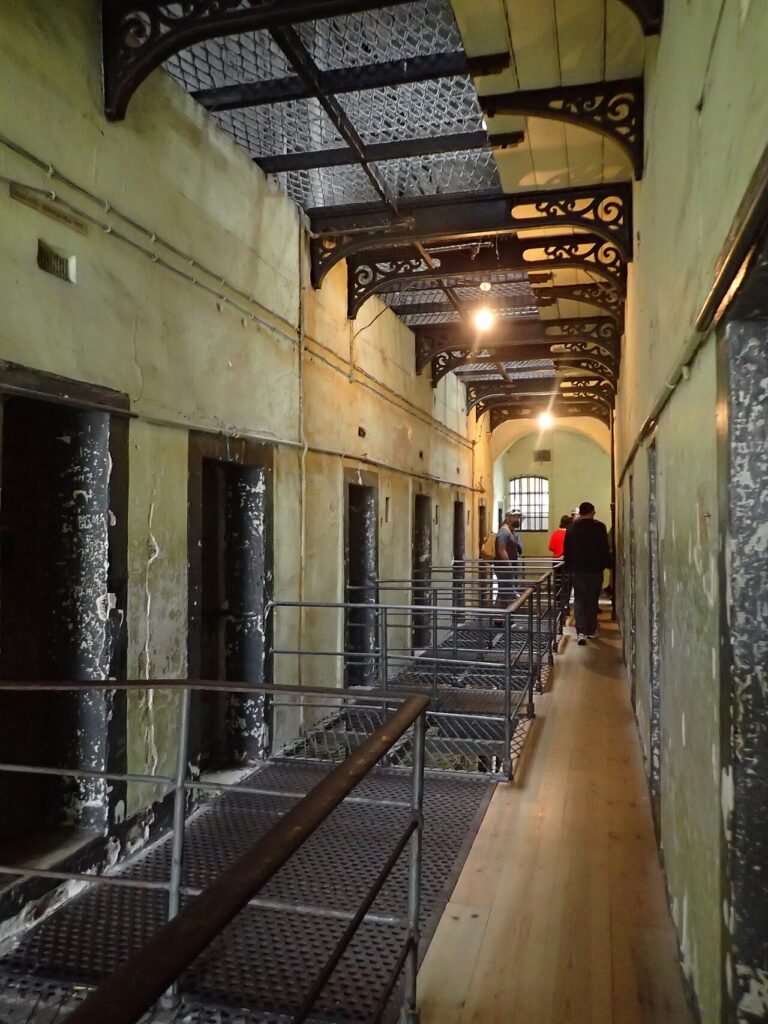
The tour begins in the atmospheric East Wing, a Victorian-era cellblock designed on the principles of solitary confinement. The massive cathedral-like hall rises four stories, with cast-iron walkways and cell doors radiating from a central point. Light filters down from the glass roof—a design meant to allow constant surveillance of prisoners.
You’ll visit individual cells, some holding just a wooden plank for a bed. Your guide will share stories of the men and women held here: Robert Emmet, Charles Stewart Parnell, the leaders of the 1916 Rising, and countless others. The cells are tiny and dark, even on bright days.
The most affecting stop is the Stonebreakers’ Yard, where 14 leaders of the 1916 Easter Rising were executed by firing squad over ten days in May 1916. A black cross marks the spot where James Connolly, too wounded to stand, was tied to a chair and shot. The courtyard is silent except for the sound of Dublin traffic beyond the walls.
The tour ends in the modern museum wing, where exhibits detail the prison’s history, the various rebellions, and the path to Irish independence. Original letters, photographs, and artifacts bring the stories to life.
Practical Information
Kilmainham Gaol is located at Inchicore Road, about two miles west of central Dublin. You can reach it by Dublin Bus routes 13, 40, or 69, or it’s a 30-minute walk from Christ Church Cathedral. There’s limited parking on site if you’re driving.
Tours run daily and last about 70 minutes. Tickets cost around $9 for adults, with discounts for students and seniors. Children under 12 are admitted free but must be accompanied by an adult. Book online through the official website at least a week ahead during spring and summer, or a few days ahead in winter.
Tours involve climbing stairs and standing for extended periods. The prison is cold year-round—stone walls and minimal heating—so bring a jacket even in summer. Photography is allowed in most areas, but be respectful in the execution yard.
The gaol is closed Mondays from November through March, and on Christmas Eve, Christmas Day, and St. Stephen’s Day (December 26).
Combining Your Visit
The Irish Museum of Modern Art at the Royal Hospital Kilmainham sits next door, housed in a beautiful 17th-century building with formal gardens. Admission is free, and it’s worth an hour if you have time before or after your gaol tour.
The Phoenix Park, one of Europe’s largest enclosed city parks, is a 15-minute walk north. You can spot wild deer, visit the Dublin Zoo, or simply walk the tree-lined paths. The park also holds Áras an Uachtaráin, the Irish president’s residence.
For lunch after your visit, head back toward the city center. The Brazen Head on Bridge Street claims to be Ireland’s oldest pub (established 1198) and serves solid traditional fare—Irish stew, fish and chips, and beef and Guinness pie—in a warren of cozy rooms.
Why It Matters
Kilmainham Gaol isn’t just a tourist attraction. It’s where Irish independence was forged, where ordinary people made extraordinary sacrifices. The stories told here—of hunger strikes, executions, and eventually, release and freedom—shaped modern Ireland.
The last prisoner released from Kilmainham was Éamon de Valera in 1924, shortly before the gaol closed. By the 1960s, the building had fallen into ruin. A volunteer restoration effort, led by ordinary Dubliners who understood its importance, saved it from demolition. Today it stands as a monument not just to those imprisoned, but to the community that refused to let their stories be forgotten.
Give yourself at least two hours for the full experience—the tour, the museum, and time to reflect in the courtyard. This isn’t a cheerful morning out, but it’s essential to understanding Ireland’s past and present.
Want more Ireland stories delivered to your inbox? Subscribe to The Ultimate Ireland Travel Guide newsletter—one short story a day, from hidden villages to legendary landmarks.