
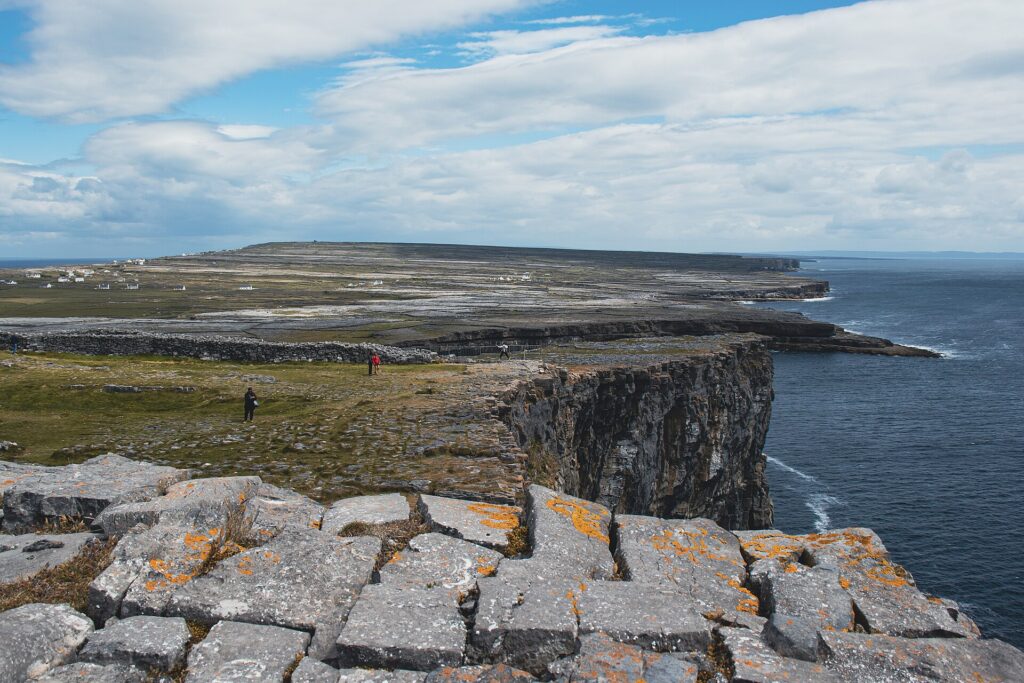
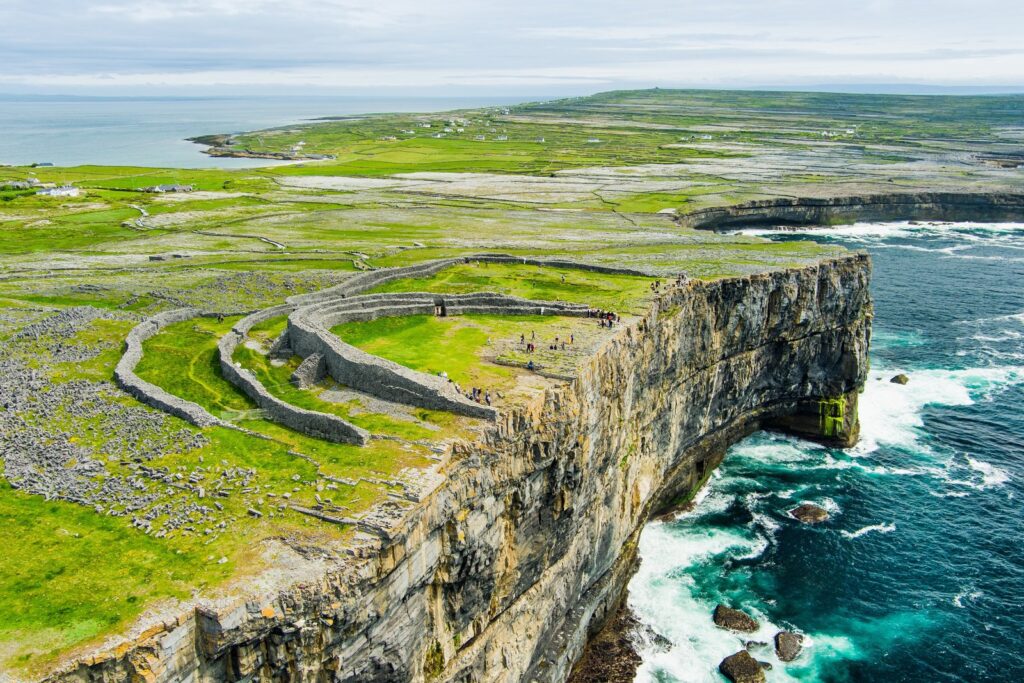
Dún Aonghasa sits where land meets sky meets ocean in the most spectacular way imaginable. This massive semicircular stone fort clings to the edge of Inishmore’s southern cliffs, its three concentric walls dating back nearly 3,000 years. Standing at the cliff edge with nothing between you and America but wind and spray is one of Ireland’s most unforgettable experiences.
The fort’s Irish name, Dún Aonghasa (sometimes spelled Dún Aengus), honors a legendary Fir Bolg chieftain, though archaeologists believe the structure predates those myths. What remains today is only half the original—the other half presumably collapsed into the sea centuries ago, though some scholars argue it was always built this way, deliberately open to the ocean.
Getting to Inishmore and the Fort
Dún Aonghasa is located about four miles west of Kilronan, Inishmore’s main village. To reach the island, you’ll take a ferry from Rossaveal in Connemara (35 minutes) or Doolin in County Clare (depending on conditions, 30-90 minutes). Flights also run from Connemara Regional Airport near Inverin, though most visitors prefer the scenic ferry crossing.
From Kilronan pier, you have several options. Minibuses meet incoming ferries and charge around $10-15 round trip to drop you at the visitor center parking area, about 15 minutes away. You can also rent a bike in Kilronan for roughly $15 per day—the ride out is fairly flat with one significant hill near the fort. Many visitors hire a pony and trap for a traditional tour of the island’s main sites including Dún Aonghasa.
The final approach is always on foot: a well-maintained stone path climbs gently uphill for about three-quarters of a mile from the visitor center to the fort itself. Allow 15-20 minutes for the walk, longer if you’re stopping to photograph the landscape.
Exploring the Stone Fort
The first thing you’ll encounter is the chevaux de frise, a dense field of jagged limestone pillars planted upright in the ground as a defensive barrier. These razor-sharp stones would have made any attack extremely difficult—try imagining a charge through them and you’ll appreciate the ingenuity.
Pass through the outer wall, then the middle wall, and finally enter the inner enclosure. The innermost wall stands up to 13 feet high and 13 feet thick in places, built with enormous stones fitted together without mortar. The craftsmanship is remarkable—these walls have stood for millennia against Atlantic gales.
The cliff edge itself has no safety barrier. Approach with caution, especially in high winds, and never turn your back to the ocean. The drop is sheer and the updrafts powerful. On clear days, the views stretch across the limestone terraces of Inishmore, out to the Connemara mountains, and south toward the Cliffs of Moher.
When to Visit and What to Bring
Summer brings the most reliable ferry service and the longest daylight hours, but also the biggest crowds. May, June, and September offer the best balance—good weather, manageable visitor numbers, and wildflowers across the island’s stone walls. The site is open year-round, though winter ferry schedules are limited and weather can cancel crossings.
The visitor center (admission $4) offers helpful exhibits on the fort’s archaeology and the island’s history. It’s worth the stop before your walk up.
Wear sturdy shoes with good grip—the limestone can be slippery, especially after rain. Bring layers and a windproof jacket regardless of the season. The island is fully exposed to Atlantic weather, and conditions can change quickly. Water and snacks are essential, though there’s a small café at the visitor center.
Combining Dún Aonghasa with Other Island Sites
If you’re spending the full day on Inishmore, which most visitors do, combine Dún Aonghasa with the island’s other remarkable prehistoric sites. Dún Eochla and Dún Eoghanachta are smaller but equally ancient stone forts. The Seven Churches (Na Seacht dTeampaill), despite the name, is a monastic settlement with just two churches but fascinating early medieval ruins.
The village of Kilronan has several good restaurants and pubs where you can fuel up before the ferry back. Tigh Nan Phaidi and Joe Watty’s both serve traditional music sessions most evenings during summer.
Plan for at least four to five hours on the island to see Dún Aonghasa properly and enjoy the journey without rushing. Day trips work well, but staying overnight lets you experience the island after the day-trippers leave, when the ancient stones feel even more timeless.
Want more stories from Ireland’s islands, ancient sites, and hidden corners? Subscribe to The Ultimate Ireland Travel Guide newsletter and get one short story a day in your inbox—the Ireland beyond the guidebooks.