

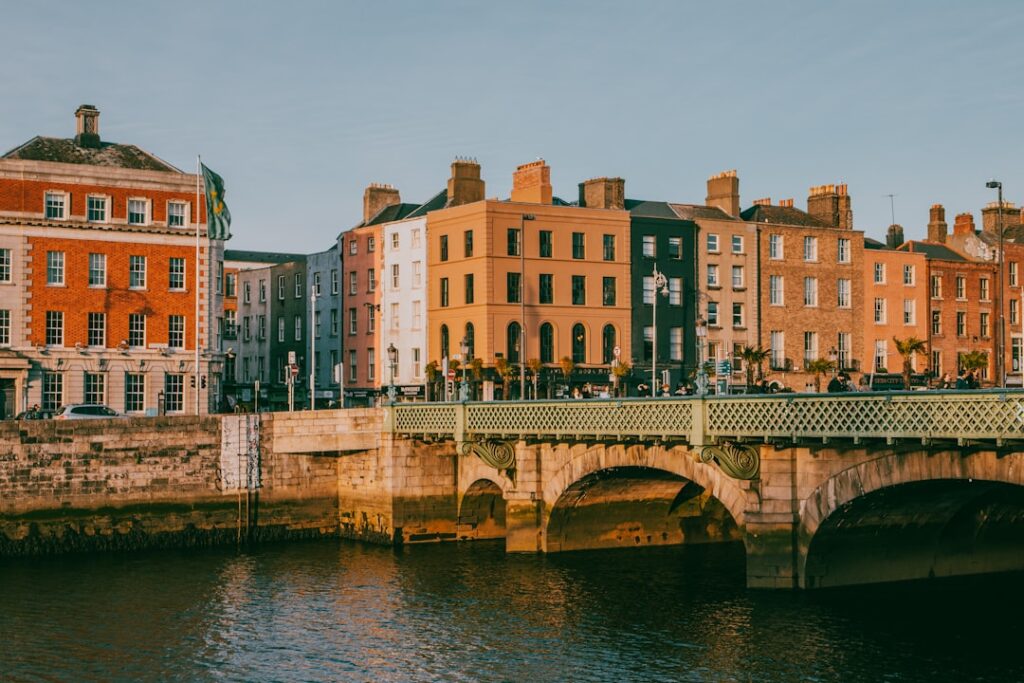
Dublin doesn’t sprawl the way London or Paris does, but its mix of medieval lanes, Georgian squares, and modern districts can disorient first-time visitors. The Liffey cuts the city in two, and neighborhoods shift character block by block. Understanding how Dublin works—and how to move through it—makes all the difference between a stressful visit and one that feels effortless.
Here’s what you need to know to navigate Ireland’s capital like you’ve been here before.
Getting from the Airport to the City Center
Dublin Airport sits about seven miles north of the city center. The Airlink Express buses (routes 747 and 757) run every 10 to 15 minutes and drop you at O’Connell Street, Busáras (the central bus station), and other key points. A one-way ticket costs around $8, and the journey takes 30 to 40 minutes depending on traffic.
Taxis and ride-shares cost $30 to $40 and take roughly the same time. If you’re staying south of the Liffey near St. Stephen’s Green or around Temple Bar, ask the driver to approach via the quays—it’s often faster than cutting through the north side.
Skip the car rental unless you’re heading out of Dublin immediately. Parking is expensive, street layouts are confusing, and you won’t need a car for sightseeing within the city.
Walking, Trams, and Buses: How to Get Around
Central Dublin is compact. You can walk from Trinity College to the Guinness Storehouse in about 35 minutes, passing through Temple Bar, Christ Church Cathedral, and the Liberties along the way. Most major sights sit within a tight loop on either side of the Liffey.
The Luas tram system has two lines—the Green Line runs from the suburbs through St. Stephen’s Green down to Sandyford, while the Red Line crosses the city from east to west, stopping at Heuston Station, the Museum of Modern Art, and Smithfield. Trams are clean, frequent, and easy to use. A single fare costs around $3; buy tickets at the platform machines before you board.
Dublin Bus covers the entire city, but routes can be confusing and buses get stuck in traffic. If you’re planning multiple journeys, grab a Leap Card—a rechargeable smart card that works on buses, trams, and commuter trains. You’ll save about 30% per trip compared to cash fares. Pick one up at any convenience store or Luas station.
Orienting Yourself: North, South, and the Liffey
Dubliners refer to neighborhoods by their relationship to the River Liffey. “Northside” means everything above the river; “southside” is below it. The two halves have distinct personalities.
The southside holds most of the tourist landmarks: Trinity College, Grafton Street shopping, St. Stephen’s Green, the Georgian townhouses of Merrion Square, and the nightlife hubs of Temple Bar and Camden Street. It’s also where you’ll find higher-end restaurants and hotels.
The northside includes O’Connell Street (Dublin’s widest avenue), the General Post Office, the Abbey Theatre, and grittier, more working-class neighborhoods. Smithfield, just northwest of the center, has been gentrifying fast—it’s home to the Jameson Distillery and a growing food scene. The area around Parnell Square and the Dublin Writers Museum is worth a wander, especially if you’re interested in literary history.
Don’t write off the northside. It’s less polished but more authentic, with better pub culture and cheaper meals.
Insider Tips for Moving Through Dublin
O’Connell Street looks grand on a map, but it’s often crowded and feels touristy. For a more pleasant walk, stick to the quays along the Liffey or cut through the smaller streets south of Dame Street.
Temple Bar is the most famous neighborhood, but it’s also the most overpriced and overrun. Wander through during the day to see the cobblestones and street performers, but eat and drink elsewhere—head to the Liberties, Stoneybatter, or Ranelagh for better value and atmosphere.
If you’re catching a train to Galway, Cork, or anywhere west or south, you’ll leave from Heuston Station (Red Luas line). Trains north to Belfast depart from Connolly Station (also accessible by Luas or a short walk from O’Connell Street). Double-check which station you need—mixing them up will cost you time and stress.
Rush hour (8–9:30 a.m. and 5–6:30 p.m.) clogs the streets. If you’re taking a taxi or bus during these windows, add 20 minutes to your expected journey time.
Finally, Dublin’s weather changes fast. Carry a lightweight rain jacket even if the morning looks clear. You’ll use it.
Make the Most of Your Time in Dublin
Dublin rewards slow exploration more than checklist sightseeing. Spend an afternoon in a pub listening to a traditional music session. Walk the canal paths at dusk. Stop into a bakery on a side street. The city’s best moments aren’t always the ones in the guidebooks.
Want more insider tips on exploring Ireland? Subscribe to The Ultimate Ireland Travel Guide newsletter—one short story a week to help you travel smarter.