
Belfast doesn’t announce itself the way Dublin or Galway does. It’s a working city first, a tourist destination second—and that’s precisely what makes it compelling. The shipyards that built the Titanic still loom over the waterfront. Victorian pubs serve pints beside contemporary cocktail bars. And the food scene, often overlooked, rivals anything you’ll find south of the border.
Two days gives you enough time to cover the essentials without rushing, and enough space to wander into neighborhoods that don’t make the typical itinerary.
Where to Stay in Belfast
The Cathedral Quarter is the most atmospheric base—cobbled lanes, live music spilling out of pubs, and walking distance to most of what you’ll want to see. The Merchant Hotel occupies a former bank and delivers old-world luxury without feeling stuffy. For something more modest, the Bullitt Hotel on Church Lane offers compact, well-designed rooms and a central location at half the price.
If you prefer quiet mornings, stay south of the city center near Queen’s University. The area around Botanic Avenue has guesthouses, leafy streets, and easy access to the Ulster Museum and Botanic Gardens. It’s a 15-minute walk or a quick bus ride into the city center.
What to Do: Titanic Quarter and City Center
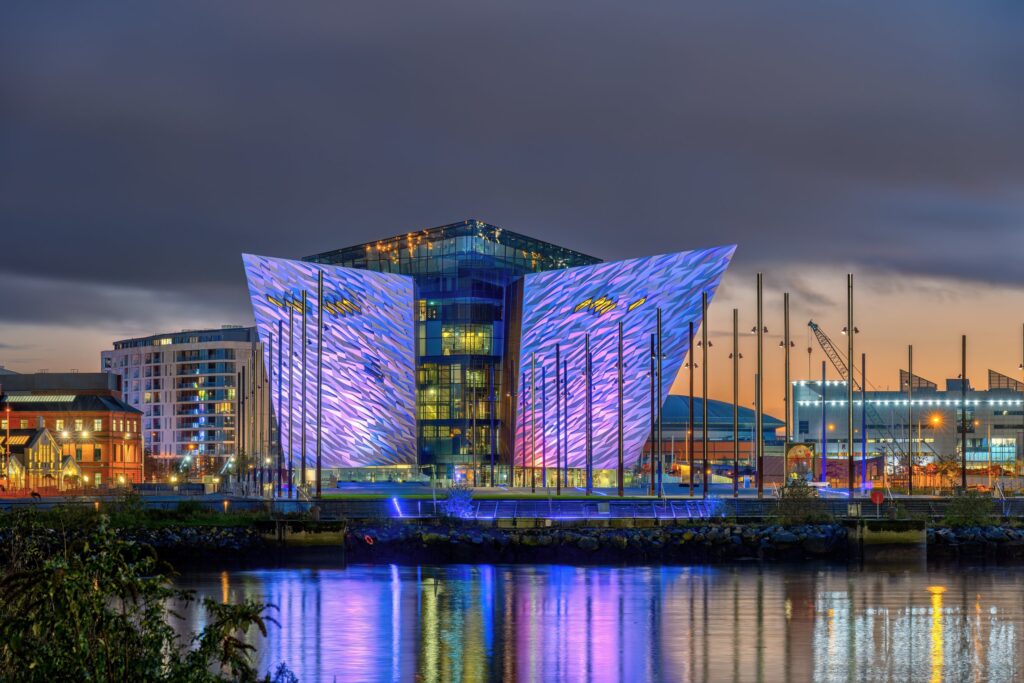
Start at Titanic Belfast, the angular museum that dominates the old shipyard. The building sits on the exact slip where the Titanic was fitted out before her maiden voyage. Inside, nine galleries walk you through the ship’s construction, launch, sinking, and rediscovery. It’s thorough without being maudlin. Tickets run around $28, and you’ll want two hours minimum. Book ahead—it’s one of Ireland’s most-visited attractions.
Afterward, walk the waterfront to SS Nomadic, the last surviving White Star Line vessel, berthed beside the museum. Then loop back toward the city center via the Odyssey Pavilion if you want lunch near the water.
Spend your afternoon in the Cathedral Quarter. St. Anne’s Cathedral anchors the neighborhood—climb the Spire of Hope for city views if the weather cooperates. Then lose yourself in the side streets: Hill Street, Commercial Court, Waring Street. Duck into The Duke of York, a narrow Victorian pub plastered with memorabilia and often hosting live music by early evening.
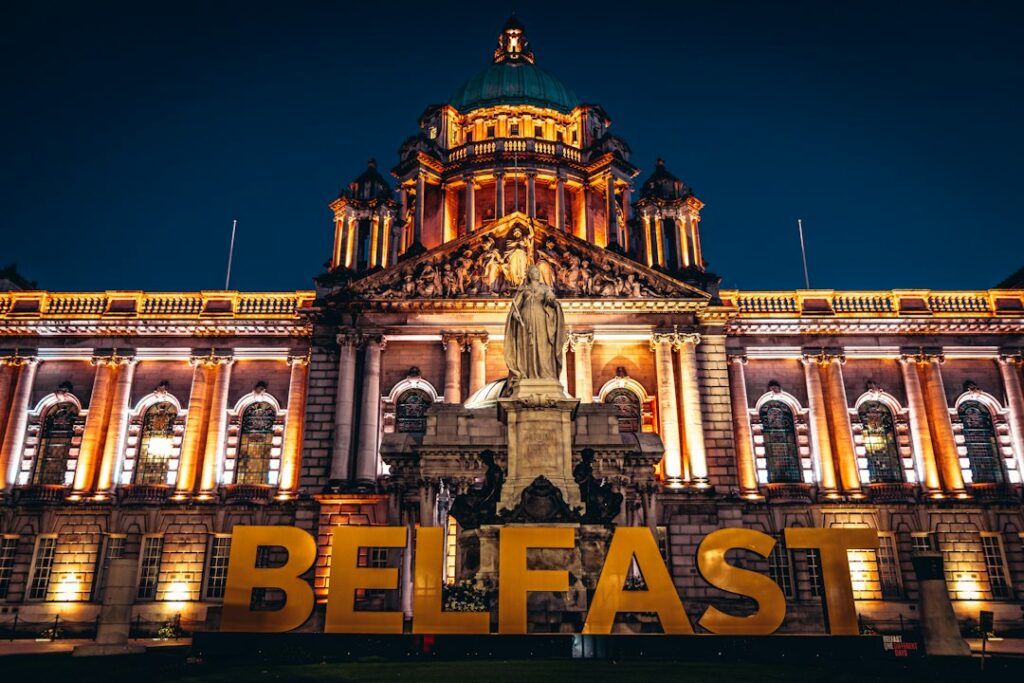
On day two, visit City Hall—free guided tours run several times daily and offer surprising insight into Belfast’s civic history. The building itself is Edwardian Baroque and worth the visit for the marble staircase alone. From there, it’s a short walk to the Ulster Museum in the Botanic Gardens. The museum covers everything from Irish art to natural history to the Spanish Armada treasure recovered off the Antrim coast. Entry is free.
Where to Eat and Drink
Belfast’s food culture has quietly become one of the island’s best. OX on Oxford Street earned a Michelin star for modern Irish cooking—expect local seafood, aged beef, and a wine list that takes the edge off the bill. Book well ahead; it’s small and popular.
For something more relaxed, head to Howard Street. Mourne Seafood Bar serves oysters, chowder, and whole crabs in a laid-back room that feels more neighborhood joint than destination restaurant. The seafood comes straight from their own shellfish beds in County Down.
The Crown Liquor Saloon on Great Victoria Street is the most famous pub in Belfast—a Victorian gin palace with snugs, tile work, and enough ornament to make you forget you’re ordering a pint. It’s touristy, yes, but it’s touristy for good reason. Go mid-afternoon to beat the crowds.
For traditional music, try Madden’s Bar on Berry Street or The Sunflower on Union Street. Both are low-key neighborhood pubs where sessions happen organically, usually Thursday through Saturday nights. Arrive by 9 p.m. if you want a seat.
If you’re after coffee and breakfast, visit Established Coffee on Hill Street. It’s tiny, the pastries are excellent, and the flat whites are some of the best in the city.
Day Trips and Practical Notes
If you have an extra day, the Causeway Coastal Route is an hour north and can be done as a long day trip. Viator runs full-day tours that cover the Giant’s Causeway, Carrick-a-Rede Rope Bridge, and the coastal villages in between. Alternatively, hire a car and drive it yourself—the route is straightforward, and driving on the left feels less daunting outside the city.
Belfast is compact and walkable. You won’t need a car unless you’re heading out of town. The black taxis offer city tours focused on the murals and recent history—worthwhile if you want local context, though be prepared for some heavy subject matter.
The city works year-round, though summer brings longer days and better weather for coastal day trips. Spring and autumn are quieter and often cheaper for accommodation.
Subscribe for More Ireland
Want one short Ireland story in your inbox each day? Subscribe to The Ultimate Ireland Travel Guide newsletter—no fluff, just the kind of specific, practical insight that makes a trip better.
Heads up — some links in this article are affiliate links. If you sign up through them, we may earn a small commission at no extra cost to you. We only recommend tools we use ourselves.