
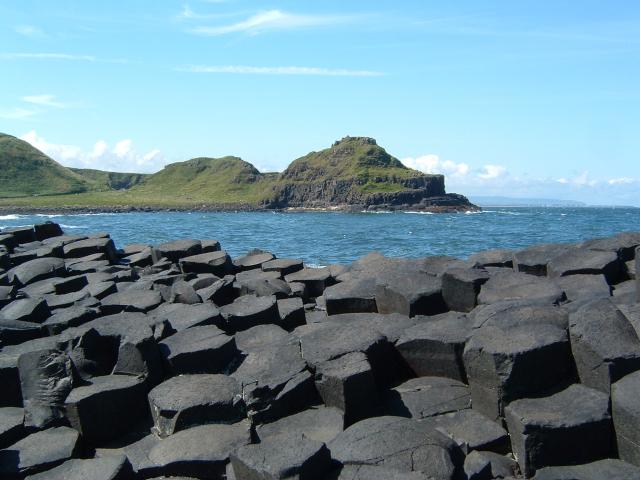
The Giant‘s Causeway, a UNESCO World Heritage Site on the north coast of County Antrim, is one of those rare places that lives up to the hype. Forty thousand interlocking basalt columns, formed by ancient volcanic activity, step down into the Atlantic like a natural staircase built for myths. The legend of the giant Finn McCool is good storytelling, but the geology is what stops you in your tracks.
The site sits along the Causeway Coastal Route between the towns of Bushmills and Ballycastle, about 60 miles north of Belfast. Most visitors arrive as part of a day trip from Belfast or Derry, though basing yourself in Bushmills or Portrush gives you more flexibility with timing.
What It Costs to Visit
The basalt columns themselves are free—they’re a natural formation on public land. But the official Giant’s Causeway Visitor Centre, operated by the National Trust, charges an admission fee of around $16 per adult. This includes access to the exhibition, parking, and the shuttle bus down to the stones (though the walk is only about 15 minutes each way and worth doing on foot).
If you’re a National Trust member, entry is free. Non-members can park at the official car park for around $8 if they skip the visitor center, but you’ll still walk the same path to the stones. There’s no way to avoid the official site entirely unless you hike in from the coastal path, which adds significant time and difficulty.
The visitor center has a café and restrooms, and while the exhibition is decent, most people are here for the columns. If you’re on a budget, pay for parking, use the facilities, and head straight down to the Causeway itself.
When to Go (and When to Avoid)
The Giant’s Causeway sees over a million visitors annually, and most of them arrive between June and August, particularly between 11 a.m. and 3 p.m. If you visit midday in summer, expect to share the stones with hundreds of others. Photos of the formations without people in them become nearly impossible.
The best time to visit is early morning or late afternoon, especially in shoulder season—April, May, September, and October. The light is better for photography at these times, and you’ll have more space to explore. Sunset visits in summer can be spectacular, though the center closes at 6 p.m. in peak season (and earlier in winter), so you’ll need to park outside and walk in.
Winter visits are quieter still, but the coastal wind is relentless, and rain makes the columns slippery. If you go between November and February, dress in serious layers and expect dramatic skies rather than blue-sky postcards.
What to Actually Do There
Most visitors spend 60 to 90 minutes at the Causeway. The main formations—the Grand Causeway, the Giant’s Boot, and the honeycomb of hexagonal columns—are all within easy walking distance of each other. Wear shoes with good grip; the stones are uneven and can be slick when wet.
If you have time and reasonable fitness, the cliff-top walk east toward Dunseverick Castle or west toward the Carrick-a-Rede Rope Bridge offers some of the best coastal scenery in Ireland. The path is part of the Causeway Coast Way, and either direction gives you views back toward the columns from above. The hike to Dunseverick is about 4 miles one way; Carrick-a-Rede is roughly 5 miles west.
Just west of the main Causeway site, the Giant’s Organ and Chimney Stacks are worth the short detour. These vertical columns rise up to 40 feet and are often less crowded than the main formations.
Practical Tips
If you’re driving, the official car park is well signposted off the A2 coastal road. Arrive before 10 a.m. in summer to guarantee a spot. Parking fills completely by midday on busy days, and there’s no overflow lot.
The shuttle bus from the visitor center to the stones runs continuously, but the downhill walk takes 10 to 15 minutes and saves the wait. The uphill return is steeper but manageable for most visitors.
Bushmills, just two miles south, is the nearest town and home to the Old Bushmills Distillery, Ireland’s oldest licensed whiskey distillery. If you’re visiting the Causeway, it’s an easy add-on, and the distillery tour is one of the best in the country.
Many visitors combine the Giant’s Causeway with the Carrick-a-Rede Rope Bridge (about 20 minutes west by car) and Dunluce Castle (15 minutes southwest). All three can be done in a long day from Belfast, though it’s a lot of driving. Basing yourself on the north coast for a night or two makes the experience far less rushed.
If you’d rather skip the logistics, Viator offers guided day trips from Belfast that cover the Causeway, Carrick-a-Rede, and the coastal route in one go.
For one short story a week about Ireland’s counties, landmarks, villages, and hidden corners, subscribe to The Ultimate Ireland Travel Guide newsletter. We skip the fluff and send you what’s worth knowing.
Heads up — some links in this article are affiliate links. If you sign up through them, we may earn a small commission at no extra cost to you. We only recommend tools we use ourselves.