The Wicklow Way cuts through some of Ireland’s most dramatic landscapes, yet it starts just a short train ride from Dublin. At 80 miles, it’s Ireland’s oldest waymarked trail, winding through the Wicklow Mountains from Marlay Park in south Dublin to Clonegal in County Carlow. You don’t need to tackle the whole route to experience its magic—day hikes and shorter sections offer plenty of rewards.
What Makes the Wicklow Way Special
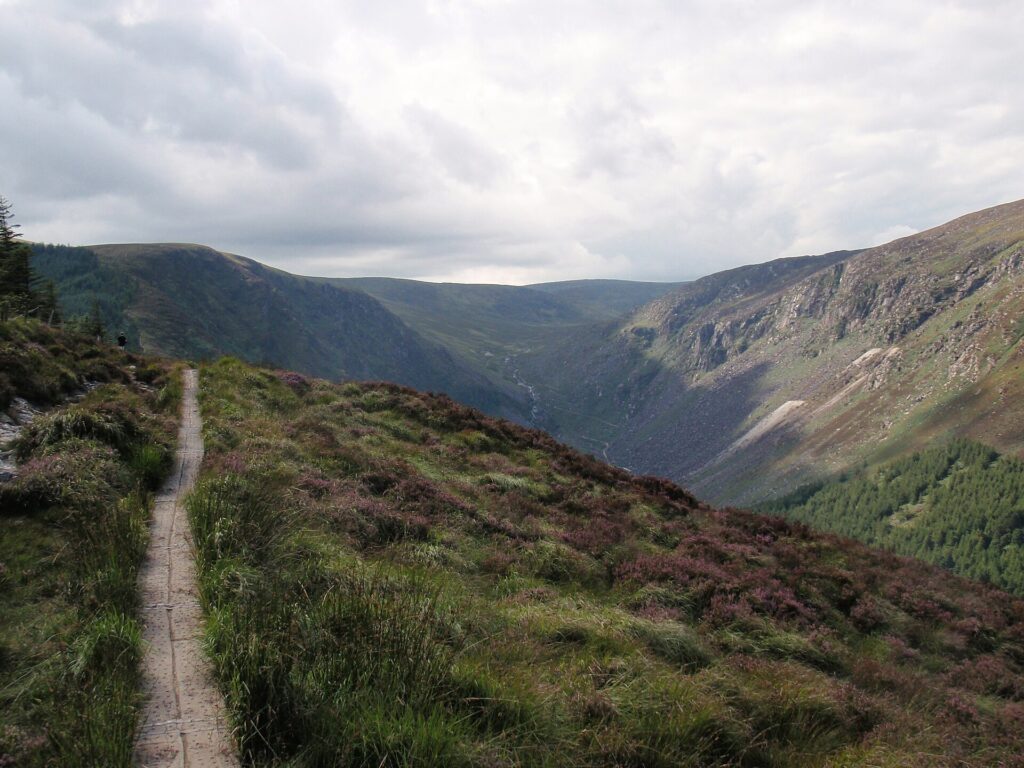
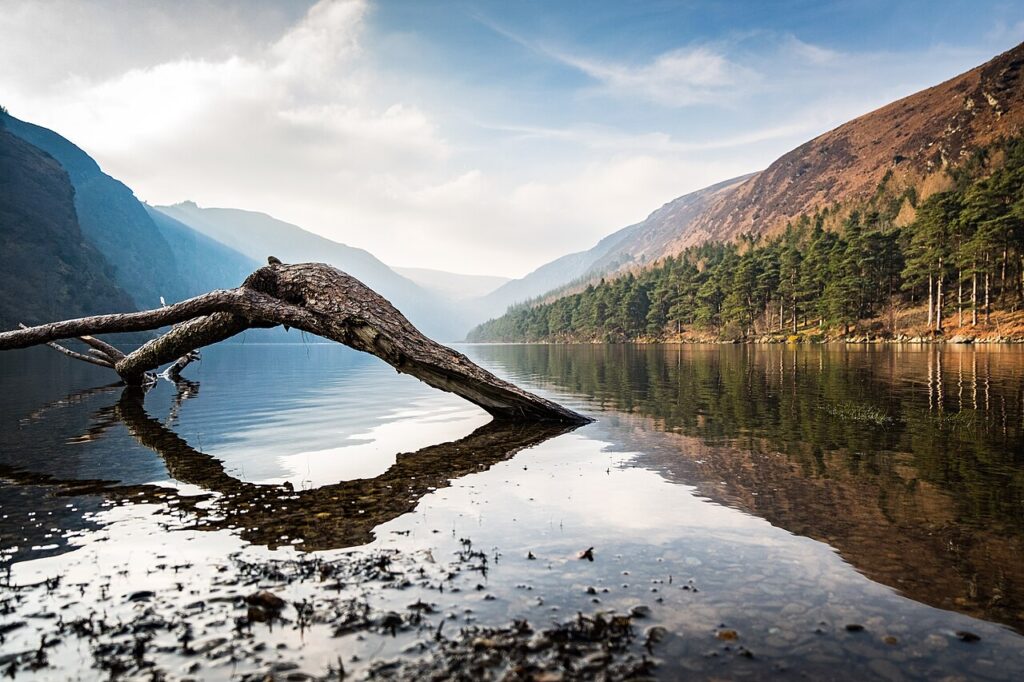
The trail takes you through constantly changing terrain. You’ll cross open moorland with sweeping views, descend into wooded valleys, pass glacial lakes, and walk ancient tracks that drovers once used to move cattle to Dublin markets. The middle sections around Glendalough and Glenmalure are the most dramatic, where granite peaks rise above deep valleys carved during the last ice age.
Unlike some of Ireland’s coastal routes, the Wicklow Way offers solitude even in summer. You’ll encounter sheep more often than crowds, especially on weekdays. The trail is well-marked with yellow arrows and wooden posts, making navigation straightforward in good weather. In mist, however, the open mountain sections require a map and compass.
Best Sections for Day Hikers
The Glendalough to Glenmalure section is the most popular day hike, and for good reason. This 8-mile stretch starts at the famous monastic site of Glendalough, climbs past the old mining village site at the top of Glenealo Valley, then descends into remote Glenmalure. The views from the ridge are stunning on clear days. Park at the Glendalough Visitor Centre (arrive before 10 a.m. in summer) and arrange a taxi back from Glenmalure, or hike back the same way.
The Knockree to Glendalough section covers about 12 miles and includes a climb over White Hill with panoramic views of the Great Sugar Loaf and the Powerscourt Waterfall valley. This is proper mountain walking with significant elevation gain, so come prepared.
For an easier introduction, try the Marlay Park to Knockree section. This 12-mile walk gradually leaves Dublin’s suburbs behind, passing through forestry and farmland before reaching the foothills. It’s a good shakedown hike if you’re testing gear for a longer trek.
Practical Tips for Walking the Wicklow Way
Weather in the Wicklow Mountains changes fast. Bring waterproofs even on sunny mornings, and pack layers—it’s often 10 degrees cooler and windier on exposed ridges than in the valleys. Solid hiking boots are essential; the trail gets boggy in places, particularly after rain.
For water, refill at streams in the mountains rather than carrying heavy loads from the start. The water is generally clean at altitude, though many hikers use a filter.
Accommodation along the route includes hostels, B&Bs, and small hotels in towns like Roundwood, Glendalough, and Glenmalure. Book ahead from June through September. If you’re doing the full trail, most hikers take 5 to 7 days, averaging 12 to 16 miles daily.
Public transport access is good at both ends and at Glendalough. Dublin Bus route 185 runs to Marlay Park. St. Kevin’s Bus Service connects Dublin to Glendalough twice daily. For other access points, you’ll need a car or taxi.
When to Go
May through September offers the most reliable weather and longest daylight hours. The heather blooms purple across the moorlands in August, creating spectacular color. October can be beautiful with autumn foliage, but expect more rain and shorter days.
Avoid January and February unless you’re experienced in winter mountain conditions. Snow and ice are possible at higher elevations, and some sections become treacherous. March and April are transitional months—you might get brilliant clear days or horizontal rain.
Weekends see more hikers, particularly on the Glendalough sections. If you prefer solitude, walk mid-week or tackle the southern sections beyond Glenmalure, which see far fewer boots.
The Wicklow Way proves you don’t need to travel to Ireland’s remote corners for wild, dramatic hiking. Some of the country’s finest mountain scenery lies an hour from the capital, waiting to be walked.
Want more Irish hiking routes, hidden trails, and insider tips delivered to your inbox? Subscribe to The Ultimate Ireland Travel Guide newsletter—one short story a week to help you explore Ireland beyond the guidebooks.
The Ultimate Ireland Travel Guide
The complete companion to the whole island — Republic and North. Every route timed, every “leave by” hour, where to stay, what to skip, and the local places that never make the tour-bus lists. In paperback and on Kindle.
See it on Amazon →Or start with the free 14-day itinerary — the whole island in one loop, printable.