
The Causeway Coastal Route stretches 120 miles along Northern Ireland’s Antrim coast, connecting Belfast to Derry (Londonderry) through some of the most spectacular scenery in Ireland. This drive rivals the Wild Atlantic Way for drama but sees fewer crowds, winding past the Giant’s Causeway, Carrick-a-Rede Rope Bridge, the Glens of Antrim, and dozens of ruined castles perched on clifftops.
You can drive the route in a single day, but it deserves at least two or three to explore properly. The road hugs the coast for most of its length, offering constant views of the Irish Sea and, on clear days, Scotland’s coastline just 12 miles across the water.
Planning Your Drive
The official route follows the A2 coastal road from Belfast north to Ballycastle, then west to Derry. Most travelers start in Belfast, spend their first night in Ballycastle or Bushmills, and finish in Derry on day two or three.
Rent a car in Belfast—automatic transmissions are widely available if you’re not comfortable with a manual. Remember you’ll be driving on the left, and these coastal roads are narrow with plenty of bends. Take your time.
Spring through early fall offers the best weather, though the route is spectacular year-round. Summer (June through August) brings the longest days and warmest temperatures, but also the biggest crowds at major sites like the Giant’s Causeway. May and September offer a sweet spot of decent weather and fewer visitors.
Download offline maps before you leave—mobile coverage can be patchy along remote stretches of coast.
Must-Stop Highlights
North of Belfast, your first major stop is Carrickfergus, home to Ireland’s best-preserved Norman castle. The 12th-century Carrickfergus Castle sits right on the harbor and takes about an hour to explore. Entry costs around $8.
Continue north to the Glens of Antrim, nine lush valleys that run from the Antrim plateau down to the sea. Stop in Glenariff, often called the “Queen of the Glens,” to hike the waterfall trail through Glenariff Forest Park.
Cushendun, a picture-perfect village at the mouth of one glen, has whitewashed cottages and a small harbor worth an hour of wandering. Just south, the Cushendun Caves—400-million-year-old sea caves carved into the cliffs—are free to explore.
Ballycastle makes an excellent base for the night. This traditional market town has good restaurants, cozy pubs, and sits close to the route’s biggest attractions.
The Giant’s Causeway, eight miles west of Ballycastle, is the route’s headline act. These 40,000 interlocking basalt columns, formed by volcanic eruptions 60 million years ago, deserve at least two hours. Arrive before 9 a.m. or after 4 p.m. to avoid tour bus crowds. The visitor center charges around $18 for parking and admission, but you can walk down from the clifftop for free if you find roadside parking.
Two miles east, the Carrick-a-Rede Rope Bridge sways 100 feet above the ocean, connecting the mainland to a tiny fishing island. Cross if you dare—it’s perfectly safe but definitely thrilling. Timed tickets cost around $15 and sell out in summer, so book ahead through Viator or directly with the National Trust.
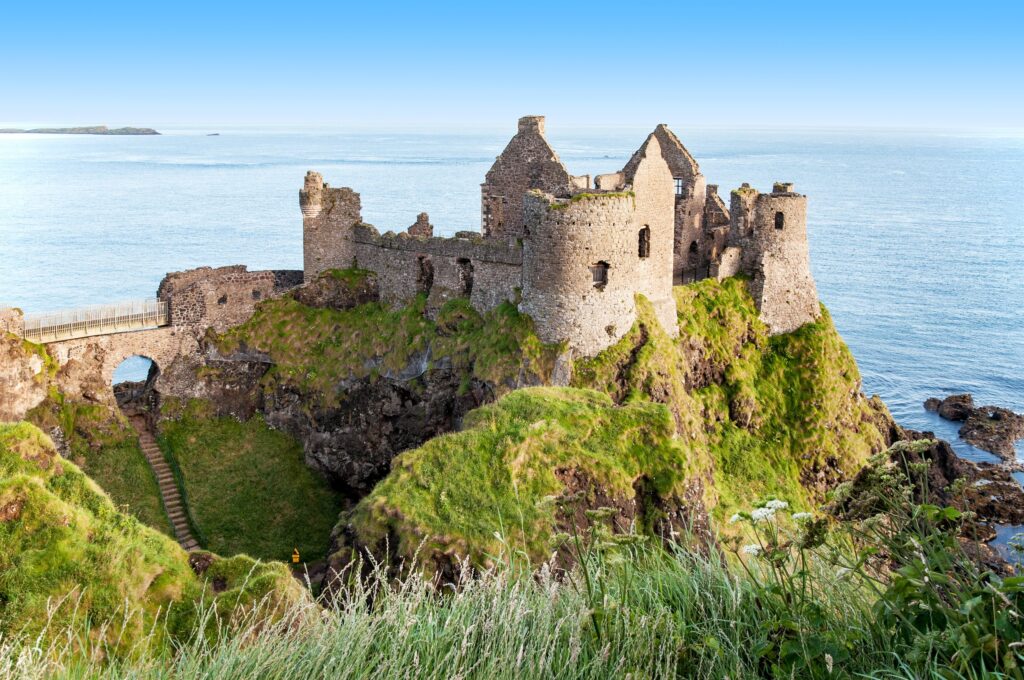
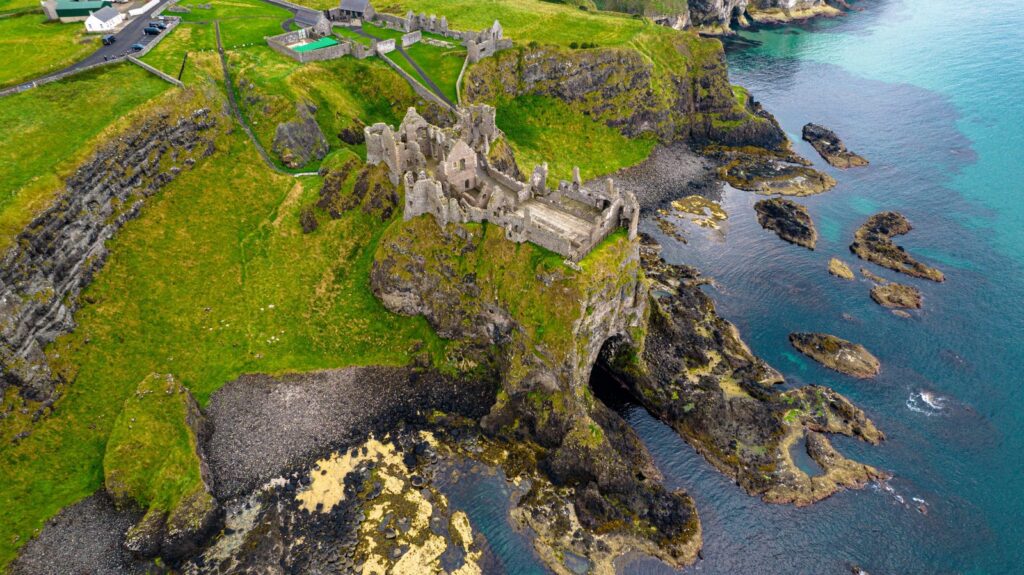
Dunluce Castle, a magnificent ruin perched on a cliff edge, sits between the Causeway and Bushmills. The medieval castle is partially collapsed into the sea—its kitchen fell into the ocean during a storm in 1639. Entry is about $8.
Where to Eat and Drink
Stop at the Old Bushmills Distillery in Bushmills village for a tour and tasting. This is the world’s oldest licensed whiskey distillery (since 1608), and tours run daily. Book ahead in summer. Tours cost around $20.
For lunch, try Ursa Minor Bakehouse in Ballycastle for excellent soups and freshly baked bread, or the Nook in Dunluce for creative bistro fare with ocean views.
In Portrush, a Victorian seaside resort town, grab fish and chips at Neptune & Prawn or book a table at 55 North for fine dining with coastal ingredients.
Harry’s Shack in Portstewart serves exceptional seafood in a casual beach shack setting—the mussels and crab sandwiches are legendary. No reservations, so arrive early or expect to wait.
Finishing in Derry
The final stretch from Portstewart to Derry passes long sandy beaches at Portstewart Strand and Benone, perfect for a walk to stretch your legs. Downhill Demesne, the romantic ruin of a Bishop’s palace with a clifftop Mussenden Temple, makes a dramatic final stop before the route ends in Derry.
Derry’s intact 17th-century city walls are the best-preserved in Ireland and make a perfect conclusion to the coastal drive. Walk the full circuit in about an hour, then explore the city’s excellent restaurants and traditional music pubs.
The entire route, including stops at major attractions and meals, will cost around $150–200 per day per person, not including accommodation or car rental. Budget an extra $100 per day for a comfortable B&B or hotel.
Want more detailed Ireland itineraries, hidden coastal villages, and local food spots delivered to your inbox? Subscribe to The Ultimate Ireland Travel Guide newsletter—one short story a day to help you explore Ireland beyond the guidebooks.
Heads up — some links in this article are affiliate links. If you sign up through them, we may earn a small commission at no extra cost to you. We only recommend tools we use ourselves.