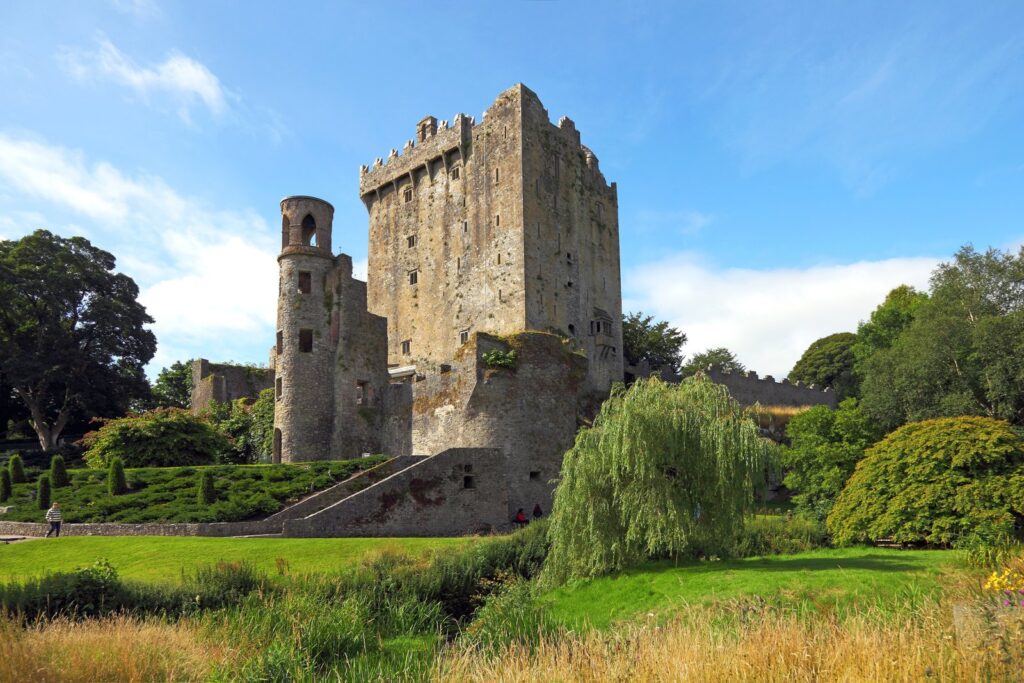
Blarney Castle rises from the green countryside of County Cork, eight kilometers northwest of Cork City. Built nearly six hundred years ago, it’s home to the Blarney Stone — a block of limestone set into the battlements that millions have leaned back to kiss, hoping to gain the “gift of the gab.” But beyond the famous ritual, the castle grounds offer poison gardens, ancient yew walks, and fairy glens worth a full morning or afternoon.
Here’s how to visit Blarney Castle without the crowds, what to see beyond the stone, and how to make the most of your time in one of Ireland’s most visited heritage sites.
Getting to Blarney Castle
Blarney village sits just off the N20, the main road connecting Cork City to Limerick and points north. If you’re driving, follow signs from Cork City center — the journey takes 15 minutes. Parking costs around $6 and fills up by late morning in summer.
Bus Éireann route 215 runs hourly from Cork’s Parnell Place station to Blarney village, dropping you a five-minute walk from the castle gates. The round-trip fare is approximately $8. If you don’t have a car, this is the easiest option.
Plan to arrive before 10 a.m. or after 3 p.m. to avoid tour bus crowds. The castle opens at 9 a.m. year-round, and early risers often have the battlements to themselves.
Kissing the Blarney Stone (and Climbing to It)
The Blarney Stone sits on the parapet of the castle’s upper wall, 85 feet above the ground. To reach it, you’ll climb a tight spiral staircase — 127 stone steps, narrow and worn smooth by centuries of traffic. If you have mobility concerns or claustrophobia, know that the staircase is steep and unlit in places.
At the top, you’ll lean backward over a gap (with iron rails and an attendant to steady you) and kiss the stone. It’s awkward, slightly absurd, and completely optional — but it’s what most people come for. The wait can stretch to 45 minutes during peak season; arriving early or late cuts that significantly.
Admission to the castle and grounds costs around $22 for adults, $10 for children. Tickets include access to the castle, gardens, and all walking trails. Buy online in advance to skip the ticket queue.
Exploring the Grounds Beyond the Castle
Most visitors miss the best part of Blarney: the 60 acres of landscaped gardens, ancient woodlands, and hidden follies. After descending the castle, follow the marked trails through the Rock Close, a mossy glen with massive boulders, druidic stones, and a Wishing Steps waterfall. Local legend assigns wishes to those who walk the steps backward with their eyes closed — take that as you will.
The Poison Garden, enclosed by black iron gates, grows hemlock, wolfsbane, mandrake, and other toxic plants, each labeled with its lethal history. It’s small but fascinating, especially for anyone interested in medieval medicine and folklore.
Don’t skip the arboretum and fern garden near the lake. The giant redwoods and 200-year-old yews create a canopy that stays cool even in summer. Benches overlook Blarney Lake, and the entire loop takes about 30 minutes at a relaxed pace.
Where to Eat and What Else to See Nearby
Blarney village has several cafés and pubs within walking distance of the castle. The Muskerry Arms and Blair’s Inn both serve solid lunches — fish and chips, seafood chowder, and hearty sandwiches for around $15 to $18. Blair’s Inn, a 10-minute walk along the river, has a lovely beer garden and often features live trad music on weekends.
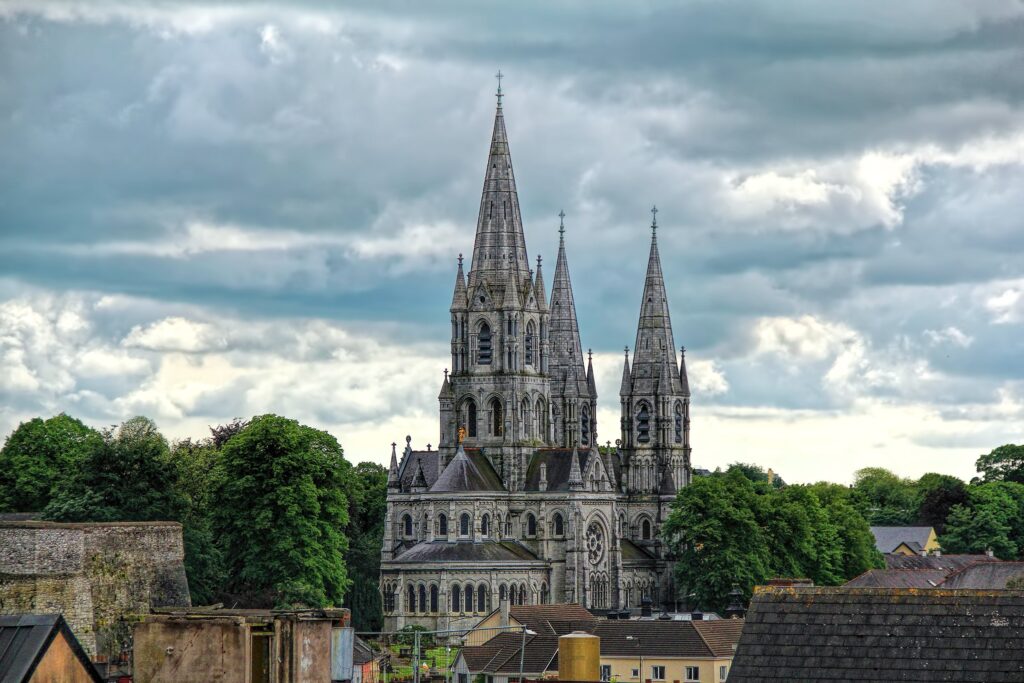
If you’re driving, combine Blarney with a visit to the Jameson Distillery in nearby Midleton (30 minutes southeast) or a loop through the villages of Macroom and Ballincollig. Cork City is close enough for an afternoon return — the English Market and St. Fin Barre’s Cathedral are both worth your time.
Blarney Castle closes around 5 p.m. in winter and 6:30 p.m. in summer, with last entry an hour before closing. Budget two to three hours for the full experience: castle climb, stone kiss, and a proper wander through the gardens.
Looking for more insider tips on Ireland’s castles, villages, and hidden corners? Subscribe to The Ultimate Ireland Travel Guide newsletter — one short story a day, straight to your inbox.