Glendalough—the name means “valley of the two lakes” in Irish—is a 6th-century monastic settlement tucked into the Wicklow Mountains, about an hour’s drive south of Dublin. Founded by St. Kevin around 545 AD, the site grew into one of Ireland’s most important centers of learning before Viking raids and eventual decline left the stone ruins you see today. Between the round tower, ancient churches, and two dark glacial lakes surrounded by forest and mountain trails, Glendalough is one of the country’s most rewarding day trips.
What You’ll See at the Monastic Site
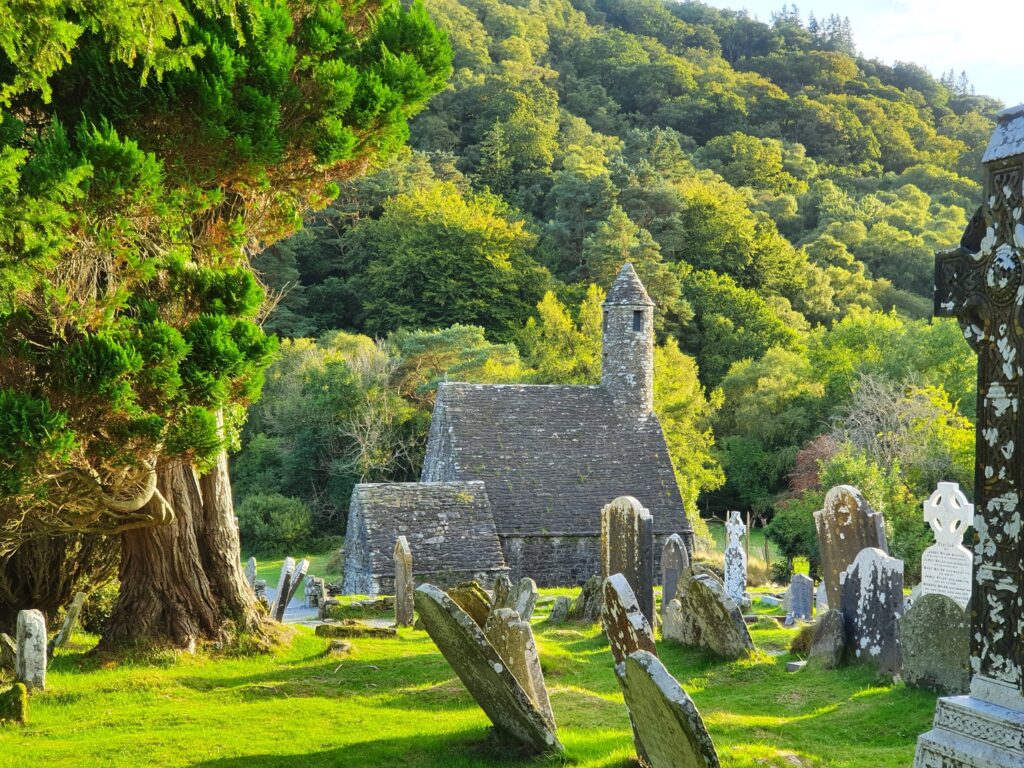
The Lower Lake area holds the main monastic complex, which you can explore on foot in about an hour. The centerpiece is the 30-meter-tall round tower, built in the 10th century as a bell tower and refuge during Viking attacks. It’s one of the best-preserved in Ireland, and its conical cap is still intact.
Next to the tower stands the roofless Cathedral of St. Peter and St. Paul, the largest structure on the site, with a beautiful Romanesque chancel arch. Just east, you’ll find St. Kevin’s Church, nicknamed “St. Kevin’s Kitchen” for its round belfry that resembles a chimney. The stone-roofed building is remarkably complete for its age.
Walk through the original stone gateway—one of the few surviving monastic gateways in Ireland—and you’ll pass several smaller churches, high crosses, and graveyards. Signs explain the history, but the site is mostly open-air and free to wander.
The Upper Lake, a 10-minute walk west along a wooded path, is quieter and more scenic. Here you’ll find the remains of Reefert Church and St. Kevin’s Cell, a small stone beehive hut perched on a rocky ledge above the lake. The setting is stunning—especially early or late in the day when the light hits the water and cliffs.
Hiking the Trails Around Glendalough
Glendalough is also the gateway to some of Wicklow’s best walks. The Glendalough Green Road is an easy 8-kilometer round trip that follows an old miners’ route through the valley, offering views of both lakes and the surrounding peaks. It’s mostly flat and suitable for families.
For something more challenging, the Spink and Glenealo Valley loop is a 10-kilometer trail that climbs steeply above the Upper Lake, with dramatic views down into the glacial valley. The path along the Spink ridge can be narrow and exposed, so wear proper hiking boots and check the weather before you go.
The Wicklow Way, Ireland’s oldest long-distance trail, also passes through Glendalough. You can hike a section north toward the Sally Gap or south toward the village of Glenmalure. Trail maps are available at the visitor center near the entrance to the Lower Lake car park.
Practical Details: Getting There and When to Visit
Glendalough is located off the R756 in County Wicklow, about 50 kilometers south of Dublin. The drive takes around an hour via the M50 and N11, then west through Laragh village. There are two car parks: one at the Lower Lake (closest to the monastic site) and one at the Upper Lake (better for hiking). Parking costs around $6 for the day, payable at the machines.
If you’re not driving, St. Kevin’s Bus runs daily services from Dublin to Glendalough, departing from near St. Stephen’s Green. The round-trip fare is about $25. Viator also offers guided day trips that combine Glendalough with stops at Wicklow’s Powerscourt Estate or the Sally Gap.
The site is open year-round and free to explore, though the visitor center (which has exhibits and a short film) charges a small admission fee—around $5 for adults. Summer weekends can be crowded, especially between June and August. For the best experience, aim for a weekday morning or visit in spring or autumn when the colors are vivid and the trails less busy.
Bring layers and rain gear—Wicklow weather is famously unpredictable—and wear sturdy shoes if you plan to hike. The Glendalough Hotel in Laragh village, just a few minutes’ drive away, serves reliable pub food and is a good spot for lunch after your visit.
Why Glendalough Belongs on Your Ireland Itinerary
Glendalough offers something rare: a combination of ancient history, natural beauty, and accessible hiking all in one place. It’s less touristy than the Cliffs of Moher or the Ring of Kerry, but just as memorable. Whether you come for the monastic ruins, the mountain trails, or simply the stillness of the Upper Lake at dawn, it’s a place that stays with you.
If you’re based in Dublin and have a day to spare, this is one of the best ways to spend it. Pack a picnic, take your time, and don’t skip the walk to the Upper Lake—it’s the most beautiful part of the valley.
Want more insider tips and hidden corners of Ireland delivered to your inbox? Subscribe to The Ultimate Ireland Travel Guide newsletter—one short story a day, straight from the source.
Heads up — some links in this article are affiliate links. If you sign up through them, we may earn a small commission at no extra cost to you. We only recommend tools we use ourselves.