
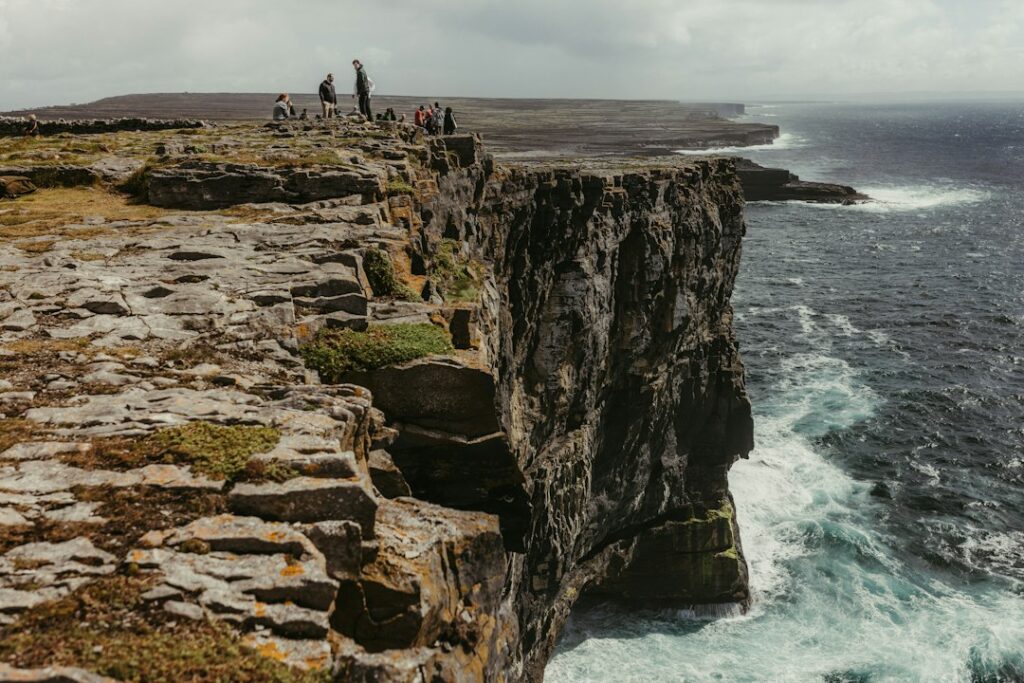
Inishmore (Inis Mór in Irish) sits nine miles off the Galway coast, the largest and most visited of the three Aran Islands. This windswept limestone island stretches seven miles long and two miles wide, wrapped in drystone walls, scattered with ancient forts, and edged by some of the most dramatic coastal scenery in Ireland. It’s a place where Irish is still spoken daily, where farming and fishing rhythms dictate island life, and where history reaches back thousands of years.
A day trip from Galway or Doolin gives you a taste, but staying overnight lets you experience the island after the ferries leave—when the quiet returns and you can walk the roads in near-solitude.
Getting to Inishmore
Ferries run year-round from Rossaveal in Connemara (about 25 miles west of Galway city) and seasonally from Doolin in County Clare. The crossing from Rossaveal takes 40 minutes; from Doolin, about 30 minutes, depending on sea conditions. Most operators offer shuttle buses from Galway city to the Rossaveal ferry terminal, included in your ticket price.
You can also fly. Aer Arann Islands operates small aircraft from Connemara Airport near Inverin, landing on Inishmore’s tiny airstrip in under 10 minutes. It’s pricey—around $60 each way—but the views over Galway Bay and the Burren are spectacular, and it’s an experience in itself.
Book ferries in advance during summer and on weekends. Weather can delay or cancel sailings, especially in winter, so build flexibility into your plans.
Dún Aonghasa: The Island’s Crown Jewel
Dún Aonghasa (Dún Aengus) is Inishmore’s must-see attraction: a prehistoric stone fort perched on a 300-foot cliff edge at the island’s western extremity. The fort’s three concentric semicircular walls date back at least 3,000 years, though no one knows for certain who built it or why. The innermost enclosure sits right at the cliff’s precipice—there’s no railing, just sheer drop to the Atlantic below.
The walk from the visitor center to the fort takes about 20 minutes uphill over bare limestone. Wear sturdy shoes; the rock is uneven and slippery when wet. The visitor center charges around $5 admission and includes a small exhibition on the island’s archaeology. Go early morning or late afternoon to avoid tour groups.
The views from the fort are staggering: nothing but ocean to the west, the Connemara mountains to the north, and the limestone terraces of the island rolling away to the east.
Getting Around the Island
Most visitors rent bicycles at the pier in Kilronan, the island’s only village. Expect to pay around $15 for the day. The main road from Kilronan to Dún Aonghasa is about four miles, gently uphill, and takes 30 to 40 minutes each way. Side roads branch off to smaller forts, churches, and beaches.
Minibus tours meet every ferry, offering 2.5-hour loops around the island with stops at the major sites. They cost around $15 per person and work well if you’re short on time or don’t want to cycle. Pony traps are also available—charming but slow, and more expensive.
If you’re reasonably fit, cycling is the best option. It gives you the freedom to stop where you want, explore the smaller ruins, and take the backroads through farmland where the stone walls form an endless gray maze.
What Else to See
Beyond Dún Aonghasa, Inishmore holds a remarkable concentration of ancient sites. The Seven Churches (Na Seacht dTeampaill) near the village of Eoghanacht is actually a monastic settlement dating to the 8th century, with two ruined churches, several High Crosses, and dozens of grave slabs. It’s peaceful and usually empty.
Dún Dúchathair (the Black Fort) sits on the southern cliffs, less visited but equally dramatic. The walls cling to a promontory fort nearly cut off from the island by a deep fissure in the rock. Dún Eochla, near the island’s center, offers 360-degree views from its hilltop perch.
The Worm Hole (Poll na bPéist), a natural rectangular pool carved into the limestone at the base of the cliffs near Dún Aonghasa, attracts cliff divers during the annual Red Bull competition, but it’s worth the detour for the geological curiosity alone.
Don’t miss the island’s beaches. Kilmurvey Beach, near Dún Aonghasa, is a long crescent of white sand backed by dunes. The water is cold—this is the Atlantic—but the setting is beautiful.
Where to Eat and Stay
Kilronan has several pubs and cafés. Ti Joe Watty’s serves hearty seafood chowder, fish and chips, and pints in a cozy, wood-paneled room. The Bar, near the pier, is the island’s traditional music hub, with sessions most nights in summer.
For accommodation, guesthouses and B&Bs dot the island, mostly along the main road. Aran Islands Hotel in Kilronan is the largest option, with sea views and a restaurant. Smaller B&Bs like Kilmurvey House, near Dún Aonghasa, offer more intimate stays in stone cottages. Book ahead from May through September.
Practical Tips
Bring layers. Inishmore is exposed to Atlantic winds, and the weather changes fast—sun, rain, and wind all in one afternoon. A waterproof jacket is essential.
The island has one ATM in Kilronan, and card machines can be unreliable, so carry cash.
Irish is the first language here. Most islanders speak fluent English, but you’ll hear Irish in shops, pubs, and on the roads. Signs are bilingual.
If you’re visiting in summer, consider staying overnight. The ferries bring hundreds of day-trippers, but by evening the island empties out, and you’ll have the roads, beaches, and ruins largely to yourself.
Want more stories like this delivered to your inbox? Subscribe to The Ultimate Ireland Travel Guide newsletter—one short story a day, taking you deeper into Ireland’s hidden corners and timeless landscapes.