
Ireland doesn’t do seasons the way most travelers expect. Summer isn’t always warm, winter rarely brings snow, and the country’s famous greenness comes at a cost: rain. Lots of it. Understanding Ireland’s weather patterns, tourism cycles, and regional quirks will help you plan a trip that matches what you actually want to experience.
Here’s how to time your visit, what to expect when you arrive, and how to make the most of Ireland no matter when you go.
The Best Times to Visit Ireland
May through September brings the longest days, warmest temperatures, and the busiest crowds. July and August see peak tourism, especially along the Wild Atlantic Way, the Ring of Kerry, and at major sites like the Cliffs of Moher and Blarney Castle. Expect higher prices for accommodation and car hire, and book ferries to the Aran Islands or Skellig Michael months in advance.
Late April through early June is ideal if you want decent weather without the summer crush. Days are long—sunset can be after 10 p.m. by late May—and the countryside is at its most vibrant. September is equally good: still warm enough for coastal drives and outdoor sites, but with fewer tour buses and more availability.
October through March is low season. Days are short, many rural attractions close or reduce hours, and rain is frequent. But accommodation costs drop sharply, pubs are full of locals rather than tourists, and you’ll have ancient sites and hiking trails largely to yourself. Winter in Ireland is mild—temperatures rarely drop below freezing—but it’s gray and damp. Pack accordingly.
Understanding Irish Weather
Ireland’s weather is famously unpredictable. You can experience all four seasons in a single day, especially along the west coast. Summer temperatures hover between 60°F and 70°F; winter averages 40°F to 50°F. Snow is rare, even in January.
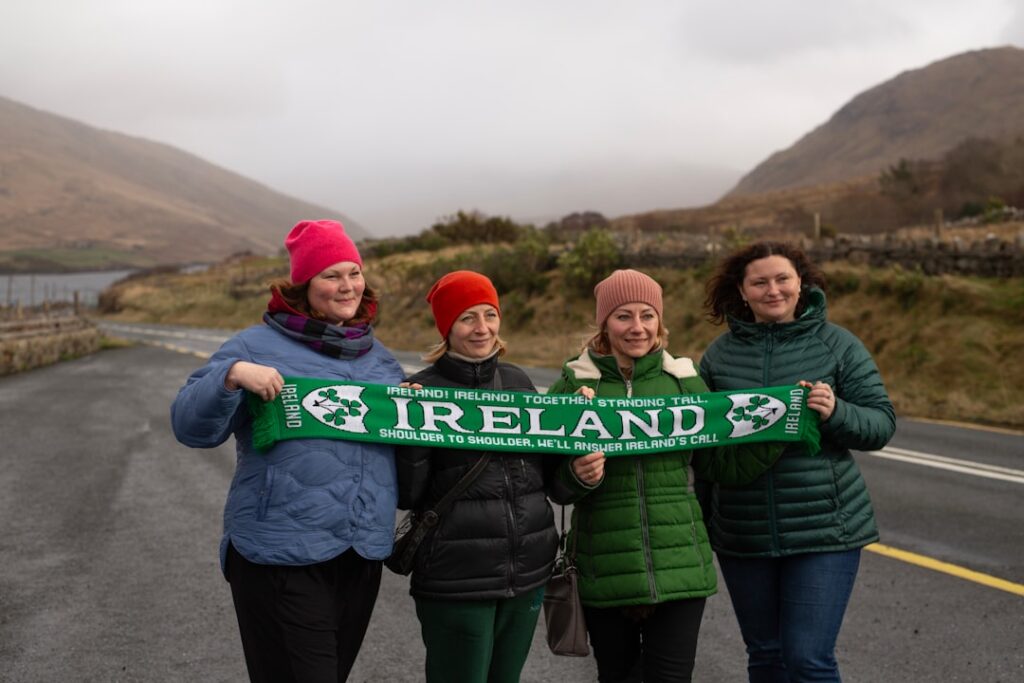
Rain, however, is constant. The west coast—Connemara, Donegal, the Dingle Peninsula—gets the most, but even Dublin averages rain on half the days of the year. It’s rarely a downpour; more often, it’s a persistent drizzle. A waterproof jacket with a hood is non-negotiable year-round.
Wind is the other factor travelers underestimate. Coastal cliffs and open boglands can be brutally exposed, even in summer. Layering is essential: a base layer, a fleece or sweater, and a windproof shell will serve you better than a single heavy coat.
Getting Around and What It Takes
Ireland is small—roughly the size of Indiana—but driving takes longer than the map suggests. Roads are narrow, winding, and often bordered by stone walls or hedgerows. The speed limit on rural roads is 100 km/h (about 60 mph), but you’ll rarely manage half that. Budget extra time, especially in Connemara, Kerry, and Donegal.
If you’re renting a car, book early. Automatic transmission vehicles cost significantly more and sell out quickly in summer. Most tourists drive clockwise around loops like the Ring of Kerry and the Dingle Peninsula, so consider going counterclockwise to reduce traffic.
Public transport is limited outside Dublin, Cork, and Galway. Bus Éireann connects most towns, but schedules are infrequent. If you’re relying on buses, you’ll spend more time waiting than sightseeing. For visiting sites like Newgrange, the Giant’s Causeway, or the Cliffs of Moher without a car, organized day tours through Viator are a practical option.
What to Expect When You Arrive
Ireland is not a budget destination. Accommodation, food, and car hire are expensive by European standards. Expect to pay $120 to $200 per night for a mid-range hotel or guesthouse in high season, $15 to $25 for a pub meal, and $6 to $8 for a pint of Guinness. Admission to major sites like the Cliffs of Moher ($9 per person) or Trinity College’s Book of Kells ($17) adds up quickly.
Tipping is less expected than in the U.S. In restaurants, 10% is standard if service isn’t included. In pubs, you don’t tip for pints, though you might leave a euro or two if you’re ordering food at the bar.
The Irish are genuinely friendly, but they’re also reserved. Don’t expect strangers to strike up conversations the way they might in other English-speaking countries. In rural areas, a nod or a quiet “how’s it going?” is standard. In pubs, especially during traditional music sessions, talking loudly over the music is considered rude.
Distances are signposted in kilometers, but older locals still think in miles. Speed limits, fuel, and road signs use metric, so get comfortable with the conversion before you drive.
Practical Tips for First-Timers
Don’t try to see everything. Ireland rewards slow travel. Pick a base—Killarney for Kerry, Galway for Connemara and the Burren, Westport for Mayo—and explore from there rather than changing hotels every night.
Book accommodations and car hire as early as possible, especially for summer or holiday weekends. Ireland’s tourism infrastructure is smaller than you’d expect for a country this popular.
If you’re visiting heritage sites, consider a Heritage Card from the Office of Public Works. It costs around $40 and covers admission to more than 40 sites, including Newgrange, the Rock of Cashel, and numerous castles. If you’re planning to visit three or more, it pays for itself.
Finally, accept that plans will change. Roads flood, ferries cancel in high winds, and that coastal hike you planned might be a muddy slog. Ireland is beautiful, but it’s not always convenient. Bring patience, waterproofs, and a willingness to adapt.
Want more practical advice, hidden gems, and insider tips delivered daily? Subscribe to The Ultimate Ireland Travel Guide newsletter—one short story about Ireland, every day.
Heads up — some links in this article are affiliate links. If you sign up through them, we may earn a small commission at no extra cost to you. We only recommend tools we use ourselves.