
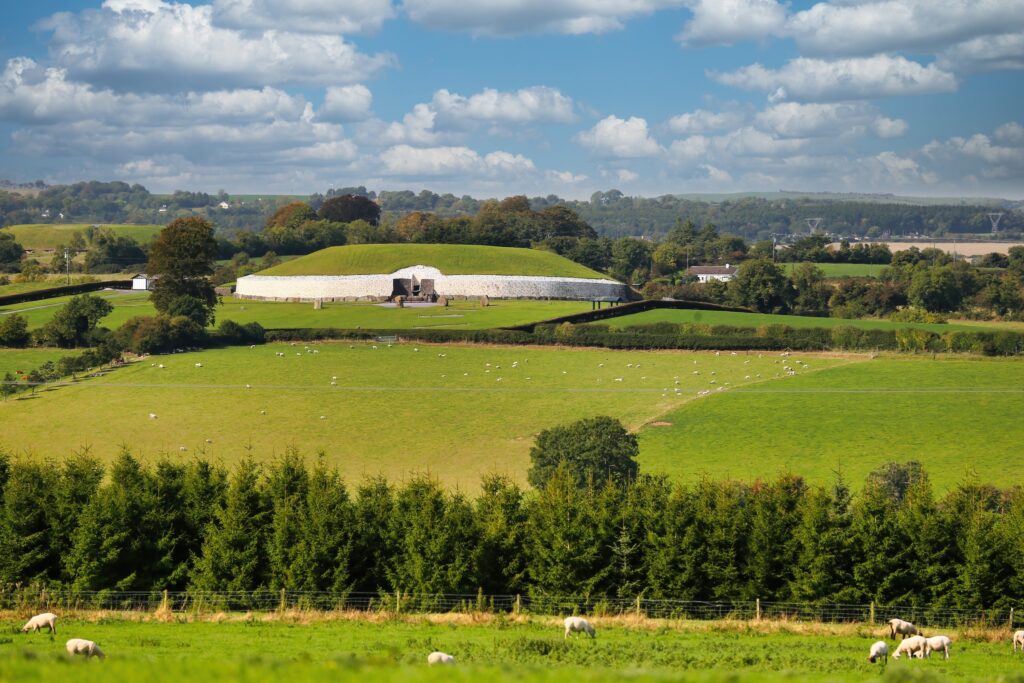
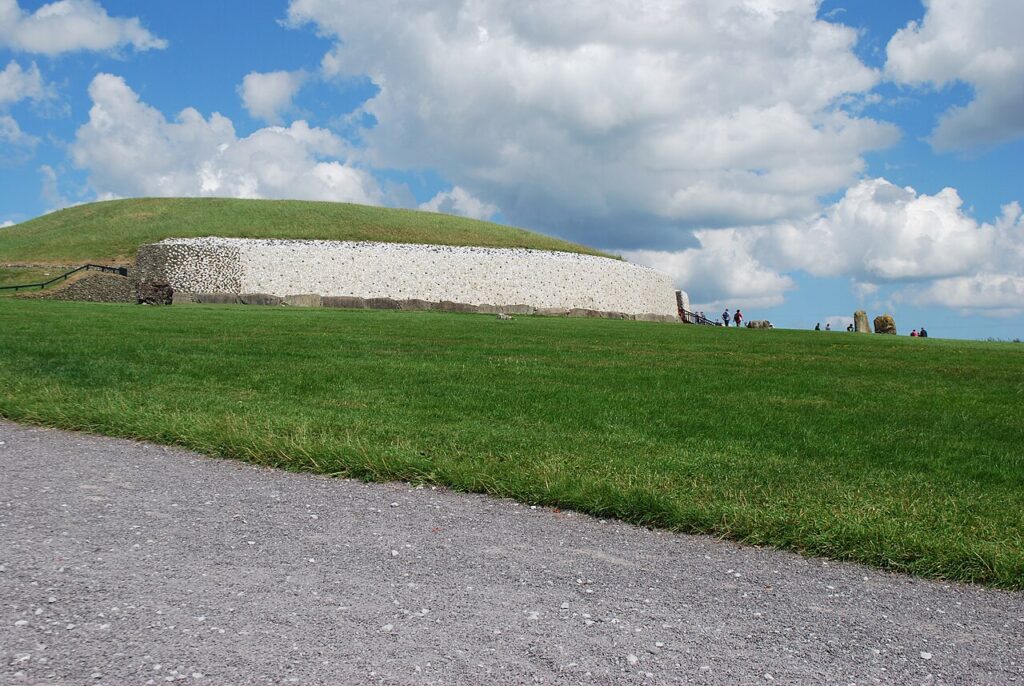
Newgrange sits in the Boyne Valley of County Meath, thirty miles north of Dublin, and it’s older than you think. Built around 3200 BC, this passage tomb predates Stonehenge by six centuries and the Great Pyramid of Giza by four. It’s a UNESCO World Heritage Site, a feat of Neolithic engineering, and one of the most significant prehistoric monuments in Europe. If you’re in Ireland and have any interest in ancient history, this is essential.
The tomb is part of Brú na Bóinne, a complex of passage tombs that includes Knowth and Dowth. But Newgrange is the star—a massive kidney-shaped mound of white quartz and river stones, ringed with kerbstones carved in spirals and lozenges whose meanings we can only guess at. Inside, a sixty-foot passage leads to a corbelled chamber that has remained dry for five millennia.
The Winter Solstice Phenomenon
Newgrange was built with astonishing precision. On the winter solstice—December 21st and for a few days on either side—sunlight enters through a roof box above the entrance and travels down the passage to illuminate the inner chamber for exactly seventeen minutes. It’s a phenomenon that draws thousands of hopefuls each year, though only a handful win the lottery to witness it in person. Applications open in late September, and your odds are roughly one in a hundred.
If you don’t win, don’t despair. The monument itself is extraordinary any day of the year, and the guided tour includes a simulation of the solstice light show inside the chamber.
How to Visit and What to Expect
You cannot walk up to Newgrange on your own. All visits go through the Brú na Bóinne Visitor Centre, located south of the River Boyne near Donore village. From there, you’ll take a shuttle bus to the monument. Tours last about an hour and include the passage and chamber—groups are small, and space inside is tight, so claustrophobics should be prepared.
Tickets are timed and can sell out, especially in summer and around the solstice. Book online in advance through the visitor centre or reserve a spot on a guided day tour from Dublin. Viator offers several options that combine Newgrange with the Hill of Tara or the medieval ruins at Trim, which makes for a full day in Meath.
The visitor centre itself is worth an hour. Exhibits cover Neolithic life, the construction of the tomb, and the archaeology of the Boyne Valley. There’s a excellent scale model of the three main tombs, and a replica of the passage and chamber if you’d rather skip the real thing and stay above ground.
Getting There and Practical Tips
Newgrange is an easy drive from Dublin—take the M1 north, exit onto the N51, and follow signs to Brú na Bóinne. Parking is free at the visitor centre. If you’re not driving, several tour operators run day trips from Dublin that include hotel pickup, transport, and admission.
The site is outdoors and exposed, so dress for Irish weather: layers, waterproof jacket, and sturdy shoes. The ground around the monument can be damp and uneven. There’s no café at the visitor centre, but Donore and Slane, a few miles west, have pubs and cafes worth stopping at after your visit.
Morning visits tend to be quieter than afternoons. If you have time, add Knowth to your ticket—it’s less famous than Newgrange but equally impressive, with two passage tombs and more megalithic art than any other site in Western Europe. Dowth is not part of the official tour but can be viewed from the outside.
Admission to Newgrange and the visitor centre is around $15 USD for adults, with discounts for seniors and students. Combined tickets with Knowth are available. The site is open year-round except for a few days around Christmas.
Newgrange is proof that Ireland’s history runs deeper than castles and round towers. Stand inside that chamber, beneath stones that were hauled and stacked five thousand years ago, and you’ll feel it. It’s humbling, and it’s worth the detour.
Want more stories like this, one a day in your inbox? Subscribe to The Ultimate Ireland Travel Guide newsletter and get Ireland beyond the guidebooks, every morning.
Heads up — some links in this article are affiliate links. If you sign up through them, we may earn a small commission at no extra cost to you. We only recommend tools we use ourselves.