
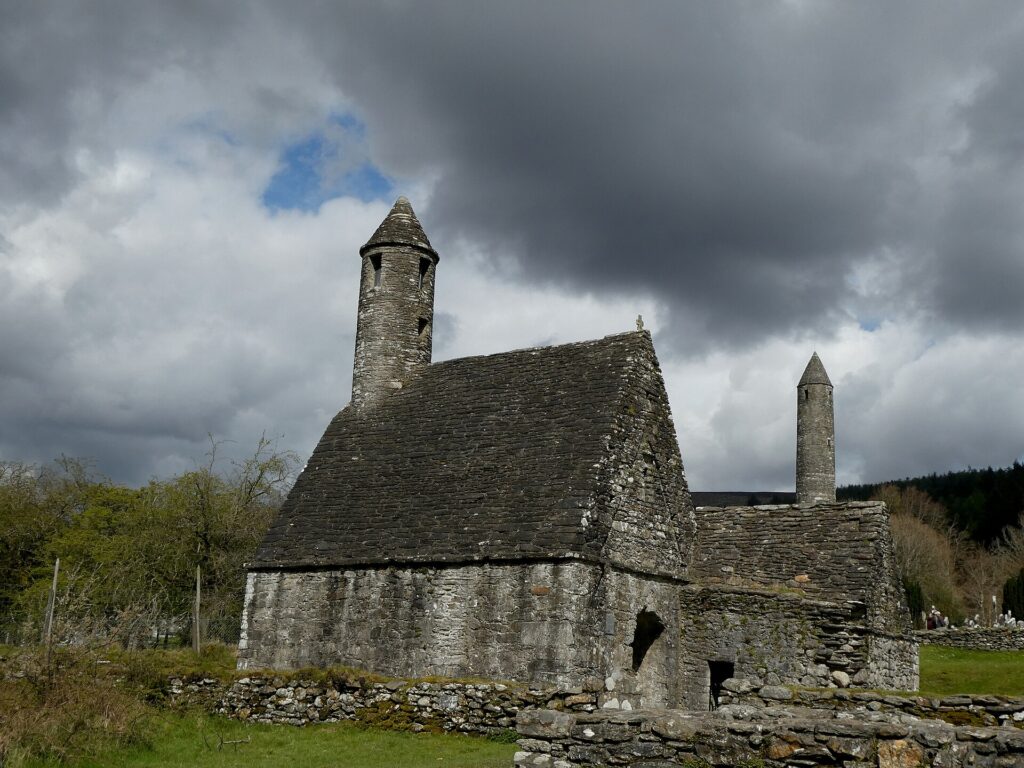
Ireland has more than sixty medieval round towers still standing, most of them clustered around monastic sites that were founded between the sixth and twelfth centuries. If you’ve driven past crumbling abbeys or explored heritage sites beyond the big-name castles, you’ve seen them: tall, tapering stone cylinders with conical caps and a doorway well above ground level.
They’re one of Ireland’s most distinctive historical structures, but most visitors don’t know what they were built for—or which ones are worth stopping for. Here’s what you need to know.
What Round Towers Were Actually For
Round towers were built between the ninth and twelfth centuries, primarily as bell towers and safe storage for church treasures during Viking raids. The doorway was typically placed 10 to 15 feet above the ground, accessible only by a ladder that could be pulled up. Inside, wooden floors connected by ladders reached up to five or six levels, with the top floor housing a bell.
Most towers are between 60 and 100 feet tall, built from local stone without mortar in many cases. The slightly tapered design and conical cap helped them withstand high winds—many have stood for over a thousand years. They weren’t primarily defensive structures (you couldn’t house a garrison), but they did provide a temporary refuge and a vantage point during attacks.
The towers also served as landmarks, visible for miles across flat or coastal terrain, marking the location of important monastic settlements.
The Best Round Towers to Visit
Glendalough, County Wicklow is the most accessible and photogenic. The 110-foot tower stands in a glacial valley surrounded by two lakes, alongside the ruins of a sixth-century monastic city founded by St. Kevin. The site is about an hour south of Dublin off the R756, with a visitor center, marked trails, and free admission to the monastic grounds (parking is around $5). The tower itself isn’t open for climbing, but the setting is unbeatable.
Clonmacnoise, County Offaly, on the banks of the River Shannon, has two round towers and the remains of a cathedral, seven churches, and hundreds of early Christian grave slabs. One tower is nearly intact at 62 feet; the other lost its cap centuries ago. The site costs around $9 and includes a small museum. It’s remote—about 90 minutes southwest of Dublin via the N6 and R357—but it’s one of Ireland’s most important early Christian sites.
Ardmore, County Waterford has a 95-foot tower standing next to a twelfth-century cathedral with remarkable stone carvings. The site overlooks the ocean on Ireland’s southeast coast, about 30 minutes from Dungarvan. It’s free to visit, and the nearby village has good cafés and a cliff walk.
Kilmacduagh, County Galway, near Gort in the Burren region, has Ireland’s tallest round tower at 112 feet—and it leans noticeably, tilting about two feet off vertical. The surrounding monastic complex is atmospheric and usually quiet. No admission fee, and it’s a 20-minute detour if you’re driving between Galway and the Cliffs of Moher.
How to Visit
Most round towers are located on heritage sites managed by the Office of Public Works or local trusts. Very few allow you to climb inside—Glendalough, Clonmacnoise, and the Rock of Cashel (which has a tower attached to its cathedral) do not. The tower at Devenish Island in County Fermanagh is one of the rare exceptions where access is occasionally permitted during guided tours.
Expect uneven ground, no facilities at smaller sites, and limited signage. Bring sturdy footwear, especially after rain. Many monastic sites also have high crosses, gravestones, and church ruins worth exploring—budget at least an hour if you want to look around properly.
If you’re short on time, Glendalough and Clonmacnoise offer the most complete experience. If you’re already touring the Burren or the southeast coast, Kilmacduagh and Ardmore are excellent additions without requiring major detours.
When to Go
Spring and early autumn offer the best light for photography and fewer crowds than summer. Glendalough gets busy on weekends year-round; aim for a weekday morning. Clonmacnoise is quieter but can feel bleak in heavy rain or wind—check the forecast. Smaller sites like Kilmacduagh are almost never crowded.
Winter visiting is possible, but some rural sites have limited daylight access and no artificial lighting. Most heritage sites close by 5 or 6 p.m. in the off-season.
Round towers don’t make it onto many Ireland itineraries, but they’re among the country’s most evocative medieval landmarks—and they’re often located in valleys, beside rivers, or along coastal roads that are worth the visit on their own.
Want one short Ireland story in your inbox every day? Subscribe to The Ultimate Ireland Travel Guide newsletter and get practical tips, hidden corners, and the country beyond the guidebooks.