
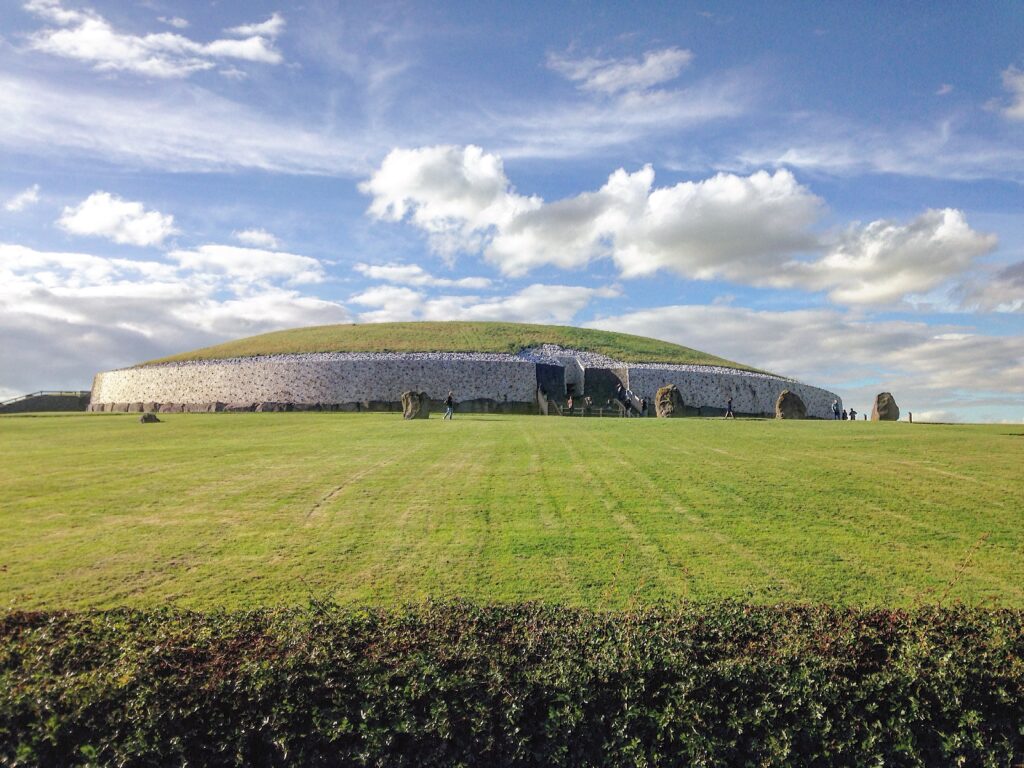
Newgrange sits in the Boyne Valley, about 30 miles north of Dublin, and it’s been there for more than 5,000 years. This massive passage tomb predates the Egyptian pyramids by 600 years and Stonehenge by 1,000. Built around 3200 BC, it’s a feat of Neolithic engineering that still functions exactly as intended: every winter solstice, sunlight floods the inner chamber through a roof box designed for that single moment.
The site is one of Ireland‘s most visited ancient landmarks, and access is tightly controlled to protect the monument. You can’t just show up and walk in. Here’s what you need to know before you go.
How to Book Your Visit
All visits to Newgrange start at the Brú na Bóinne Visitor Centre, located on the south bank of the River Boyne near Donore, County Meath. You cannot drive directly to Newgrange itself—visitors are taken by shuttle bus from the center.
Tickets are timed and often sell out, especially during summer and on weekends. Book online in advance through the official heritage site portal. Tours run year-round, weather permitting. Expect to pay around $15 per adult for access to Newgrange, or $18 for a combined ticket that includes Knowth, another passage tomb in the complex.
Tours are guided only, and they last about an hour including the bus ride. You’ll spend roughly 20 minutes inside the tomb itself. Group sizes are limited to preserve the structure, so don’t expect crowds inside—but do expect a wait if you arrive without a reservation.
What You’ll See Inside the Tomb
The tomb is a grass-covered mound roughly 250 feet in diameter and 40 feet high, ringed by 97 kerbstones, many carved with spirals, lozenges, and other Neolithic art. The most famous is the entrance stone, covered in triple spirals that have become one of Ireland’s iconic images.
You’ll walk through a 60-foot passage into the central chamber, a cruciform room with three alcoves. The corbelled roof—built without mortar—has kept the interior dry for five millennia. Your guide will turn off the lights and simulate the winter solstice sunrise, when a shaft of light creeps up the passage and illuminates the chamber for about 17 minutes. It’s brief, eerie, and worth the trip on its own.
Photography is not allowed inside the tomb, so take it in while you’re there. Outside, the white quartz façade—reconstructed in the 1970s based on archaeological evidence—is striking and polarizing. Some find it magnificent; others think it looks too clean. Either way, it’s impossible to ignore.
Knowth and the Wider Boyne Valley
If you have time, add Knowth to your visit. It’s part of the same Neolithic complex and equally impressive. Knowth has two passage tombs and the largest collection of megalithic art in Western Europe—more than 300 decorated stones. Unlike Newgrange, you can’t enter the passages, but you can walk around the mound and see the carvings up close.
The Boyne Valley is dense with ancient sites. The Hill of Tara, the seat of the High Kings of Ireland, is a 15-minute drive west. The Battle of the Boyne site is nearby if you’re interested in more recent history (1690). The medieval town of Trim, with its massive Norman castle, is 20 minutes southwest and makes a good lunch stop.
Practical Tips for Your Visit
Newgrange is an easy day trip from Dublin. Drive north on the M1, then follow signs for Donore and Brú na Bóinne. The visitor center has free parking. If you’re relying on public transport, options are limited—consider booking a day tour from Dublin that includes transport and admission.
Wear sturdy shoes. The ground around the monuments can be uneven and muddy, especially after rain. The passage inside Newgrange is narrow and low in places—if you’re claustrophobic or have mobility issues, ask your guide before entering.
Visit early in the day if you can. Morning tours are quieter, and the light on the mound is better for photos. Avoid weekends in July and August unless you’ve booked weeks ahead.
The winter solstice lottery is legendary. Every year, a small number of people win the chance to be inside the chamber on December 21 when the real sunrise lights it up. Applications open in late September, and tens of thousands enter. If you don’t win, the simulated sunrise on a regular tour is the next best thing.
The visitor center itself is well done, with exhibits on Neolithic life, tomb construction, and the archaeologists who excavated the site. Give yourself at least two hours for the full experience—more if you’re adding Knowth or exploring the valley.
Newgrange is humbling in a way few sites are. Standing in a chamber built 5,000 years ago by people with stone tools and zero written language makes most modern achievements feel small. It’s worth the trip, the planning, and the early alarm.
Subscribe to The Ultimate Ireland Travel Guide newsletter—one short story a day to help you dig deeper into Ireland beyond the guidebooks.