
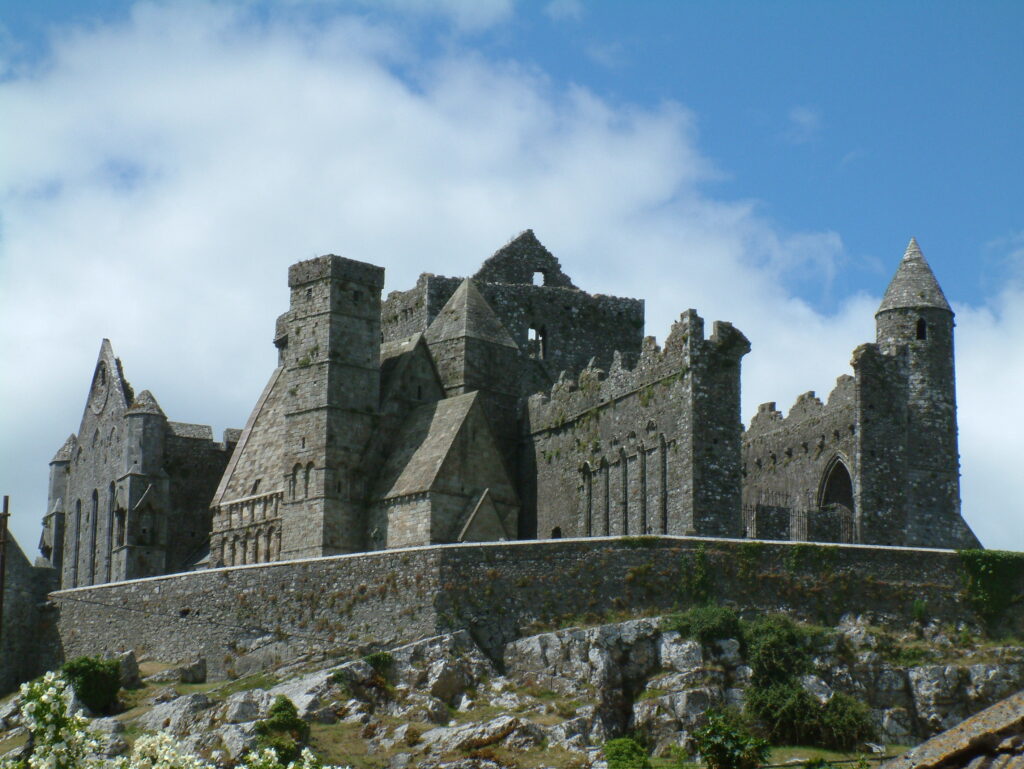
The Rock of Cashel announces itself from miles away. A limestone outcrop topped with medieval towers and ruins, it rises 200 feet above the plains of County Tipperary like something out of a storybook. Kings were crowned here. Battles were fought. And today, it’s one of the most visited heritage sites in Ireland—deservedly so.
Most visitors give the Rock an hour. That’s a mistake. Between the architecture, the views, and the town of Cashel itself, you’ll want half a day at minimum. Here’s how to visit right.
What You’ll See on the Rock
The Rock of Cashel isn’t a single building—it’s a complex of medieval structures spanning centuries. The most impressive is Cormac’s Chapel, built in 1127 and considered the finest Romanesque church in Ireland. The stone carvings here are intricate and remarkably preserved, especially around the arched doorway and the chancel arch.
Next to it stands the roofless 13th-century cathedral, its Gothic arches open to the sky. Climb the round tower—it’s narrow and steep, but the 360-degree views over the Golden Vale are worth the effort. On a clear day, you can see for miles across Tipperary’s patchwork fields.
The Hall of the Vicars Choral, a restored 15th-century building at the entrance, houses a small museum and a replica of the Cross of St. Patrick. The original is in Dublin, but the copy gives you a sense of the craftsmanship.
Allow at least 90 minutes to walk the site properly. Audio guides are included with admission and add helpful context, especially for the chapel’s architecture and the site’s role in Irish history.
When to Visit and How Much It Costs
The Rock is open year-round, but timing matters. Summer brings crowds—expect tour buses between 11 a.m. and 3 p.m. Visit early (the site opens at 9 a.m.) or late afternoon for quieter exploration and better light for photography. Winter sees far fewer visitors, and the site takes on a moody, atmospheric quality under gray skies.
Admission is $10 for adults, less for seniors and students, and free for children under 12. Tickets are available at the entrance or online. There’s no café on-site, so bring water if you’re visiting in warm weather.
The Rock sits just outside Cashel town, about a 10-minute walk uphill from the center. Parking is available at the base for $3, or you can park in town and walk up. The path is paved but steep in sections—wear comfortable shoes.
Exploring Cashel Town
Don’t skip the town itself. Cashel is small but charming, with a few excellent spots worth your time. The Cashel Folk Village, a short walk from the Rock, is a quirky but genuine collection of recreated 19th-century shops and cottages. It’s run by locals and feels refreshingly un-touristy.
For lunch, head to Mikey Ryan’s Bar & Kitchen on Main Street. The lamb stew is rich and satisfying, and the atmosphere is welcoming without being overly polished. If you’re after something lighter, Cafe Hans on Moor Lane serves excellent soup and sandwiches—get there early, as it’s small and fills up fast.
Cashel also has a handful of craft shops and a small farmers market on Saturdays. If you’re driving the area, consider pausing at the Brú Ború Cultural Centre at the base of the Rock. It hosts traditional music performances most evenings in summer and offers workshops on Irish music and dance.
Getting There and Combining Visits
Cashel sits on the N8 between Dublin and Cork, making it an easy stop if you’re traveling between the two cities. It’s about 90 minutes from Dublin, 75 minutes from Cork, and an hour from Kilkenny. If you’re relying on public transport, Bus Éireann runs regular services from Dublin, Cork, and Limerick to Cashel—the bus stop is a five-minute walk from the Rock.
If you have a car, Cashel pairs well with other Tipperary sites. The town of Cahir, 15 minutes south, has a beautifully preserved 13th-century castle set on an island in the River Suir. It’s less crowded than the Rock and takes about an hour to explore. Farther afield, the Glen of Aherlow offers excellent hiking with views of the Galtee Mountains.
For an overnight stay, Cashel has a few good guesthouses. Baileys of Cashel, just off Main Street, is comfortable and well-run, with rooms starting around $100 per night. The Cashel Palace Hotel, a luxury option in a former archbishop’s residence, offers a more upscale experience with gardens overlooking the Rock.
Practical Tips
Bring layers. Even in summer, the hilltop can be windy and cooler than the surrounding plains. The stone surfaces inside the buildings can be uneven and slippery when wet, so watch your footing, especially in the cathedral and tower.
Photography is allowed throughout the site, and the light in late afternoon—especially golden hour—makes the stone glow. If you’re visiting in spring, the surrounding fields are dotted with lambs and wildflowers, adding to the scenery.
Most visitors treat the Rock as a quick stop, but it rewards slower exploration. Take time to sit in the cathedral ruins, walk the perimeter walls, and absorb the scale of the place. It’s been a seat of power for more than a thousand years, and that history is palpable.
Want more stories like this delivered to your inbox? Subscribe to The Ultimate Ireland Travel Guide newsletter—one short story a day, straight from the road.