
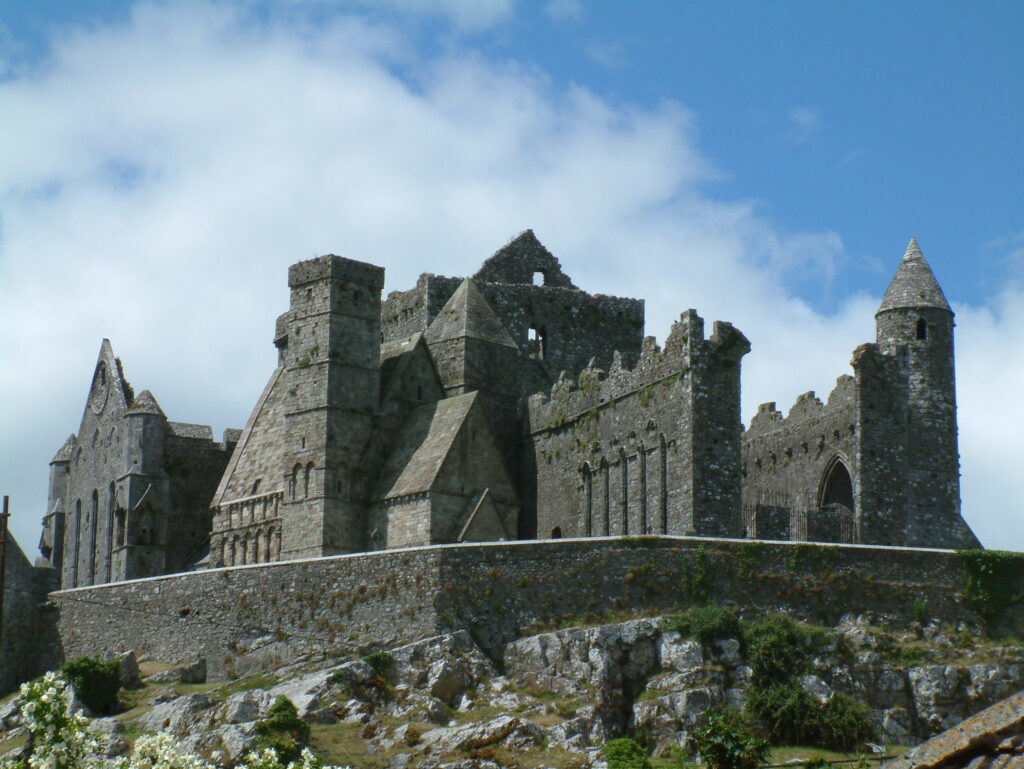
Rising 200 feet above the Golden Vale in County Tipperary, the Rock of Cashel commands attention from miles away. This dramatic cluster of medieval buildings—perched on a limestone outcrop—has been a symbol of power and faith for more than a thousand years. Unlike many Irish ruins, Cashel offers remarkably complete architecture, making it one of the country’s most rewarding heritage sites to explore.
What You’ll See at the Rock
The site‘s centerpiece is the roofless 13th-century Gothic cathedral, its soaring arches and stone walls still largely intact. Inside, you’ll find medieval tomb effigies and architectural details that survived centuries of exposure to the elements. The Round Tower, dating to around 1100, is one of the best-preserved examples in Ireland and offers a striking silhouette against the Tipperary sky.
Don’t miss Cormac’s Chapel, built in 1127. This Romanesque gem features intricate stone carvings, including mythical beasts and biblical scenes, that are among the finest in Ireland. The chapel’s twin towers and elaborate archways represent some of the most sophisticated stonework of the period.
The Hall of the Vicars Choral, the most recent addition from the 15th century, has been restored and now houses an exhibition on the site’s history. Look for the original St. Patrick’s Cross in the hall—the weathered high cross you see outside is a replica.
Getting There and Practical Details
Cashel town sits on the N8, about 60 miles from Cork and 100 miles from Dublin. The Rock itself is impossible to miss—just follow signs through the compact town center to the parking area at the base. Entry costs around $10 for adults, with discounts for seniors and students. The site is managed by the Office of Public Works, and tickets include a helpful orientation video.
Plan for at least 90 minutes to explore thoroughly. The self-guided route takes you through all the main buildings, and interpretive panels provide historical context. Audio guides are available for an additional fee and add considerable depth to the visit.
Weather matters here. The Rock is completely exposed to the elements, and strong winds are common on the outcrop. Even in summer, bring a windproof layer. The site is open year-round except for a few days around Christmas, with longer hours from June through August.
When to Visit and What Else to See
Early morning or late afternoon visits offer the best light for photography and fewer tour groups. Summer sees peak crowds, especially between 11 AM and 2 PM when coach tours arrive. Visiting in spring or autumn means smaller crowds and dramatic skies that make the medieval stonework even more atmospheric.
Down in Cashel town, stop at the Cashel Folk Village, a small but engaging collection of 19th-century buildings and artifacts. For lunch, Mikey Ryan’s Bar & Kitchen on Main Street serves excellent seafood chowder and traditional fare in a 400-year-old building.
The ruins of Hore Abbey sit in the fields just west of the Rock—a short walk that most visitors skip. This 13th-century Cistercian monastery is free to explore and offers stunning views back toward Cashel’s silhouette.
Insider Tips for Your Visit
The climb from the parking area to the entrance involves about 80 steep steps. There’s no elevator, so visitors with mobility concerns should be prepared. Once inside the walls, the site is relatively flat, though uneven medieval paving requires sturdy footwear.
Photography is unrestricted, and the Rock rewards patient shooters. The view from the cathedral nave looking toward the Round Tower is iconic. For exterior shots, walk down to the GAA grounds south of the Rock for the classic postcard angle.
Combine Cashel with nearby attractions for a full day out. The town of Cahir, 10 miles south, has one of Ireland’s best-preserved castles. Holy Cross Abbey, 8 miles north, is a beautiful medieval monastery that’s still in use as a parish church. Both make excellent additions to a Tipperary itinerary, and Viator offers day tours that combine all three sites from Dublin or Cork.
The gift shop near the entrance stocks quality Irish crafts and historical books about the site. If you’re interested in medieval Ireland, pick up a copy of the site guide—it’s more detailed than the interpretive panels and makes a worthwhile souvenir.
Ready to explore more of Ireland’s ancient heritage? Subscribe to The Ultimate Ireland Travel Guide newsletter and get one short story a week—practical tips, hidden corners, and the Ireland beyond the guidebooks delivered straight to your inbox.
Heads up — some links in this article are affiliate links. If you sign up through them, we may earn a small commission at no extra cost to you. We only recommend tools we use ourselves.