
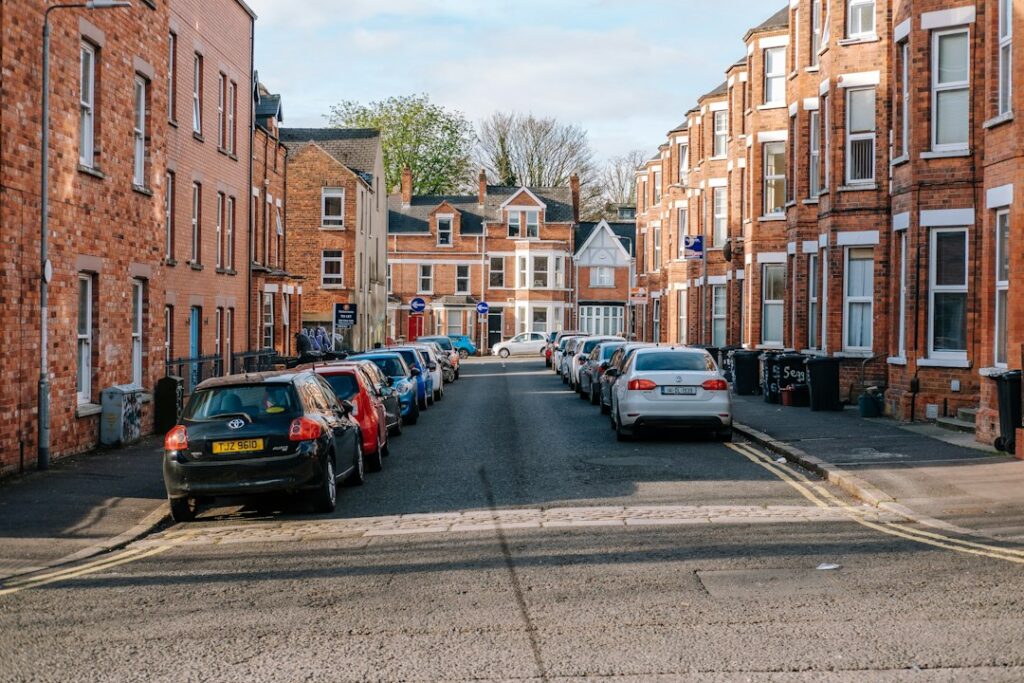
Belfast rewards travelers who choose their base carefully. This compact city packs Victorian grandeur, waterfront renewal, and vibrant neighborhoods into a walkable footprint, but where you stay shapes what you see, hear, and experience. Whether you’re chasing traditional music sessions, quiet Georgian streets, or harborside views, Belfast has a neighborhood that fits.
Here’s how to pick the right one for your trip.
Cathedral Quarter: Cobblestones and Culture
The Cathedral Quarter sits at Belfast’s creative heart. Narrow lanes lined with Victorian warehouses now house cocktail bars, galleries, and restaurants. St. Anne’s Cathedral anchors the district, but the real draw is the atmosphere—street art, live music spilling from doorways, and enough energy to keep you out past midnight.
Stay here if you want to walk to everything: the Titanic Quarter is a 20-minute stroll along the Lagan, City Hall is five minutes south, and you’re surrounded by some of Belfast’s best restaurants. The MAC (Metropolitan Arts Centre) and the Oh Yeah Music Centre keep the cultural calendar full.
Hotels range from boutique properties in converted linen mills to modern chains. Expect to pay $120–$220 per night for a double room. The neighborhood gets lively Thursday through Saturday—pack earplugs if you’re a light sleeper, or embrace it and join a session at The Duke of York.
Titanic Quarter: Waterfront and Modern Comfort
The Titanic Quarter sits along Belfast Lough, a 15-minute walk or quick bus ride from the city center. This is where the RMS Titanic was built, and the angular, aluminum-clad Titanic Belfast museum dominates the skyline. The neighborhood is newer, quieter, and purpose-built for visitors.
Stay here if you’re keen on maritime history or prefer modern hotels with amenities like gyms, parking, and breakfast buffets. The waterfront promenade is ideal for morning runs, and the SSE Arena hosts concerts and events year-round. You’re also close to the Odyssey Pavilion’s restaurants and cinema.
The trade-off is distance from Belfast’s pub culture and traditional music scene. It’s a deliberate choice: comfort and space over cobblestones and craic. Rooms run $100–$180 per night. The Glider bus connects you to the city center in under ten minutes.
South Belfast: Leafy Streets and University Buzz
South Belfast sprawls from the Botanic Gardens through the Queen’s Quarter and into the residential neighborhoods of Malone and Stranmillis. This is where locals live, students study, and tree-lined streets feel more village than city.
The area around Queen’s University hums with cafés, independent bookshops, and pubs that cater to a younger, relaxed crowd. Botanic Gardens and the Ulster Museum are free to visit and worth an afternoon. The Lisburn Road, just west, is Belfast’s restaurant row—everything from Lebanese to modern Irish, with wine bars tucked between boutiques.
Stay here if you want a quieter base with easy access to parks and excellent food. Guesthouses and B&Bs cluster along Malone Road and Eglantine Avenue, often in Victorian townhouses. Expect $80–$150 per night, with breakfast included. It’s a 15-minute walk or quick bus ride into the Cathedral Quarter.
City Centre: Victorian Grandeur and Central Access
Belfast’s City Centre means Donegall Square, City Hall, and the streets radiating outward—a mix of Victorian architecture, pedestrian shopping lanes, and grand hotels. You’re at the geographic heart of everything, with buses, trains, and taxis converging at Great Victoria Street and Donegall Square.
Stay here if you’re on a short trip or want to maximize convenience. The Grand Opera House, Crown Liquor Saloon, and St. George’s Market are all within a five-minute walk. You’ll find both budget chains and historic properties like The Merchant Hotel, where rooms start around $200 and go up from there.
The downside is that City Centre can feel generic—chain stores, traffic, and fewer independent spots than the Cathedral Quarter or South Belfast. But for first-timers or business travelers, the location can’t be beat.
Practical Tips for Choosing Your Belfast Base
Book early if you’re visiting during summer or around events like Cathedral Quarter Arts Festival in May. South Belfast fills up during university term time, especially in September.
If you’re renting a car, choose a hotel with parking or stay outside the city center—street parking is scarce and expensive. The Glider bus system connects Titanic Quarter, City Centre, and South Belfast efficiently; a day pass costs around $5.
Most neighborhoods are safe and walkable, but as anywhere, stick to well-lit streets late at night. Belfast’s compact size means you can easily base yourself in one area and explore the others on foot or by bus.
Want more insider tips on Ireland and Northern Ireland? Subscribe to The Ultimate Ireland Travel Guide newsletter—one short story a day, straight to your inbox.