
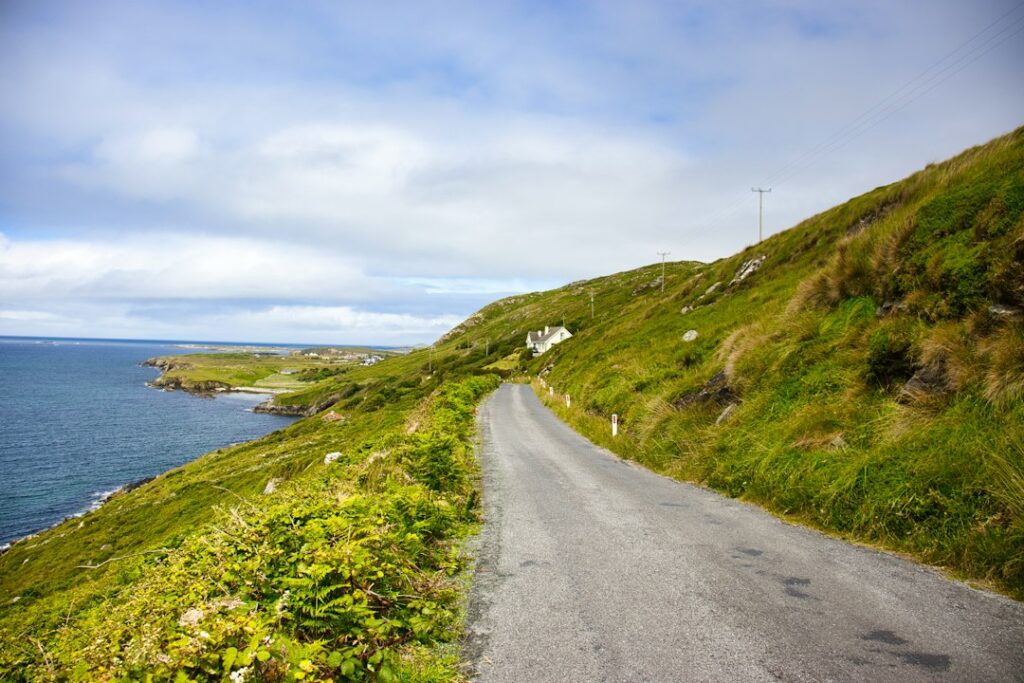
The Wild Atlantic Way stretches 1,600 miles along Ireland‘s western seaboard, from Kinsale in County Cork to Malin Head in County Donegal. It’s marketed as the world’s longest defined coastal touring route, but let’s be clear: you’re not going to drive it all in one trip. Not unless you have a month and a tolerance for relentless beauty fatigue.
Most travelers tackle sections. The key is choosing which ones match your interests and how much time you actually have. Here’s how to approach it without burning out or spending half your vacation behind the wheel.
Breaking It Into Sections
The Wild Atlantic Way is officially divided into five regions, running south to north: the Haven Coast (Cork), the Surf Coast (Kerry and Limerick), the Cliff Coast (Clare and Galway), the Bay Coast (Mayo), and the Surf and Turf Coast (Sligo, Leitrim, and Donegal).
If you have a week, pick two adjacent sections. Ten days to two weeks, you can comfortably manage three. Anything less than five days, stick to one region and explore it properly rather than racing through highlights.
The most dramatic scenery concentrates in three areas: the Dingle and Beara peninsulas in Kerry and Cork, the Cliffs of Moher and the Burren in Clare, and the coastline from Connemara through north Mayo into Donegal. If you’re choosing based purely on landscape, those are your targets.
Where to Base Yourself
Instead of moving hotels every night, choose two or three bases and take day loops. Dingle town works for the Dingle Peninsula and Slea Head Drive. Kenmare or Killarney put you between the Ring of Kerry and the Beara Peninsula. Doolin or Kinvara serve the Cliffs of Moher, the Burren, and Connemara’s southern edge.
Clifden is the natural base for Connemara and the Sky Road loop. Westport handles Achill Island, Croagh Patrick, and the fjord country of north Mayo. In Donegal, Donegal town or Ardara work for the southern coast, while Dunfanaghy or Downings cover the northern headlands and Malin Head.
Staying put for three nights lets you explore without the fatigue of constant packing. You’ll also eat better, sleep better, and have time to find a proper local pub with traditional music sessions.
The Stretches Worth Prioritizing
Slea Head Drive west of Dingle delivers ancient beehive huts, Irish-speaking villages, and coastal views that justify every photo you’ll take. The entire 30-mile loop takes three hours if you stop frequently—and you will.
The Connemara coast from Galway city through Roundstone, Clifden, and up to Killary Harbour is relentlessly scenic: stone walls, white beaches, the Twelve Bens rising inland, and bogland that glows orange in evening light. Budget a full day minimum.
Achill Island in Mayo feels remote even by Wild Atlantic Way standards. The Atlantic Drive around the island’s south coast, Keem Bay, and the Minaun Cliffs are worth the detour off the main route. Stay overnight if you can—the island quiets beautifully after day-trippers leave.
In Donegal, the stretch from Glencolmcille around Slieve League (some of Europe’s highest sea cliffs) to Ardara is stunning and far less crowded than the Cliffs of Moher. The road north from Dunfanaghy to Malin Head passes through Fanad and Inishowen, peninsulas that feel like the end of the world.
Practical Tips for Driving It
The route is well-signed with white signs featuring an orange wave logo. Don’t rely solely on GPS—it sometimes shortcuts you onto faster inland roads that skip the coastal sections entirely.
Narrow roads, stone walls, and sheep are constants. Drive slower than you think you need to, especially on single-track boreens. Passing places exist, but you’ll still meet tractors, tour buses, and oncoming traffic on blind corners.
Fuel stations are sparse in parts of Mayo and Donegal. Fill up in towns; don’t assume the next village has a pump. Similarly, many stretches have limited food options outside of peak season. Pack snacks and water.
Weather changes fast. Carry rain gear even if the morning is clear, and be prepared for wind strong enough to rip car doors from your hands at clifftop parking areas. September and early October often deliver the best conditions—fewer crowds, stable weather, and autumn light that’s made for photography.
If you’re booking tours or activities along the route through Viator or other platforms, reserve ahead in summer. Boat trips to the Skellig Islands, Aran Islands ferries, and guided hikes fill quickly June through August.
The Wild Atlantic Way rewards slow travel. You’re here for the detours, the unplanned stops at tiny beaches, the conversations in village pubs, and the realization that the destination matters less than the drive itself. Pick your sections, take your time, and leave room to get lost.
Want more Ireland travel stories like this delivered daily? Subscribe to The Ultimate Ireland Travel Guide newsletter—one short story a day, straight to your inbox.
Heads up — some links in this article are affiliate links. If you sign up through them, we may earn a small commission at no extra cost to you. We only recommend tools we use ourselves.