
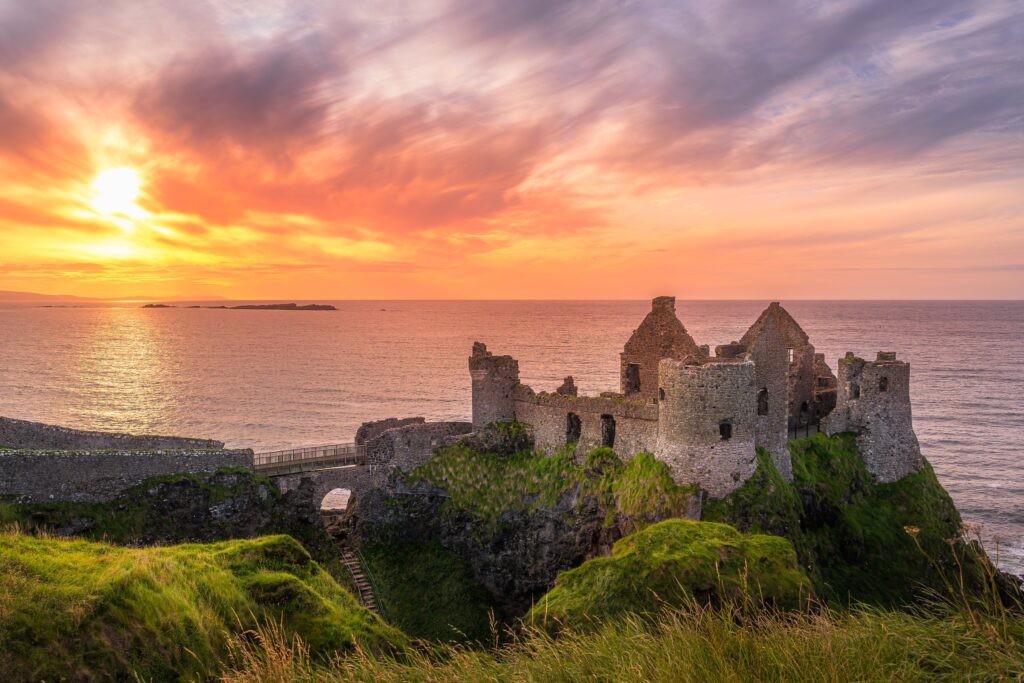
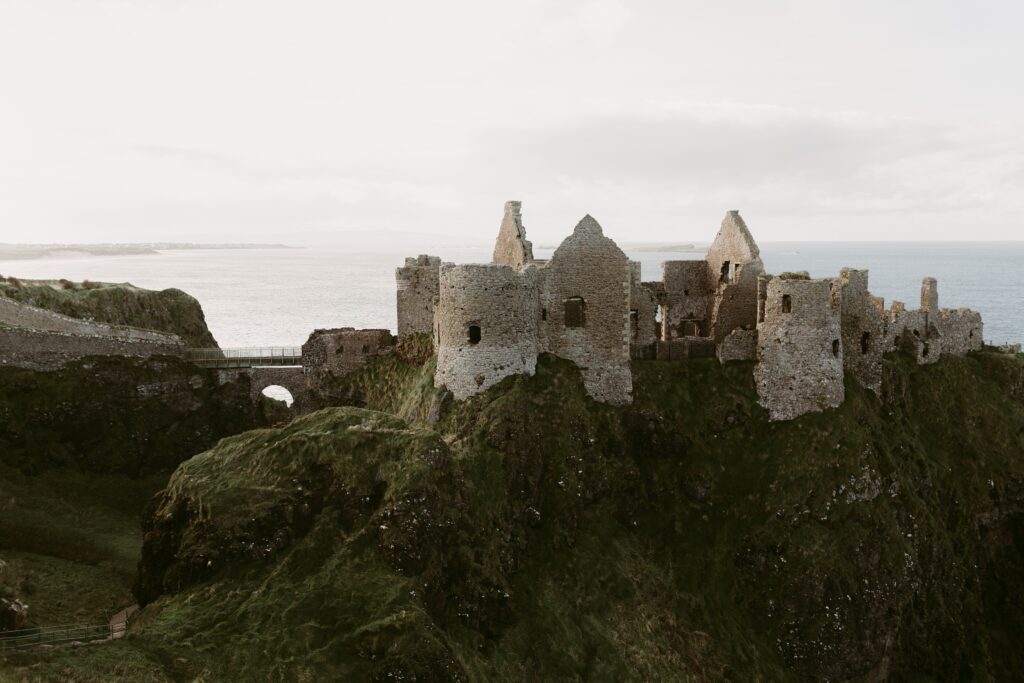
Dunluce Castle sits on a narrow basalt outcrop jutting into the North Atlantic, its crumbling walls framed by cliffs that drop 100 feet to the sea below. It’s one of the most photographed ruins in Ireland, and for good reason: the setting is theatrical, the history is rich, and the location — midway between the Giant’s Causeway and the seaside town of Portrush — makes it an easy stop on the Causeway Coastal Route.
Unlike heavily restored castles, Dunluce is a ruin in the truest sense. Sections of the kitchen famously fell into the sea during a storm in 1639, taking several servants with it. What remains is atmospheric, windswept, and best visited early or late in the day when tour buses thin out.
What You’ll See at Dunluce
The castle complex includes the remains of the gatehouse, the inner courtyard, and sections of the great hall. Interpretive panels and augmented reality displays help piece together what stood here during the castle’s 16th- and 17th-century heyday, when the MacDonnell clan controlled much of the Antrim coast.
The most striking feature is the location itself. Walk across the narrow bridge to the main ruins, and you’ll see how precarious the site is — waves crash directly beneath the walls, and on windy days, you’ll feel the full force of the Atlantic. Bring layers, even in summer.
The visitor center is small but well done, with exhibits on the MacDonnells, the castle’s construction, and its role in regional power struggles. There’s a short film that’s worth watching before you head outside, especially if you’re traveling with kids who need context.
How to Get There and What It Costs
Dunluce Castle is located on the A2 coastal road, about three miles east of Portrush and nine miles west of the Giant’s Causeway. If you’re driving the Causeway Coastal Route, you’ll pass it — look for the brown heritage signs. There’s a car park directly at the site.
Admission is around $7 for adults, with discounts for seniors, students, and families. The site is managed by the Department for Communities, and it’s open year-round, though hours are shorter in winter. Check ahead if you’re visiting between November and March.
Plan to spend 45 minutes to an hour here, longer if you’re a photography enthusiast or history buff. The ground is uneven and exposed, so wear sturdy shoes and be cautious if it’s wet — the basalt can be slick.
Where to Eat and Stay Nearby
Portrush, just a few minutes west, is the closest town with a full range of restaurants, pubs, and accommodations. For seafood, try 55 North on Causeway Street, where the fish is local and the views overlook the harbor. For a pint and a bowl of chowder, The Harbour Bar is a solid, unpretentious choice.
If you’re basing yourself along the coast, Portrush and Bushmills are both convenient. Bushmills has the added draw of the Old Bushmills Distillery, Ireland’s oldest licensed whiskey distillery, a 10-minute drive from the castle. Portstewart, slightly west, is quieter and has a lovely strand for walking.
For a special-occasion meal, The Ramore Wine Bar in Portrush serves excellent seafood and has been a favorite with locals for decades. Book ahead on weekends.
When to Visit and What Else to Combine
Dunluce is best visited early in the morning or late afternoon, when the light is softer and the crowds are lighter. Midday buses from Belfast and tour groups can make it busy between 11 a.m. and 2 p.m., especially in summer.
If you’re driving the Causeway Coastal Route, combine Dunluce with stops at the Giant’s Causeway, Carrick-a-Rede Rope Bridge, and the Dark Hedges. It’s an easy day trip from Belfast (about 90 minutes each way), or a half-day excursion if you’re staying in Portrush or Bushmills.
In autumn and winter, the castle is even more dramatic — fewer visitors, moodier skies, and the wind howling off the Atlantic. Just dress accordingly and check the weather before you go.
Practical Tips
There’s no café at Dunluce, so bring water and snacks if you’re planning to linger. The nearest facilities are in Portrush or at the Giant’s Causeway Visitor Centre.
The castle is partially accessible, but the terrain is challenging for wheelchairs or strollers. The visitor center and viewing platform are accessible, but the ruins themselves involve steps and uneven ground.
If you’re interested in guided tours, Viator offers day trips from Belfast that include Dunluce, the Giant’s Causeway, and other north coast highlights — useful if you’d rather not drive.
Want one short Irish travel story in your inbox each day? Subscribe to The Ultimate Ireland Travel Guide newsletter — practical tips, hidden spots, and the Ireland beyond the guidebooks.
Heads up — some links in this article are affiliate links. If you sign up through them, we may earn a small commission at no extra cost to you. We only recommend tools we use ourselves.