
Most visitors to Trinity College Dublin know about the Book of Kells. Fewer realize that the Old Library holds another illuminated manuscript of equal historic significance: the Book of Durrow, created around 650-700 AD on the monastery island of Iona or at Durrow Abbey in County Offaly. It’s one of Ireland’s oldest intact gospel books and a masterpiece of early medieval art.
While the Kells gets the spotlight, the Durrow deserves your attention. Its geometric patterns, interlaced designs, and vivid pigments influenced manuscript illumination across Europe for centuries. Here’s how to see it and what makes it extraordinary.
What Makes the Book of Durrow Special
The Book of Durrow predates the Book of Kells by more than a century. Its 248 vellum pages contain the four gospels in Latin, decorated with carpet pages—full-page abstract designs resembling woven textiles—and stylized evangelist symbols. The artwork blends Celtic, Germanic, and Mediterranean influences into something entirely original.
What stands out is the restraint. Unlike the densely packed illuminations of Kells, Durrow uses bold blocks of color: yellow orpiment, red lead, and verdigris green. The designs are geometric and rhythmic. Each gospel opens with an ornamental initial and a symbol page: a man for Matthew, an eagle for John, a calf for Luke, and a lion for Mark, rendered in flat, almost abstract forms that feel startlingly modern.
The manuscript survived Viking raids, the Dissolution of the Monasteries, and centuries of neglect. By the 17th century, it was at Durrow Abbey in County Offaly, where a farmer used water in which its pages had been soaked as a cure for sick cattle. Trinity College acquired it in 1661, and it’s been in their care ever since.
Where to Find It in the Old Library
The Book of Durrow is displayed in the Long Room, Trinity College’s main library hall. After you purchase tickets to see the Book of Kells (around $18 for adults), you’ll walk through the exhibition on the ground floor, then climb the stairs to the Long Room itself—a 213-foot-long chamber lined with 200,000 of the library’s oldest books.
The Durrow is kept in a glass case partway down the hall, typically open to one of its decorated pages. The page on display rotates periodically to preserve the manuscript, so you might see a carpet page, an evangelist symbol, or an illuminated initial depending on when you visit. There’s interpretive text beside the case, but the lighting is dim to protect the vellum, so take your time and let your eyes adjust.
Unlike the Kells, which draws a constant crowd, the Durrow often has space around it. You can stand close, study the interlacing, and notice details: the precision of the compass-drawn circles, the asymmetries that reveal the hand of the scribe, the pinprick holes used to plan the designs.
When to Visit and What Else to See
The Old Library is open daily, but it’s busiest between 10 a.m. and 2 p.m., especially in summer. Book tickets online in advance—walk-up entry isn’t guaranteed, and lines can stretch an hour or more in peak season. Early morning (right at opening) or late afternoon offers the quietest visit.
Plan at least 90 minutes for the full experience: 30 minutes for the Kells exhibition, 30 for the Long Room and Durrow, and another 30 to browse. The Long Room also holds a rare 1916 Proclamation of the Irish Republic, one of the oldest harps in Ireland (the so-called Brian Boru harp), and first editions of works by Swift, Wilde, and Beckett.
If you’re interested in early medieval manuscripts, ask at the desk about the library’s other holdings. The Book of Armagh and Book of Dimma aren’t always on public display, but special exhibitions sometimes bring them out. Check the Trinity College Library website before your visit.
Practical Details
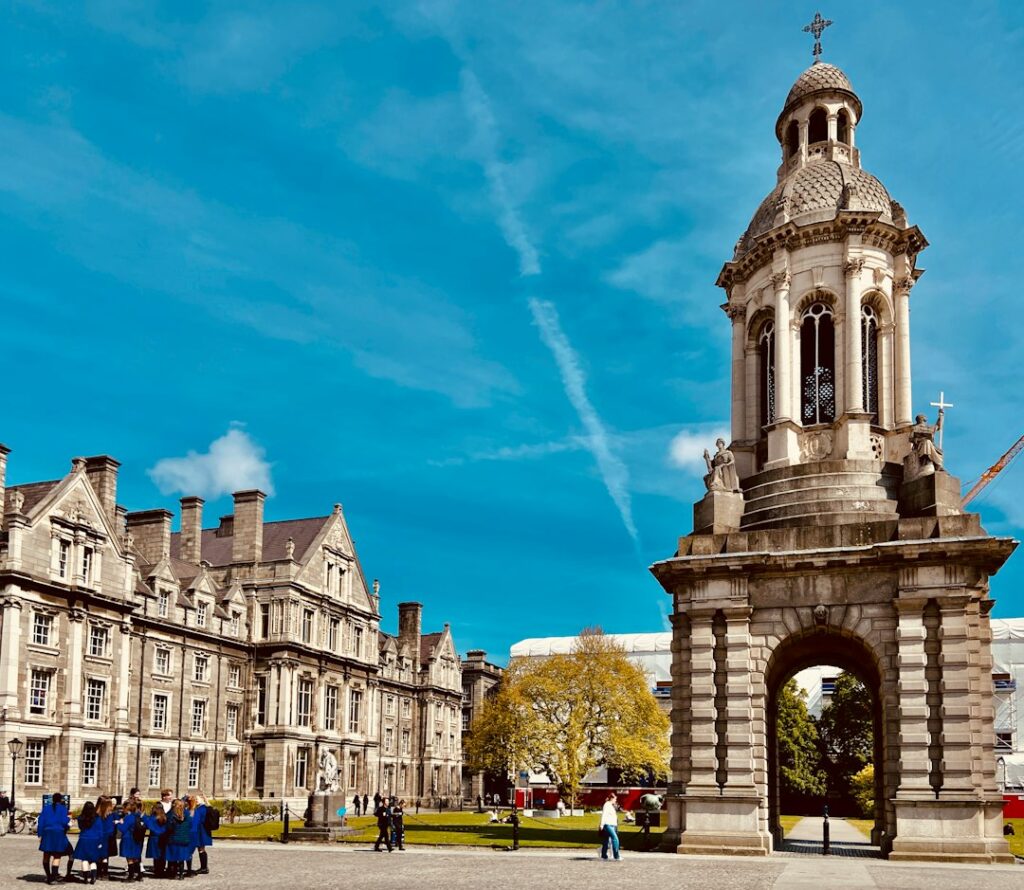
The Old Library entrance is on Fellows’ Square, inside Trinity’s main campus on College Green in Dublin city center. Tickets cost around $18 for adults, $16 for seniors and students, and $9 for children under 12. Family tickets are available. Photography is not permitted inside the exhibition or Long Room.
Trinity College is a short walk from most central Dublin hotels. If you’re staying outside the city center, take the Luas green line to Trinity or St. Stephen’s Green, or any Dublin Bus route to College Green. There’s no parking on campus; use a public car park on Dame Street or Dawson Street if you’re driving.
Viator offers combination tickets that bundle the Book of Kells with other Dublin attractions—useful if you’re planning a full day of sightseeing. Just be sure your time slot allows enough space to linger in the Long Room.
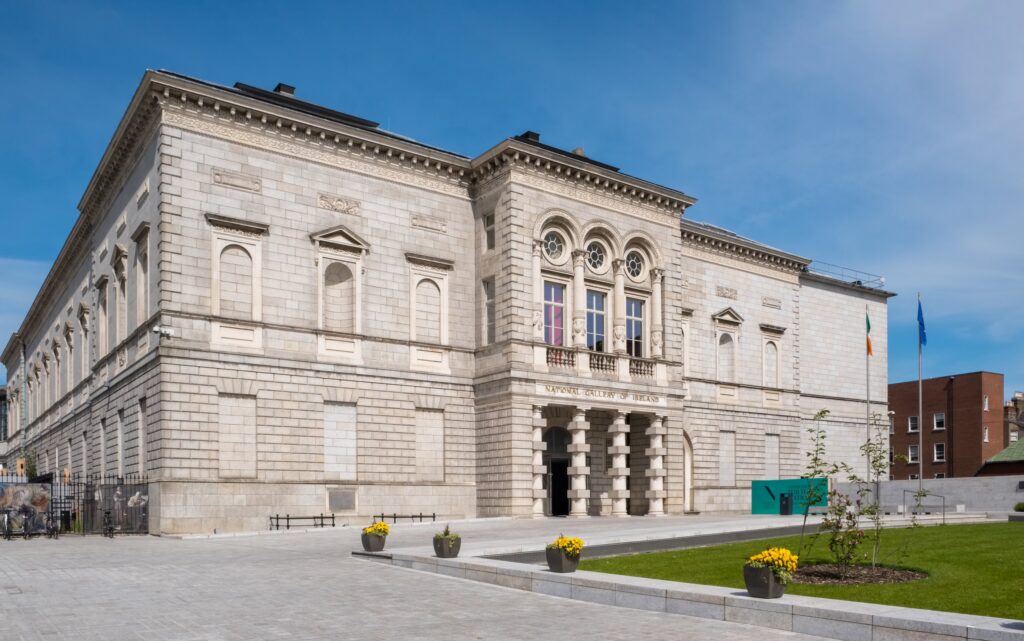
After your visit, walk through Front Square and out the Lincoln Place gate to reach Merrion Square and the National Gallery, or head west to Grafton Street for lunch. The library’s shop, just off the Long Room, stocks high-quality facsimile editions and books on manuscript illumination if you want to take the subject deeper.
Ready to uncover more of Ireland’s hidden cultural treasures? Subscribe to The Ultimate Ireland Travel Guide newsletter and get one short story a day—straight to your inbox.
Heads up — some links in this article are affiliate links. If you sign up through them, we may earn a small commission at no extra cost to you. We only recommend tools we use ourselves.