
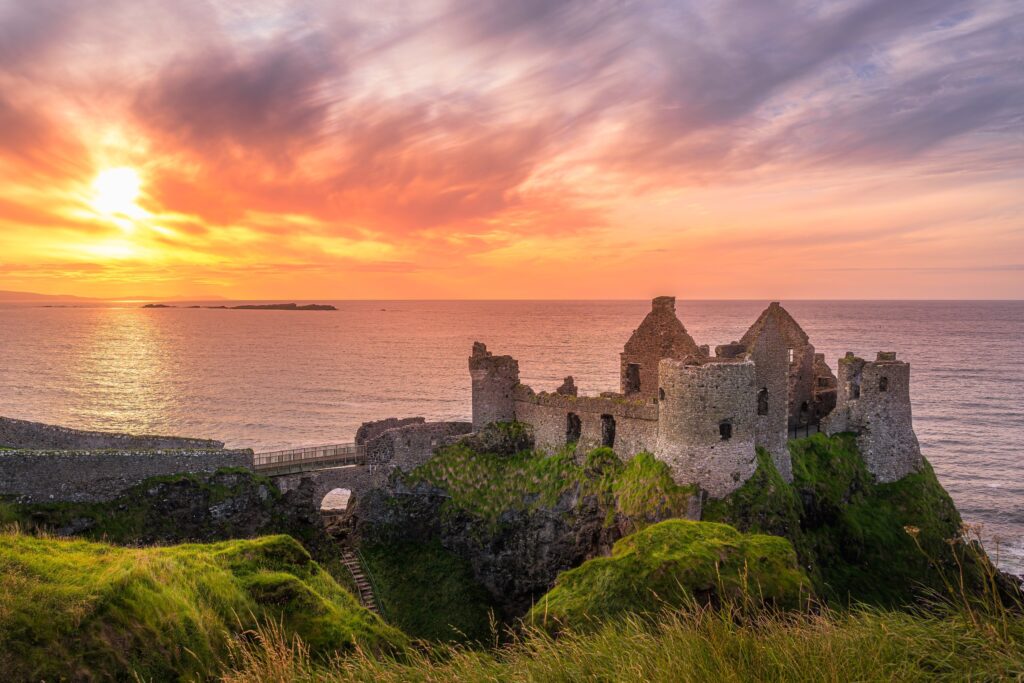
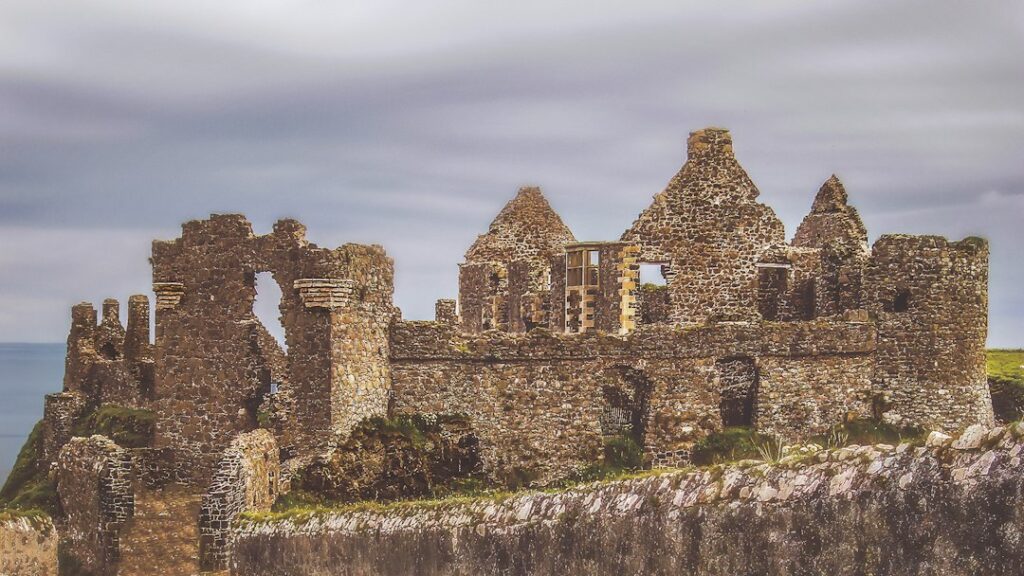
Dunluce Castle sits on a narrow basalt outcrop jutting into the Atlantic, its broken towers and walls rising straight from the cliffs. Half the kitchen fell into the sea during a storm in 1639, taking most of the staff with it. What remains—gatehouse, walls, and scattered foundations—makes for one of the most arresting castle ruins in Ireland.
Located on the Causeway Coast between Portrush and the Giant’s Causeway, Dunluce is a natural stop on any drive through County Antrim. The site itself takes less than an hour to explore, but the setting and history make it worth the detour.
Getting There and What It Costs
Dunluce Castle is on the A2 Causeway Coastal Route, about two miles east of Portrush and seven miles west of the Giant’s Causeway. There’s a small parking lot directly at the site—free to use. If you’re driving the coast, you’ll see the castle signposted clearly from the road.
Admission is around $7 for adults, less for seniors and children. The site is managed by the Northern Ireland Environment Agency and is open year-round, though hours are shorter in winter. Check ahead if you’re visiting between November and March.
There’s no public transport directly to the castle, so you’ll need a car or a tour. Viator runs several Causeway Coast day trips from Belfast that include Dunluce as part of the itinerary.
What to See at the Castle
The remains are extensive enough to get a sense of the layout—courtyards, the Great Hall, living quarters, and the infamous kitchen that collapsed into the sea. Interpretive panels throughout the site explain the history, from its construction by the MacQuillan family in the 13th century to its occupation by the MacDonnells, who made it their stronghold in the 16th century.
The gatehouse is the most intact structure. You can walk through the archway and climb narrow stone stairs to the upper levels for sweeping views of the coast. On clear days, you can see Scotland across the water.
The castle’s most famous feature is its location. The outcrop is connected to the mainland by a narrow bridge, and the cliffs drop nearly 100 feet straight down. Bring a camera—the angles here are dramatic from every direction.
Combining Dunluce with the Causeway Coast
Dunluce fits neatly into a full day driving the Causeway Coastal Route. Start in Belfast and head north through Carrickfergus, stopping at the castle there if time allows. Continue along the coast to the Giant’s Causeway, then backtrack west to Dunluce before finishing in Portrush or Bushmills for the night.
If you’re staying in Portrush, the castle is an easy morning visit before the crowds arrive at the Causeway. Bushmills Distillery is just four miles south—pair the two for a half-day outing. The Carrick-a-Rede Rope Bridge is 15 miles east, manageable as part of the same loop if you start early.
The small beach below the castle, Dunluce Strand, is accessible via a footpath and worth a walk if the weather cooperates. It’s quiet, windswept, and offers a different perspective on the ruins above.
Practical Tips
The site is exposed, and the wind off the Atlantic is relentless. Bring a windproof jacket even in summer. The stone paths can be slippery after rain, so wear shoes with grip.
There’s no café on-site, but Portrush has plenty of options for lunch. The Harbour Bar and Restaurant on the harbor serves solid seafood chowder and fish and chips. If you’re heading to Bushmills, stop at the French Rooms for coffee and pastries.
Early morning or late afternoon light is best for photography—the sun hits the castle straight on, and you’ll avoid the tour bus rush that hits midday in summer.
Dunluce doesn’t require much time, but it’s one of those places that stays with you. The combination of history, drama, and sheer cliff-edge recklessness makes it a highlight of the Causeway Coast.
Want more stories like this delivered daily? Subscribe to The Ultimate Ireland Travel Guide newsletter—one short story a day, straight to your inbox.
Heads up — some links in this article are affiliate links. If you sign up through them, we may earn a small commission at no extra cost to you. We only recommend tools we use ourselves.