
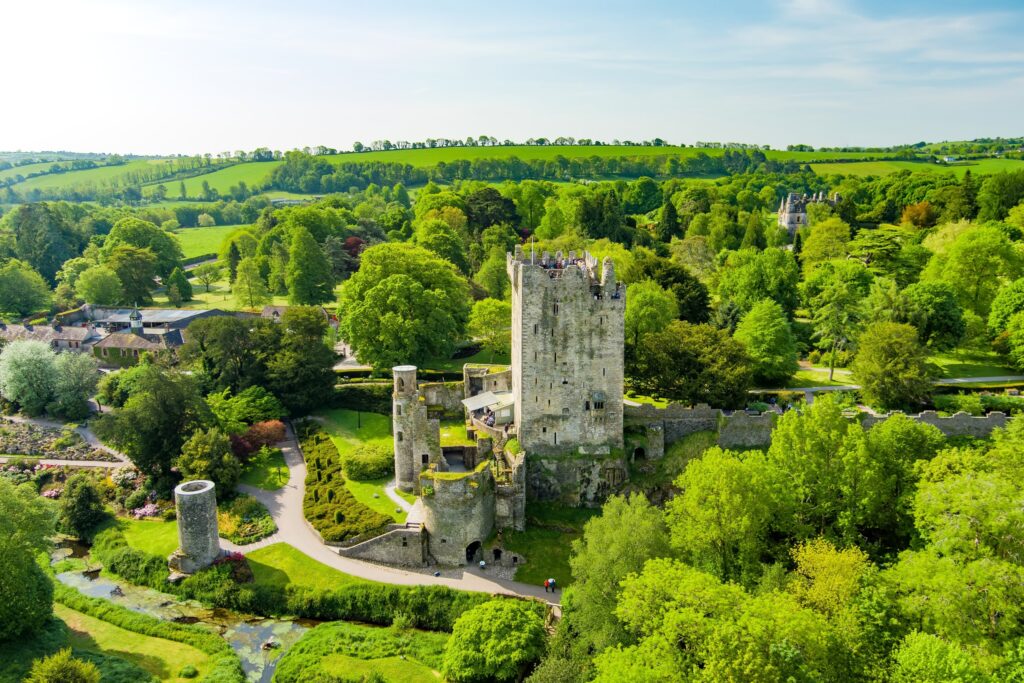
Blarney Castle sits five miles northwest of Cork City, a fifteenth-century tower house famous for one thing: a limestone block built into the battlements that legend says grants the gift of eloquence to anyone who kisses it. The Stone of Eloquence draws hundreds of thousands of visitors each year, but the castle itself—and the sixty acres of gardens, caves, and trails that surround it—deserve just as much attention.
If you’re planning a visit, come early, skip the peak summer months if you can, and leave time to explore beyond the keep. Here’s what you need to know.
The Blarney Stone and the Castle Keep
The ritual is famous: climb the narrow spiral staircase to the top of the castle, lean backward over a gap, and kiss the stone while a staff member steadies you. It’s safe, quick, and mildly awkward—but it’s also become one of Ireland’s most iconic tourist experiences.
The wait can stretch to an hour or more during summer afternoons and on weekends, so arrive when the gates open at 9:00 a.m. if you want to beat the crowds. Weekdays in spring and autumn are your best bet. The climb is steep and the stairs are uneven—wear sturdy shoes and take your time.
Once you’ve kissed the stone (or decided to skip it), take a few minutes at the top. The views stretch across the Lee Valley and the surrounding countryside, and the battlements themselves are worth inspecting. Blarney Castle was built in 1446 by Cormac Laidir MacCarthy, and the stonework, murder holes, and defensive layout tell the story of a fortress designed to withstand siege.
The Poison Garden and Rock Close
The castle grounds are the real surprise. Most visitors spend ten minutes at the top of the tower and leave, but the estate includes some of the most atmospheric gardens in Munster.
The Poison Garden, enclosed by iron gates, grows deadly plants from around the world—hemlock, mandrake, belladonna, and ricin among them. It’s small but fascinating, and the signs explaining each plant’s toxic history are worth reading. Access is controlled, so you’ll walk through with a guide.
Rock Close, a short walk from the castle, feels like something out of a folk tale. Massive yew trees, moss-covered stones, and a stone circle known as the Druid’s Circle create an otherworldly atmosphere. The Witch’s Kitchen, a stone formation with a narrow passage, and the Wishing Steps—descend and ascend backward with your eyes closed while holding a single wish in your mind—add to the mystical reputation of the place.
The Woodland Walks and Badger Cave
Beyond the formal gardens, marked trails lead through mixed woodlands along the River Martin. The walk to the Badger Cave takes about fifteen minutes from the castle and brings you to a man-made cave that stretches beneath the estate. It’s damp, unlit, and narrow in places, so bring a phone light and be prepared to crouch.
The arboretum and fern garden are quieter still, and if you’re visiting in May or June, the rhododendrons and azaleas are in full bloom. Budget at least two hours if you want to explore the grounds properly—longer if you’re a keen walker or gardener.
Practical Information
Blarney Castle is open year-round, though hours vary by season. Admission is $21 for adults, $9 for children. Tickets are available on-site, but booking online in advance guarantees entry and often saves a few dollars.
The castle is an easy day trip from Cork City—drive the R617 northwest for twenty minutes, or take Bus Éireann route 215 from Cork’s Parnell Place station (runs hourly, $8 round trip). Parking on-site is free.
The village of Blarney has a handful of cafés and craft shops if you need lunch after your visit. Blarney Woollen Mills, a large store selling Irish knitwear, crystal, and souvenirs, sits just across from the castle gates and has a decent restaurant upstairs.
Wear layers—the castle is exposed and windy at the top, even in summer—and bring waterproof shoes if it’s been raining. Thegrounds can get muddy, especially along the woodland trails.
When to Visit
April, May, September, and October offer the best balance of decent weather and manageable crowds. July and August are the busiest months, and tour buses arrive in waves throughout the day. Midweek visits are always quieter than weekends.
If you’re combining Blarney with other stops, pair it with Cobh (twenty minutes southeast) or Kinsale (thirty minutes south) for a full day in County Cork. Both are worth the detour.
Blarney Castle is touristy, yes—but it’s also genuinely beautiful, and the estate offers more than the famous stone. Go early, take your time in the gardens, and you’ll leave with more than just a story about leaning backward over a parapet.
Want more stories like this? Subscribe to The Ultimate Ireland Travel Guide newsletter and get one short story a day—straight to your inbox.