
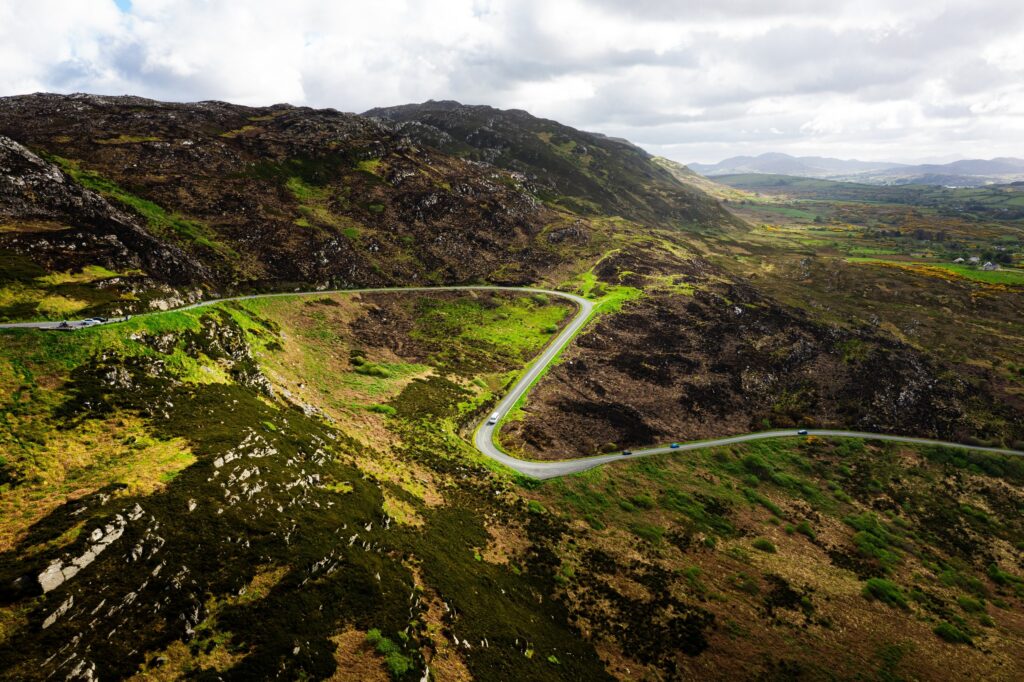
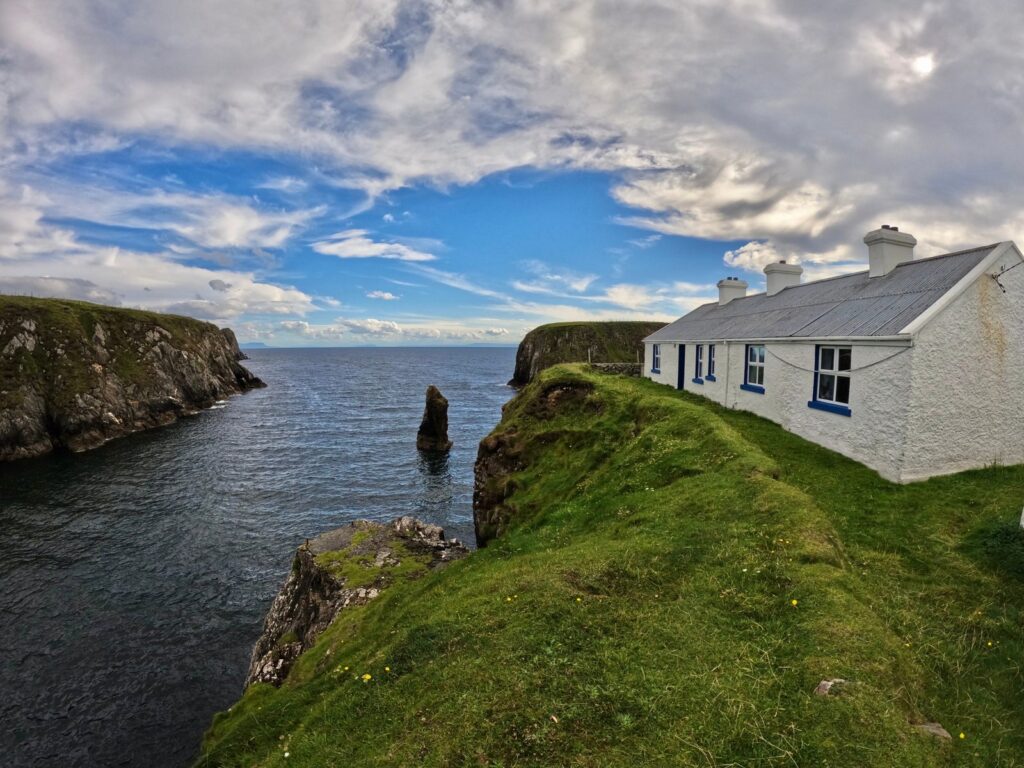
Donegal sits at Ireland’s northwestern edge, a county of soaring sea cliffs, vast empty beaches, and valleys where Irish remains the first language. It’s the least visited corner of the Wild Atlantic Way, and that’s part of its appeal. The coastal roads here feel raw and undiscovered, threading through landscapes that shift from barren moorland to surf-pounded headlands in a matter of miles.
Driving Donegal’s coast requires patience, confidence on narrow roads, and a willingness to follow your instincts when the GPS loses signal. The rewards are genuine solitude, some of Ireland’s most dramatic scenery, and villages where traditional culture is lived, not performed.
The Route: Where to Start and What to Include
Most travelers approach Donegal from Sligo to the south or Derry to the east. The coastal route isn’t a single loop—it’s a collection of peninsulas and headlands that jut into the Atlantic, each requiring a dedicated detour.
Start in Donegal Town, a market town with a castle and a triangular Diamond (town square) lined with pubs. From here, head west on the N56 toward Killybegs, Ireland’s premier fishing port. The road skirts Donegal Bay, with views across to the Slieve League cliffs rising in the distance.
At Killybegs, turn north onto the R263 toward Glencolmcille. This single-track road climbs through the Glengesh Pass, a glacial valley with hairpin turns and stone walls pressing close to the road. Glencolmcille itself is a Gaeltacht village—Irish-speaking—with a folk village that recreates traditional thatched cottages from different centuries.
Continue north to Ardara, a heritage town known for hand-woven tweed, then push on to the fishing village of Portnoo and the Blue Flag beach at Narin Strand. From here, the R261 leads to Dungloe, gateway to the Rosses, a low-lying coastal region dotted with lakes and small islands.
Horn Head, Fanad Head, and Inishowen
The three great peninsulas of northern Donegal—Horn Head, Fanad, and Inishowen—offer the county’s most dramatic coastal driving. Each is a half-day commitment, and all three reward the effort.
Horn Head Loop begins in Dunfanaghy, a tidy village with good cafés and access to Killahoey Beach. The loop road climbs 180 meters above the sea, with sheer cliffs, nesting seabirds, and views to Tory Island. It’s a narrow, one-lane road with passing places—drive slowly and yield to oncoming traffic.
Fanad Peninsula stretches northeast from Letterkenny, ending at Fanad Head Lighthouse, one of Ireland’s most photographed. The coast road (R246 and R247) passes through villages like Rathmullan, where the Flight of the Earls took place in 1607, marking a turning point in Irish history. The beaches here—Ballymastocker Bay in particular—are vast and often empty, even in summer.
Inishowen is Ireland’s northernmost peninsula, bordered by Lough Swilly to the west and Lough Foyle to the east. The Inishowen 100 is a signed scenic route that circles the peninsula, passing Malin Head (the island’s northernmost point), the walled town of Buncrana, and the 17th-century fort at Greencastle. Budget a full day for the loop, and stop at the Gap of Malin for sweeping views over the Atlantic.
Practical Tips for Driving Donegal’s Coast
Donegal’s roads are narrow, winding, and often single-track with grass growing down the middle. Expect to reverse to a passing place if you meet a tractor or a tour bus. Sheep wander freely in upland areas—slow down if you see them near the road.
Fuel stations are sparse, especially in the Gaeltacht regions. Fill up in larger towns like Donegal, Letterkenny, or Buncrana before heading into remote peninsulas. Mobile signal is patchy; download offline maps before you set out.
The best time to visit is late spring (May and early June) or early autumn (September), when daylight is long, roads are quieter, and the weather is marginally more predictable. Summer brings tour buses to the major viewpoints, but even then, you’ll have most beaches and back roads to yourself.
Accommodation is limited outside the main towns. Book ahead in Dunfanaghy, Ardara, or Buncrana if you’re visiting in high season. Many B&Bs and guesthouses close from November through March.
Where to Stop and What to See
Break up the drive with stops at small beaches, heritage sites, and villages worth exploring on foot. At Maghera Beach near Ardara, walk through a natural rock arch to reach a hidden cove. At Doagh Famine Village on Inishowen, a local guide leads you through restored cottages and explains the peninsula’s history.
For traditional music, try McGinley’s Bar in Glenties or the Bridge Bar in Ardara, both known for unscheduled sessions on weekend nights. In Dunfanaghy, The Mill Restaurant serves local lamb and Atlantic seafood in a converted flax mill.
Donegal’s coast isn’t a highlight reel—it’s a slow burn. The appeal is cumulative: miles of empty road, sudden views, the sense that you’ve left the tour bus circuit far behind. Drive it without a rigid itinerary, and you’ll see why Donegal remains Ireland’s best-kept secret.
Want more Ireland beyond the guidebooks? Subscribe to The Ultimate Ireland Travel Guide newsletter—one short story a day, delivered to your inbox.