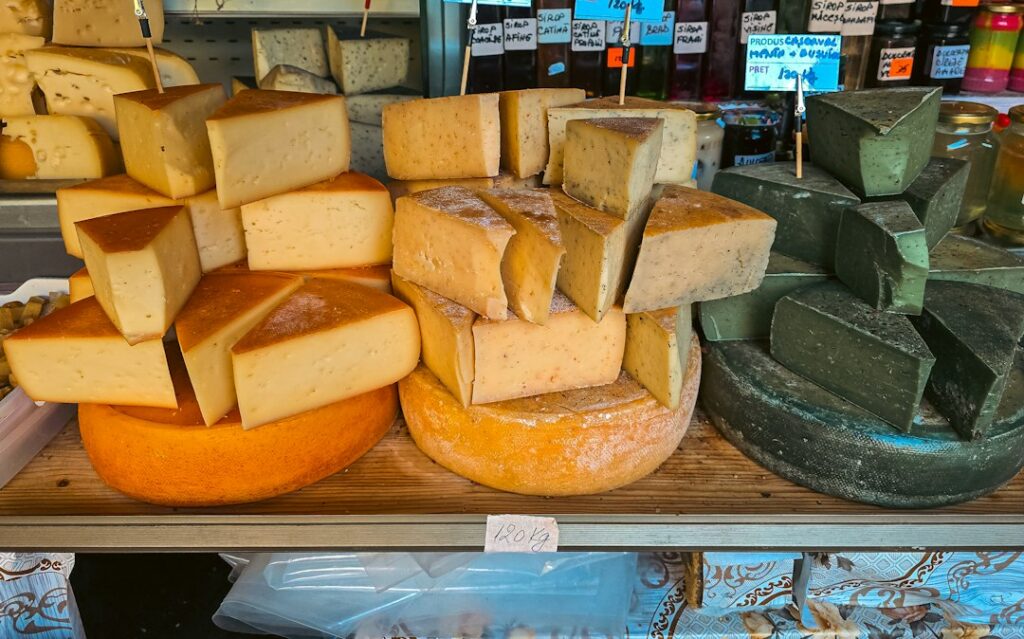
County Cork produces more artisan cheese than anywhere else in Ireland. From the green hills of West Cork to the coastal valleys near Clonakilty, small family-run farms are turning out world-class cheeses that rival anything from France or Switzerland. This is where Ireland’s modern cheese renaissance began in the 1970s, and it’s still the best place to taste farmhouse cheese at its source.
Unlike mass-produced supermarket varieties, these cheeses are handmade in small batches using milk from the cheesemaker’s own herd or neighboring farms. The result is cheese with character—earthy, complex, and tied to the pastures where the cows or goats graze.
Gubbeen Farmhouse in Schull
Gubbeen is one of Ireland’s most celebrated cheeses, and the farm where it’s made sits on the Mizen Peninsula near Schull in West Cork. Tom and Giana Ferguson started making cheese here in 1979, and their semi-soft, washed-rind Gubbeen has won international awards ever since.
The farm runs a small shop where you can buy Gubbeen cheese, along with their smoked meats and salami. It’s open Tuesday through Saturday, 10 a.m. to 4 p.m. The cheese itself is creamy and rich, with a pink rind and a nutty, slightly funky flavor that deepens as it ages. Ask for a taste before you buy—they’re generous with samples.
To get there, take the N71 from Bantry toward Schull, then follow signs for Gubbeen. It’s about a 90-minute drive from Cork city, and the narrow roads through the hills are part of the experience.
Durrus Farmhouse Cheese near Durrus Village
Jeffa Gill has been making Durrus cheese in the Sheep’s Head Peninsula since 1979. It’s a raw milk, semi-soft cheese with a natural rind, aged in a stone building that overlooks Dunmanus Bay. The result is a cheese with a creamy texture and a complex, earthy flavor that changes with the seasons—grassy in summer, richer and more robust in winter.
Durrus cheese is sold at the Bantry Farmers’ Market every Friday morning (9 a.m. to 1 p.m.), and Jeffa herself is often there to talk about the cheese. You can also find it at specialty shops throughout Cork, but tasting it at the market, with the hills of West Cork rising behind you, is the best way to appreciate what makes it special.
If you’re visiting Durrus village, stop by The Blueberry Cafe on the main street—they serve a cheese board featuring local Cork cheeses, including Durrus.
Ardsallagh Goat’s Cheese in Carrigtwohill
East of Cork city, near the town of Carrigtwohill, Jane Murphy makes some of Ireland’s finest goat cheese on her small farm at Ardsallagh. The farm sits on twenty acres of pasture, and the goats roam freely, grazing on wildflowers and clover. The milk is turned into soft logs of fresh chèvre, as well as a semi-hard aged cheese with a crumbly texture and a bright, tangy flavor.
Ardsallagh cheese is sold at Cork’s English Market (Monday through Saturday) and at farm gates by appointment—call ahead if you’d like to visit the farm and meet the goats. Jane also makes goat’s milk yogurt and feta, and she’s happy to explain the cheesemaking process if you ask.
The farm is about a 20-minute drive east of Cork city on the N25. Pair a visit here with a stop at Ballymaloe House or the Jameson Distillery in Midleton, both nearby.
Where Else to Find Cork Cheese
If you’re based in Cork city, the English Market is the best place to sample multiple farmhouse cheeses in one go. On the Princes Street Gallery level, you’ll find Kay O’Connell’s cheese stall, one of the finest cheese counters in Ireland. She stocks Gubbeen, Durrus, Ardsallagh, Cashel Blue from Tipperary, and dozens more Irish and European cheeses. Ask for recommendations and tastings—she knows every cheese by heart.
Outside the city, the weekly farmers’ markets in Bantry (Friday), Clonakilty (Thursday and Saturday), and Midleton (Saturday) all feature local cheesemakers selling directly to customers. Prices run from $8 to $20 per wedge, depending on size and age.
For a more immersive experience, consider a food tour. Viator offers guided trips through West Cork that include stops at cheese farms, breweries, and artisan food producers. These tours typically run $90 to $120 per person and include tastings and transport from Cork city.
When to Visit
Cheese is made year-round, but spring and summer offer the best flavors—the milk is richer when the animals are grazing on fresh grass. Farmers’ markets run through the winter, but some farms reduce their hours between November and March, so call ahead if you’re planning a farm visit in the off-season.
If you’re serious about cheese, plan your trip around the Taste of West Cork Food Festival in September, when cheesemakers, bakers, and other producers gather in Skibbereen for tastings, workshops, and demos.
County Cork’s farmhouse cheese scene is one of Ireland’s quieter treasures—no crowds, no tour buses, just good cheese made by people who care deeply about their craft. Bring a cooler bag if you’re buying cheese to take home; it travels well and makes an excellent edible souvenir.
Want more stories like this delivered to your inbox? Subscribe to The Ultimate Ireland Travel Guide newsletter—one short story a day, written for travelers who want to see Ireland beyond the guidebooks.
Heads up — some links in this article are affiliate links. If you sign up through them, we may earn a small commission at no extra cost to you. We only recommend tools we use ourselves.