
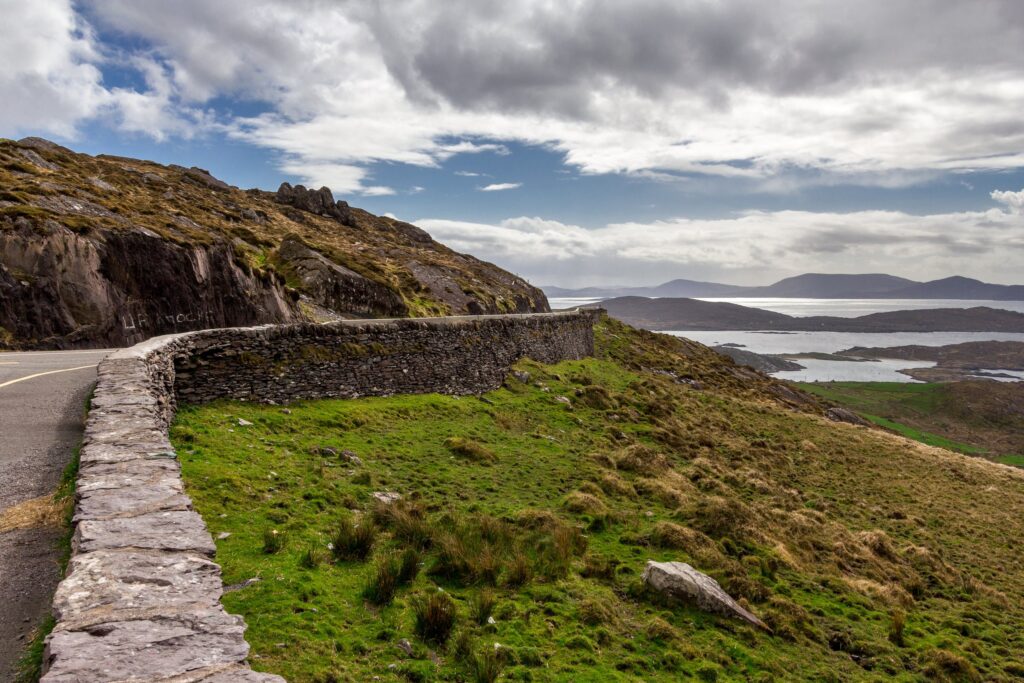
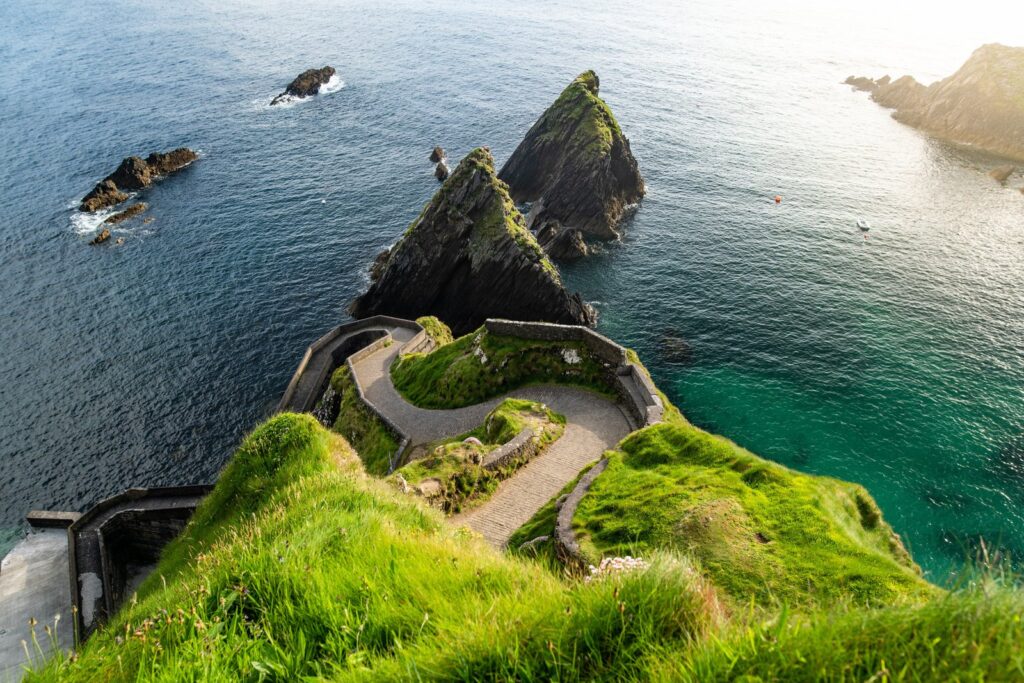
The Dingle Peninsula juts into the Atlantic like a defiant finger, its spine of mountains separating a northern coast of sandy beaches from southern cliffs that plunge into the sea. This 30-mile stretch of County Kerry offers everything Ireland does best: ancient stone forts, early Christian sites, traditional Irish-speaking villages, and scenery that shifts from pastoral green to lunar rockscape within a single bend.
Unlike the Ring of Kerry to the south, Dingle feels less trampled, more authentic. You’ll share the road with farmers moving sheep, stop at family-run pubs where Irish is the first language, and find beaches where you’re the only footprints in the sand.
Driving the Slea Head Loop
The Slea Head Drive forms a 30-mile loop west from Dingle Town, hugging the peninsula’s southern and western edges. Start early to catch the morning light on the Blasket Islands and to beat the tour buses that arrive mid-morning.
The route follows the R559 through the Gaeltacht villages of Ventry, Dunquin, and Ballyferriter, where road signs appear in Irish first, English second. Stop at the pullouts—there are dozens—to photograph the Blasket Islands floating offshore, the beehive huts at Fahan, and the views back toward the Three Sisters mountains.
The entire loop takes about two hours if you drive straight through, but you’ll want at least half a day to explore properly. The road is narrow and winding, with stone walls pressing close on both sides. Drive slowly, pull over when you meet oncoming traffic, and don’t attempt it in a large vehicle.
What to See Along the Way
The Gallarus Oratory, a perfectly preserved early Christian church built sometime between the 6th and 9th centuries, sits just off the main route near Ballyferriter. Its corbelled stone construction has kept it watertight for over a thousand years—not a drop of mortar used. Entry costs around $3, and you can walk right inside this tiny ship-shaped sanctuary.
Dunbeg Fort clings to a clifftop promontory south of Ventry, its stone walls defending a spectacular drop to the sea below. This Iron Age fort lost part of its defensive wall to erosion centuries ago, leaving a dramatic half-circle perched above crashing waves. The site charges about $4 for entry and offers one of the peninsula’s most photographed views.
The Blasket Centre in Dunquin tells the story of the Blasket Islands and the Irish-language writers who came from this remote community before it was abandoned in 1953. The modern interpretation center costs around $6 and provides context for the islands you’ll see from every western viewpoint.
Dingle Town: Base Camp
Dingle Town makes the perfect base for exploring the peninsula. This working fishing port has evolved into a culinary destination without losing its character. The harbor still shelters a fishing fleet, and you’ll find locals in the pubs alongside visitors.
The town’s traditional music scene ranks among Ireland’s best. Dick Mack’s, a pub that’s half bar and half shoe shop, hosts sessions most nights. The atmosphere at the small front bar can’t be beaten—squeeze in among locals and musicians, and don’t be surprised when someone breaks into song between tunes.
For seafood, Out of the Blue on the waterfront serves whatever came off the boats that morning. They don’t take reservations, don’t open if the catch isn’t good, and don’t serve anything that isn’t fish or shellfish. Expect to pay $25-35 for a main course. For something more casual, try Reel Dingle Fish for excellent fish and chips at $12-15.
Practical Details
The Dingle Peninsula sits about 50 miles west of Killarney and 60 miles southwest of Shannon Airport. The drive from either takes roughly 90 minutes. Regular buses connect Dingle Town to Tralee, but you’ll need a car to properly explore the peninsula.
Visit between May and September for the best weather and longest days. June offers the advantage of wildflowers carpeting the hillsides. September brings fewer crowds while keeping most of the good weather. Winter on Dingle can be spectacular—dramatic storms, empty roads, cozy pubs—but many businesses reduce hours or close entirely from November through March.
Book accommodation in Dingle Town well ahead during summer months. The town has plenty of B&Bs, guesthouses, and a few hotels, but it’s popular with Irish visitors who’ve been coming here for generations. Budget $80-120 for a good B&B, $150-250 for a hotel.
Fill your tank before leaving Dingle Town for the Slea Head loop. There are no fuel stations along the western route, and those narrow roads climbing over Connor Pass burn through gas faster than you’d expect.
Many visitors combine Dingle with day trips from Killarney, but that sells the peninsula short. Stay at least two nights to explore both the Slea Head Drive and the northern coast, with its sweeping beaches at Castlegregory and Brandon Bay. If you have three days, add a boat trip to the Blasket Islands or a hike up Mount Brandon, the peninsula’s 3,127-foot peak.
Want more insider tips on exploring Ireland’s most beautiful places? Subscribe to The Ultimate Ireland Travel Guide newsletter—one short story a day, straight to your inbox.