
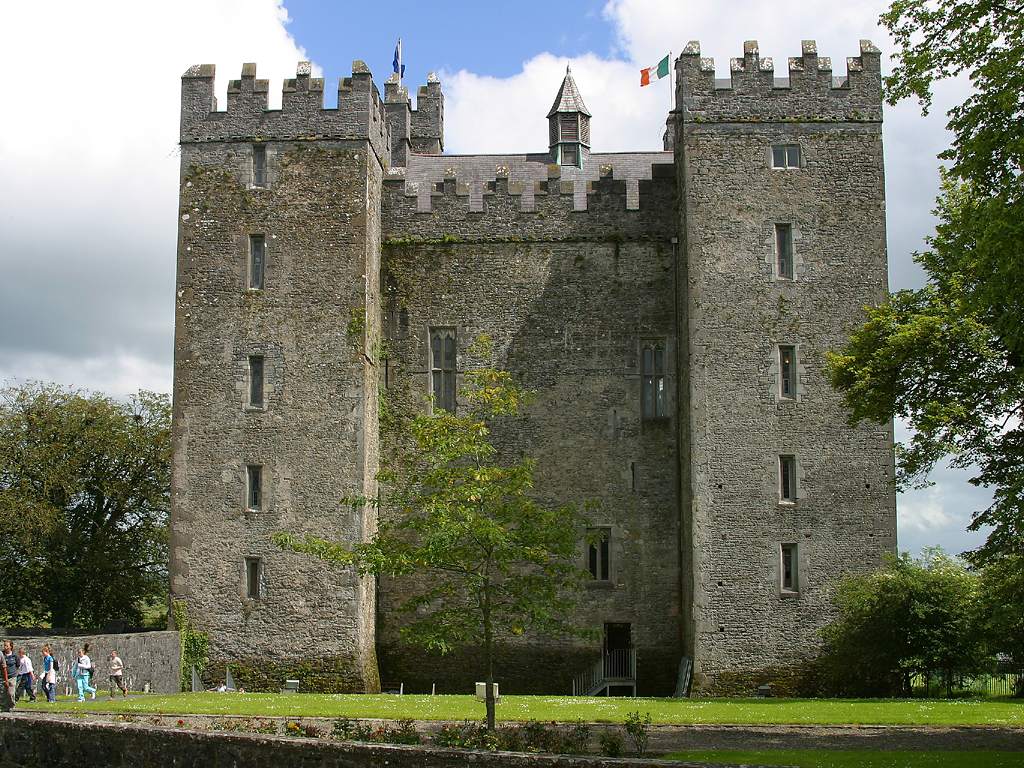
Bunratty Castle rises from the Clare countryside like a textbook illustration of a medieval Irish fortress. Built in 1425 by the MacNamara family and later claimed by the O’Briens, Earls of Thomond, it’s the most complete and authentically furnished castle in Ireland. Unlike many ruins scattered across the island, Bunratty has been meticulously restored and filled with 15th and 16th-century furnishings, tapestries, and artwork that bring the medieval period to life.
The adjoining Folk Park—a 26-acre open-air museum of reconstructed cottages, farmhouses, and village buildings—offers something equally rare: a walk through rural Irish life as it looked in the 1800s. Together, they make Bunratty one of Ireland’s most rewarding heritage sites, especially if you’re traveling with kids or want more than just another pile of stones.
Inside the Castle: Four Floors of Medieval Life
Bunratty’s tower house stands four stories tall, connected by narrow spiral staircases worn smooth by centuries of footsteps. The self-guided tour takes you through the Great Hall, where banquets were held under high timber ceilings, past private chambers with canopied beds and carved chests, and up to the rooftop battlements with views over the Shannon Estuary and the Clare countryside.
The castle’s collection includes original furnishings and period pieces sourced from across Europe. You’ll see Flemish tapestries, oak furniture, iron-bound chests, and even a 15th-century toilet chute. The attention to detail is striking—rush-covered floors, pewter plates set on long tables, and fireplaces large enough to roast an ox. It’s atmospheric without being stuffy, and the lack of velvet ropes lets you get close to the artifacts.
Plan to spend 45 minutes to an hour inside the castle itself. Arrive early in the day or late in the afternoon to avoid coach tour groups, which tend to sweep through mid-morning and early afternoon.
The Folk Park: A 19th-Century Irish Village
Step outside the castle and into the Folk Park, where more than 30 buildings have been reconstructed or relocated to recreate a working 19th-century Irish village. You’ll find a schoolhouse, post office, doctor’s house, blacksmith’s forge, and a series of cottages representing different levels of rural wealth—from a one-room laborer’s cabin with an earthen floor to a more prosperous farmhouse with whitewashed walls and multiple rooms.
Costumed interpreters work in several buildings, baking soda bread in the farmhouse kitchen, tending animals in the barn, or demonstrating traditional crafts. The village street includes Mac’s Pub and Durty Nelly’s, both fully stocked 19th-century-style taverns where you can actually stop for a pint or a coffee. It’s not a theme park—it’s a serious piece of social history presented in a way that’s engaging and accessible.
Budget at least 90 minutes for the Folk Park, more if you want to chat with the interpreters or let kids explore the village at their own pace. Wear comfortable shoes—the paths are gravel and grass, and there’s a fair bit of walking.
The Medieval Banquets
Bunratty is famous for its twice-nightly medieval banquets, held year-round in the Great Hall. Guests are seated at long communal tables, served a four-course meal (soup, ribs, chicken, dessert) eaten without cutlery, and entertained by harpists, singers, and performers in period costume. Wine and mead flow freely, and the whole affair leans into pageantry without tipping into full kitsch.
It’s not haute cuisine—think hearty, communal fare—but the atmosphere is genuinely fun, especially if you embrace the novelty. Banquets run around $75 per person and must be booked in advance. They’re popular with tour groups and family celebrations, so reserve early if you’re visiting in summer or around holidays.
If banquets aren’t your style, daytime entry to the castle and Folk Park costs around $20 for adults, with discounts for seniors, students, and families. Combination tickets are available if you’re also visiting nearby Craggaunowen or other Shannon Heritage sites.
Getting There and Practical Tips
Bunratty is located in County Clare, just off the N18 between Limerick and Ennis, about 8 miles from Shannon Airport. It’s one of the most accessible heritage sites in the west of Ireland—if you’re flying into Shannon, you can visit on your way to or from Galway, the Cliffs of Moher, or the Burren.
There’s a large free car park on site. If you’re using public transport, Bus Éireann route 51 runs between Limerick and Ennis and stops near the entrance, though service is infrequent—check schedules in advance.
The castle and Folk Park are open daily year-round, with slightly shorter hours in winter. Last admission is typically 90 minutes before closing. If you’re visiting in high season, aim for early morning or late afternoon to beat the crowds. Rainy days are common—the castle is fully covered, but you’ll want waterproofs for the Folk Park.
Bunratty village itself is tiny, but Durty Nelly’s pub (the real one, just outside the Folk Park entrance) is worth a stop for a pint and a bowl of chowder. The Bunratty Castle Hotel next door offers solid accommodation if you’re overnighting in the area.
Why Bunratty Stands Out
Ireland has no shortage of castles, but most are atmospheric ruins where you’re left to imagine the past. Bunratty offers the opposite: a fully realized, richly furnished snapshot of medieval and 19th-century Irish life. It’s especially worthwhile if you’re traveling with children, short on time, or looking for a heritage experience that’s more immersive than a quick photo stop.
Pair it with a visit to the nearby Craggaunowen Bronze Age settlement or the Cliffs of Moher for a full day in Clare, or use it as a first or last stop if you’re flying through Shannon.
Want more stories like this delivered to your inbox? Subscribe to The Ultimate Ireland Travel Guide newsletter—one short story a day, covering the Ireland you came to find.