
The Causeway Coastal Route is Northern Ireland’s answer to the Wild Atlantic Way — 120 miles of tightly wound coastal road connecting Belfast to Derry, with the Giant’s Causeway as the headliner and a dozen worthy stops in between. It’s less wild than the west coast, more intimate, and easier to cover in a long day or a relaxed two-day loop.
You’ll drive past ruined castles perched on sea cliffs, rope bridges swaying over turquoise coves, distilleries older than the United States, and villages where the pubs still serve stew made that morning. The road hugs the Antrim coast, rarely straying far from the water, and the views — especially between Cushendall and Ballycastle — rival anything on the island.
The Route and Where to Start
Most travelers begin in Belfast and drive counterclockwise toward Derry, which puts the ocean on your right and makes pullover stops easier. The official route follows the A2 coastal road almost the entire way, with a few detours inland through the Glens of Antrim.
From Belfast, head north through Carrickfergus, where the massive Norman castle sits right on the waterfront. The first scenic stretch begins at Glenarm, the southernmost of the nine Glens of Antrim. The road climbs and dips through Carnlough, Cushendall, and Cushendun — small harbor villages with stone piers, whitewashed cottages, and cafés that close at 4 p.m.
Between Cushendall and Ballycastle, the road becomes a proper coastal drive: steep drops to the sea, hairpin bends, and views across to Scotland on clear days. Ballycastle is the halfway point and the logical place to stop for lunch or stay overnight.
Giant’s Causeway and the North Coast Highlights
West of Ballycastle, the route delivers its biggest attractions in quick succession. The Carrick-a-Rede Rope Bridge is first — a 66-foot suspension bridge swinging 100 feet above the Atlantic. It’s dramatic, slightly terrifying, and worth the $14 ticket if you don’t mind crowds. Book online in advance during summer.
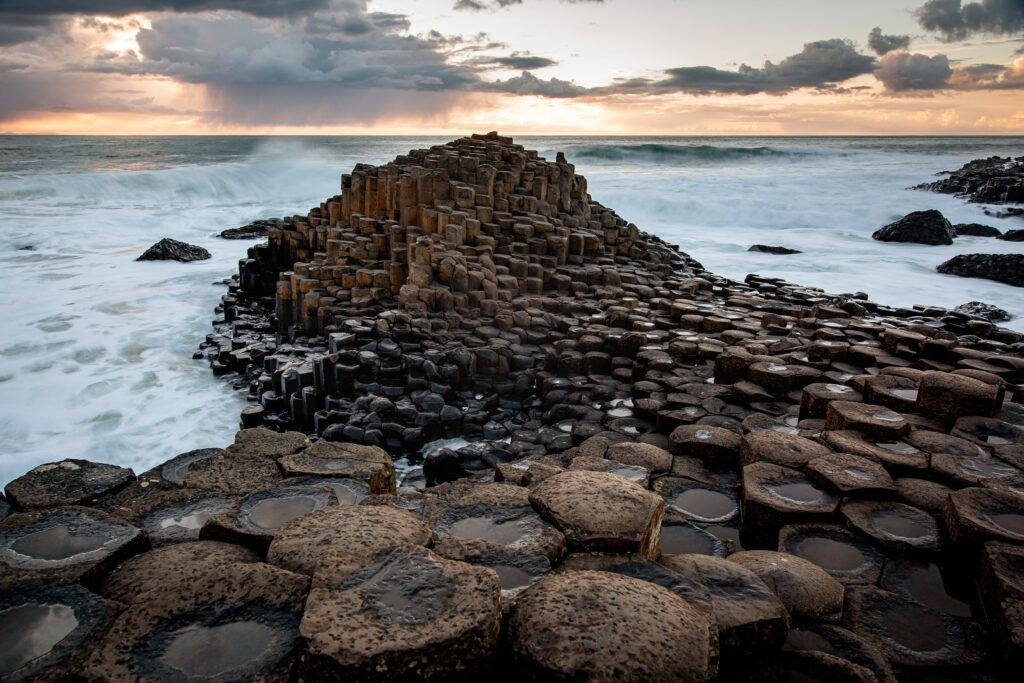
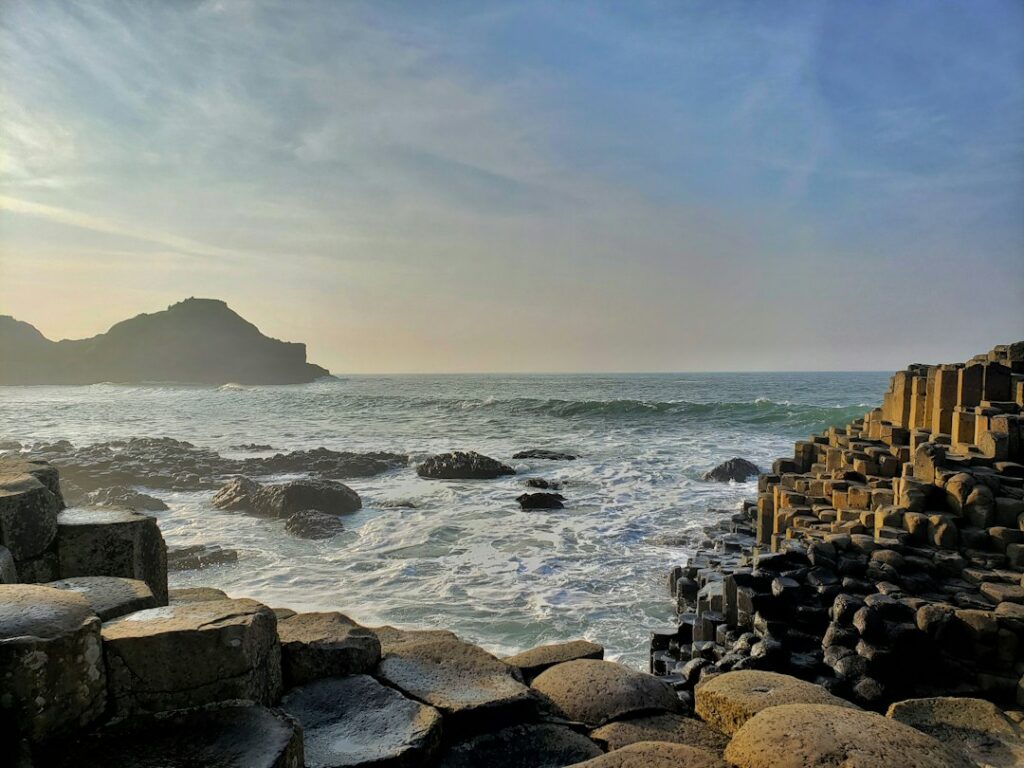
Ten miles farther, the Giant’s Causeway appears: 40,000 interlocking basalt columns formed by volcanic eruptions 60 million years ago. The visitor center charges $16, but you can walk down to the stones for free if you skip the exhibits. Go early or late to avoid tour buses.
Just beyond the Causeway, Bushmills Distillery has been making whiskey since 1608. Tours run daily, cost around $18, and include a tasting. The village of Bushmills itself is tiny but pleasant — a good base if you want to stay near the Causeway without the Portrush crowds.
Dunluce Castle, a few miles west, is the most photogenic ruin in Northern Ireland: a jagged medieval fortress teetering on a cliff edge, half-collapsed into the sea. Entry is $7. The castle inspired C.S. Lewis and appears in a dozen fantasy films.
Derry and the Western End
The route’s final stretch runs through Portstewart and Castlerock, both seaside towns with long strands and decent fish-and-chips shops, before ending in Derry. The city’s 17th-century walls are the best-preserved in Ireland, and the Bogside murals offer a powerful (and free) walk through recent history.
If you’re short on time, you can turn around at Dunluce and drive back to Belfast in three hours. If you have two days, spend the first night in Ballycastle or Bushmills, the second in Derry, and loop back via the interior through Limavady and Antrim town.
Practical Tips for Driving the Causeway Coast
The Causeway Coastal Route is well-marked and easy to follow, but the road is narrow in places, with frequent tour buses between Ballycastle and Portrush in summer. Drive defensively, especially around tight bends near Torr Head and Fair Head.
Petrol stations are sparse between Larne and Ballycastle — fill up in Cushendall or Ballycastle if your tank is below half. Most villages have only one or two restaurants, and many close by 8 p.m., so plan your stops accordingly.
The best time to drive the route is May through September, when daylight stretches past 9 p.m. and the weather is (relatively) cooperative. October brings fewer crowds and dramatic skies, but expect rain and early sunsets. Winter is quiet and moody, but some attractions reduce hours or close entirely.
If you don’t want to drive, Viator runs guided day tours from Belfast that hit the Giant’s Causeway, Carrick-a-Rede, and Dunluce in about 10 hours. You’ll miss the Glens and the slower villages, but it’s a solid option if you’re staying in the city without a car.
Budget a full day if you want to stop at the main sights, or two days if you plan to hike, visit distilleries, or explore the Glens. Car hire from Belfast starts around $40 per day — book early for the best rates and automatic transmission.
Want more Ireland stories like this? Subscribe to The Ultimate Ireland Travel Guide newsletter — one short story a day, straight to your inbox.
Heads up — some links in this article are affiliate links. If you sign up through them, we may earn a small commission at no extra cost to you. We only recommend tools we use ourselves.