
Kilkenny earns its nickname—the Marble City—from the black limestone quarried nearby, polished to a dark, glossy sheen. But it’s the city’s remarkably intact medieval streetscape, thriving craft scene, and walkable scale that make it one of Ireland‘s most rewarding stops. Compact enough to explore in a day, deep enough to surprise you at every turn.
Most visitors pass through on their way between Dublin and Cork or Waterford. That’s a mistake. Give Kilkenny a full day, and you’ll leave wishing you’d stayed longer.
Start with Kilkenny Castle
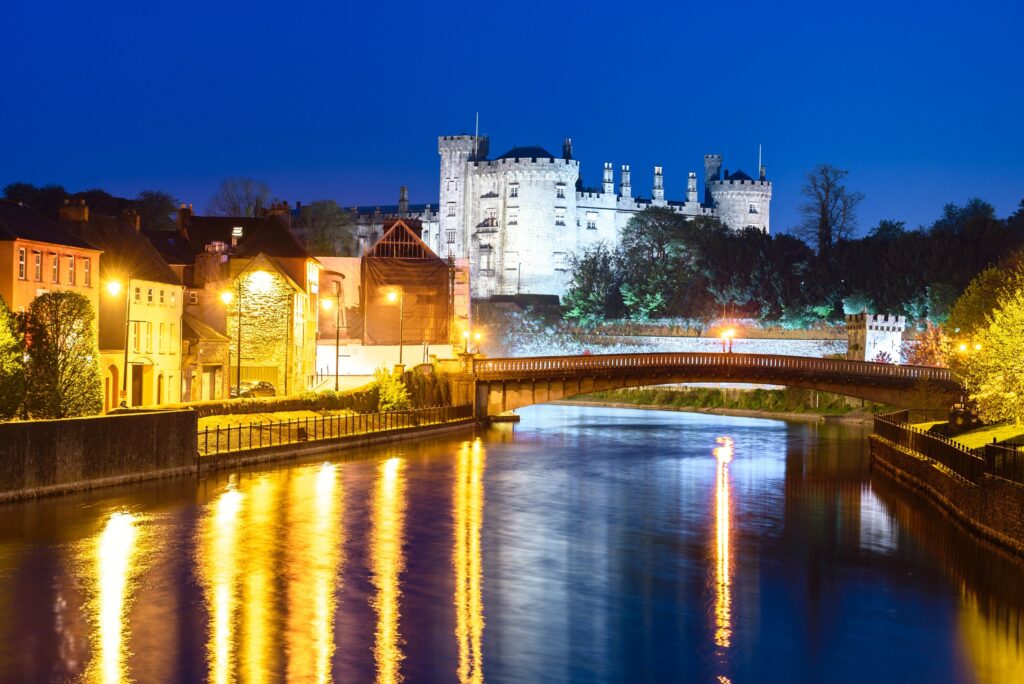
Begin at Kilkenny Castle, the Norman fortress that dominates the city’s skyline. Built in 1195 by William Marshal, it was home to the Butler family for nearly 600 years. The castle opens at 9:30 a.m., and arriving early means you’ll beat the tour groups.
The highlight is the Long Gallery, a Victorian addition lined with portraits and intricate ceiling paintings. Don’t skip the basement kitchen and servants’ quarters—they offer a glimpse into how the estate actually functioned. Admission is around $10 for adults.
After touring the interior, walk the castle grounds. The Rose Garden and surrounding parkland are free to explore, with views back across the River Nore. In spring and summer, locals spread picnic blankets on the lawns.
Wander the Medieval Mile
Kilkenny’s Medieval Mile stretches from the castle north to St. Canice’s Cathedral, following the path of the original walled city. Start on Parliament Street and High Street, where you’ll find the Tholsel—a 1761 tollhouse with an arched arcade—and narrow lanes like Butter Slip, barely wide enough for two people to pass.
Stop into the Medieval Mile Museum, housed in the 13th-century St. Mary’s Church. It tells the story of Kilkenny’s golden age through artifacts, tomb sculptures, and the ornate Rothe Chapel ceiling. It’s small but exceptionally well curated.
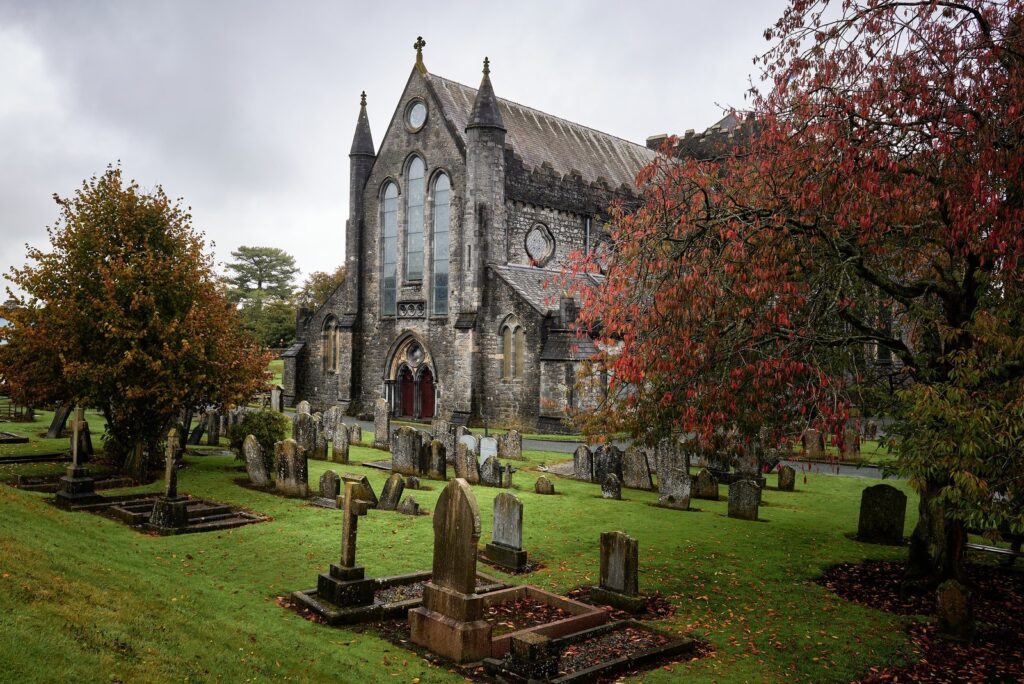
At the north end of the mile, St. Canice’s Cathedral anchors the old town. The cathedral itself is worth seeing—Gothic, austere, lined with ancient tombstones set into the floor. But the real draw is the round tower beside it. Climb the 100 narrow stone steps for sweeping views over the city and the Nore Valley. The tower dates to the 9th century and is one of only two in Ireland you can still climb.
Lunch and the Craft Quarter
By midday, head toward the Kilkenny Design Centre in the former castle stables. The café upstairs serves excellent lunch—smoked salmon on brown bread, vegetable tarts, good coffee—with windows overlooking the castle and gardens. Expect to pay around $15 to $18 for a main.
Afterward, browse the Design Centre’s galleries and shops, showcasing Irish ceramics, knitwear, jewelry, and prints. It’s a cut above the usual craft shop, with pieces from established Irish makers.
Walk up to the Smithwick’s Experience on the site of the original brewery, founded in 1710. The hour-long tour covers the history of Ireland’s oldest beer brand and ends with a tasting. Tickets run about $18. Smithwick’s isn’t brewed here anymore—production moved to Dublin—but the storytelling is strong and the setting atmospheric.
If beer isn’t your thing, visit the National Craft Gallery instead. Housed in the old castle coach house, it features rotating exhibitions of contemporary Irish craft—ceramics, textiles, metalwork, and glass.
Evening on the Parade and Beyond
As the afternoon fades, stroll down the Parade, Kilkenny’s handsome Georgian street lined with townhouses. Stop into Kyteler’s Inn on Kieran Street for a pint. Built in 1224, it’s one of Ireland’s oldest pubs, once home to Dame Alice Kyteler, accused of witchcraft in 1324. The interior is all low beams, stone walls, and creaking floors.
For dinner, book a table at Campagne on The Arches. Chef Garrett Byrne serves modern Irish cuisine with French technique—pan-roasted hake, Kilkenny beef, seasonal vegetables from local farms. Mains start around $30. It’s one of the best restaurants outside Dublin.
If your budget’s tighter, try Zuni on Patrick Street for wood-fired pizzas and small plates, or Ristorante Rinuccini for Italian done well in a vaulted medieval stone room.
End the evening back in one of the pubs along John Street. Matt the Miller’s and Cleere’s both host traditional music sessions most nights—no cover, just pull up a chair, order a pint, and settle in.
Practical Notes
Kilkenny is about 90 minutes south of Dublin by car via the M9, or just over two hours by train from Dublin Heuston. The train station sits a 10-minute walk from the town center. Viator offers guided day trips from Dublin if you’d rather not drive.
Parking in the city center is metered and limited. Use the car park at the castle or near the train station and walk—everything is within 15 minutes on foot.
Kilkenny works year-round, but it shines in late spring and early autumn when the medieval streets aren’t overrun and the gardens are in bloom. The Kilkenny Arts Festival in August is worth planning around if you’re interested in theater, music, and visual art.
One day gives you the highlights. Two lets you slow down, visit Dunmore Cave or Jerpoint Abbey outside town, and linger over a long lunch without watching the clock.
Want more stories like this delivered daily? Subscribe to The Ultimate Ireland Travel Guide newsletter—one short story a day, straight to your inbox, no fluff.
Heads up — some links in this article are affiliate links. If you sign up through them, we may earn a small commission at no extra cost to you. We only recommend tools we use ourselves.