
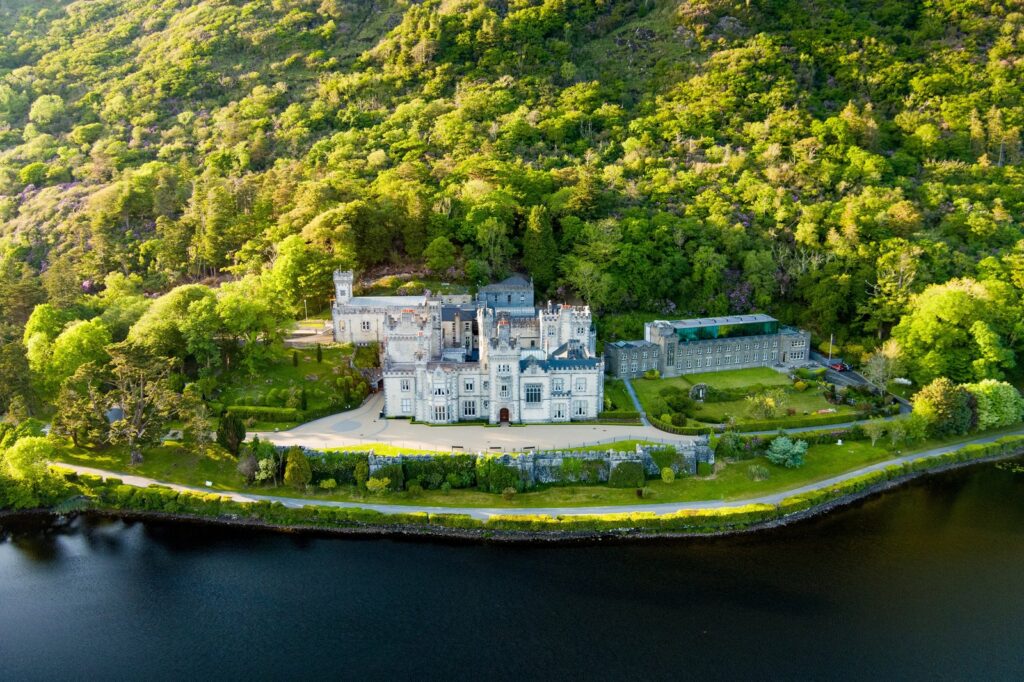
Kylemore Abbey sits on the edge of a mirror-still lake in the heart of Connemara, its Victorian turrets and battlements reflected in the water below. It’s one of Ireland’s most photographed buildings, and for good reason — the setting is breathtaking, the history is layered, and the estate itself offers far more than just the abbey building.
Built in 1868 as a romantic castle by Mitchell Henry, a wealthy doctor and politician from Manchester, Kylemore was a gift to his wife Margaret. After her untimely death, the estate passed through several hands before being purchased by Benedictine nuns fleeing Belgium during World War I. Today, it remains a working abbey and one of Connemara’s most-visited landmarks.
Getting There and When to Visit
Kylemore Abbey is located on the N59, about 50 miles west of Galway city and 12 miles east of Letterfrack village in County Galway. If you’re driving from Galway, the journey takes about 90 minutes through some of Connemara’s most dramatic scenery. The abbey is well-signposted along the main road.
There’s no public transport directly to Kylemore, so you’ll need a car or a guided tour. Many visitors combine it with a day exploring Connemara National Park, the Sky Road near Clifden, or the coastal villages of Roundstone and Cleggan.
The estate is open year-round, though hours vary by season. Summer (April through September) sees the longest opening hours and the busiest crowds. Visit early in the morning or late afternoon to avoid tour buses. Winter offers a quieter, moodier experience, though some parts of the gardens may be less colorful.
Admission is around $18 for adults, with discounts for seniors and students. Tickets include access to the abbey rooms, the Victorian Walled Garden, and the Gothic Church. Allow at least two to three hours to explore the grounds properly.
What to See Inside the Abbey
The abbey building itself is smaller than it appears from the road, but the restored rooms are worth exploring. You’ll walk through the grand entrance hall, the library, the dining room, and several reception rooms, all furnished to reflect the estate’s Victorian past. Interpretive panels tell the story of the Henry family, the Benedictine nuns, and the abbey’s transformation over 150 years.
The nuns still live in a private wing of the abbey, so only a portion of the building is open to visitors. Photography is allowed in most areas, but be respectful — this is still a working religious community.
Don’t miss the short film shown near the entrance. It provides helpful context about the estate’s history and the nuns’ continued presence here.
The Victorian Walled Garden
A shuttle bus runs from the main abbey building to the Victorian Walled Garden, about a mile away. This is one of the highlights of any visit. Restored by the Benedictine community over two decades, the garden is a masterpiece of Victorian horticulture, with 21 glasshouses, herbaceous borders, vegetable plots, and a working stream running through the center.
The glasshouses are particularly impressive — each one dedicated to a different type of plant, from fuchsias to ferns. In summer, the borders explode with color. Even in early spring or late autumn, the structure and design are worth the trip.
The walk between the abbey and the garden takes about 20 minutes along a wooded path beside the lake. If the weather’s good, skip the shuttle and walk — you’ll get beautiful views of the abbey from the far shore.
The Gothic Church
A short walk from the main abbey, the neo-Gothic church was built by Mitchell Henry as a mausoleum for his wife Margaret, who died suddenly during a trip to Egypt. The setting is peaceful, tucked into the hillside overlooking the lake, and the church’s interior is beautifully crafted with stained glass and marble detailing.
It’s a quiet spot, and visitors often have it to themselves. The walk there takes you along a forested trail with views back toward the abbey — bring a camera.
Practical Tips
Kylemore’s café, located in the main visitor center, serves soups, sandwiches, scones, and hot drinks. The food is simple but reliable, and the scones are worth ordering. There’s also a craft shop selling Benedictine pottery, local woolens, and preserves made by the nuns.
Wear comfortable shoes — much of the estate involves walking on gravel paths and uneven trails. The gardens can be muddy after rain, especially in autumn and winter.
If you’re short on time, prioritize the Victorian Walled Garden and the lakeshore views. The interior of the abbey is interesting, but the real magic of Kylemore is in its setting and its gardens.
Combine your visit with a stop at Connemara National Park in Letterfrack, just 10 minutes west, or drive the scenic loop around Killary Fjord for some of Ireland’s most dramatic coastal and mountain views.
Want more stories like this delivered to your inbox? Subscribe to The Ultimate Ireland Travel Guide newsletter — one short story a day, exploring Ireland beyond the guidebooks.