
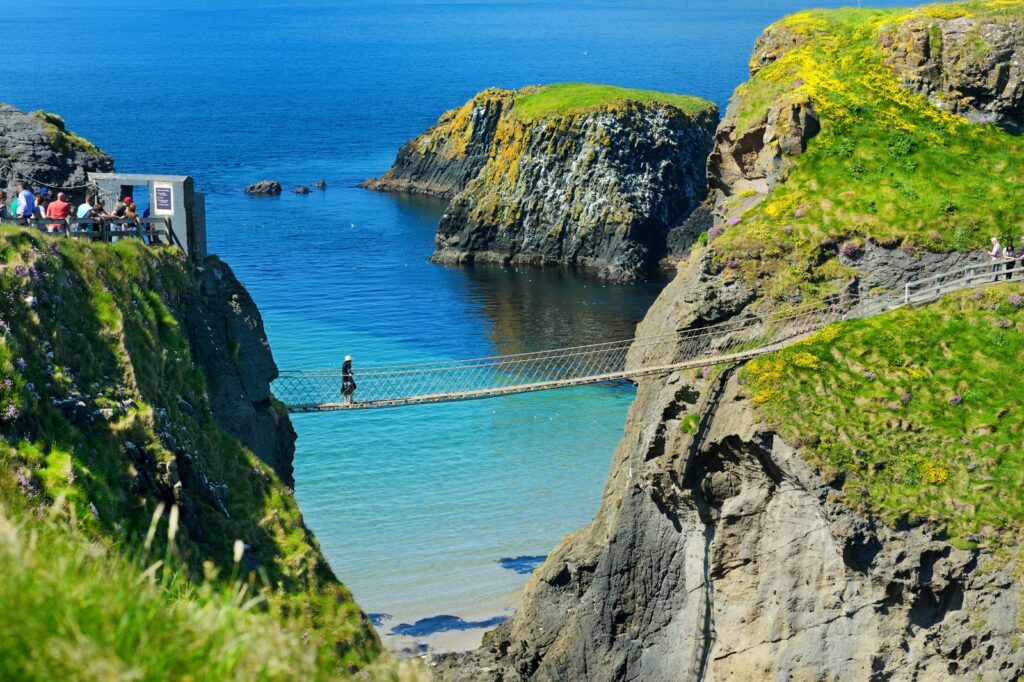
Suspended 100 feet above the North Atlantic between the mainland cliffs and a tiny island, the Carrick-a-Rede Rope Bridge in County Antrim is one of Northern Ireland’s most exhilarating coastal experiences. Originally built by salmon fishermen in 1755, this swaying 66-foot bridge now draws visitors from around the world who come to test their nerves and soak in the dramatic views of Rathlin Island and the Scottish coast beyond.
Walking the bridge isn’t for everyone — the narrow span bounces and sways with every step, and there’s nothing but rope netting between you and the churning sea below. But if you can manage the crossing, you’ll be rewarded with stunning cliff-top scenery and the satisfaction of conquering one of Ireland’s most iconic adventures.
Where to Find It and How to Get There
Carrick-a-Rede sits on the Causeway Coastal Route between Ballycastle and the Giant’s Causeway, about eight miles west of Ballycastle town. The full address is 119A Whitepark Road, Ballintoy, County Antrim. From Belfast, it’s roughly a 90-minute drive north via the M2 and A26, then the coastal A2.
There’s a National Trust car park at the site (around $8 per vehicle), and from there it’s a half-mile walk along a paved coastal path to the bridge itself. The walk is mostly downhill on the way out — which means uphill on the way back — but it’s manageable for most fitness levels and takes about 15 minutes each way.
Public transport is limited in this part of Antrim, so most visitors either drive or join a day tour. Viator runs guided tours along the Causeway Coast that include stops at Carrick-a-Rede, the Giant’s Causeway, and other highlights if you’d rather not navigate the route yourself.
Booking Your Visit
You must book a timed entry ticket in advance through the National Trust website — walk-ups aren’t permitted. Tickets cost around $14 for adults and include access to the bridge and the coastal path. National Trust members enter free, but still need to book a time slot.
Slots fill quickly in summer and on weekends, so book at least a week ahead if you’re visiting between May and September. Shoulder season (April, October) offers better availability and fewer crowds, though weather can be more unpredictable.
The bridge is open daily from late March through October, typically from 9:30 a.m. to around 6:00 p.m. in summer (last crossing is 45 minutes before closing). It closes entirely from November through February due to high winds and rough seas.
What to Expect on the Bridge
The crossing itself takes just a few minutes, but many visitors pause midway to take in the views — or catch their breath. The bridge sways noticeably, especially on windy days, and the gaps in the rope netting beneath your feet reveal the waves crashing on the rocks far below. It’s perfectly safe (inspected regularly and closed in dangerous weather), but it’s definitely not for anyone with a serious fear of heights.
Once you reach the small island on the far side, there are viewing platforms overlooking the sea and rugged coastline. In spring and early summer, you might spot puffins nesting in the cliffs, along with razorbills, guillemots, and kittiwakes. The island itself is tiny — you can explore it in about 10 minutes — and then you’ll need to cross back the way you came.
There’s no alternate route off the island, so if you decide mid-crossing that you can’t continue, you’ll need to turn back on the bridge. Staff are on hand to offer encouragement, but they can’t accompany nervous crossers.
When to Visit and What Else to See Nearby
Early morning or late afternoon slots offer the calmest experience with fewer people on the bridge at once. Midday in July and August can feel crowded, with queues to cross. Weekdays are quieter than weekends year-round.
Weather matters more here than at most attractions. Even light rain makes the wooden planks slippery, and the bridge closes entirely if winds exceed safe limits. Check the forecast and the National Trust’s Twitter feed for real-time updates on closures.
The surrounding coastline is spectacular even if you don’t cross the bridge. The walk from the car park offers views of white chalk cliffs, hidden coves, and the open Atlantic. Ballintoy Harbour, just a few minutes’ drive east, is a tiny stone harbor used as a filming location for Game of Thrones and worth a quick stop.
Most visitors combine Carrick-a-Rede with the Giant’s Causeway (20 minutes west) and Dunluce Castle (15 minutes west) for a full day on the Causeway Coast. The Dark Hedges, another filming location, is about 30 minutes inland near Ballymoney.
Practical Tips
Wear sturdy, closed-toe shoes with good grip — the wooden planks can be slick, and the coastal path is uneven in places. Layers are essential; the wind off the Atlantic is bracing even on warm days. Bring a rain jacket year-round.
There are no facilities on the island itself, so use the restrooms at the visitor center before you walk down. The small café near the car park serves coffee, sandwiches, and soup — handy for a post-crossing warm-up.
Photography is allowed on the bridge, but keep cameras and phones secured with straps. Dropping anything means it’s gone for good. Selfie sticks aren’t practical on the narrow span.
If you’re traveling with young children, consider their comfort with heights before booking. Kids under 5 can find the experience frightening, and there’s no way to turn back once you’re midway across if they panic.
Carrick-a-Rede is a thrilling slice of Ireland’s north coast and one of the most memorable experiences you’ll have along the Causeway Coastal Route. Book ahead, dress for the weather, and don’t look down unless you really want to.
Want more insider tips and hidden gems from around Ireland? Subscribe to The Ultimate Ireland Travel Guide newsletter and get one short story a day delivered straight to your inbox.
Heads up — some links in this article are affiliate links. If you sign up through them, we may earn a small commission at no extra cost to you. We only recommend tools we use ourselves.