
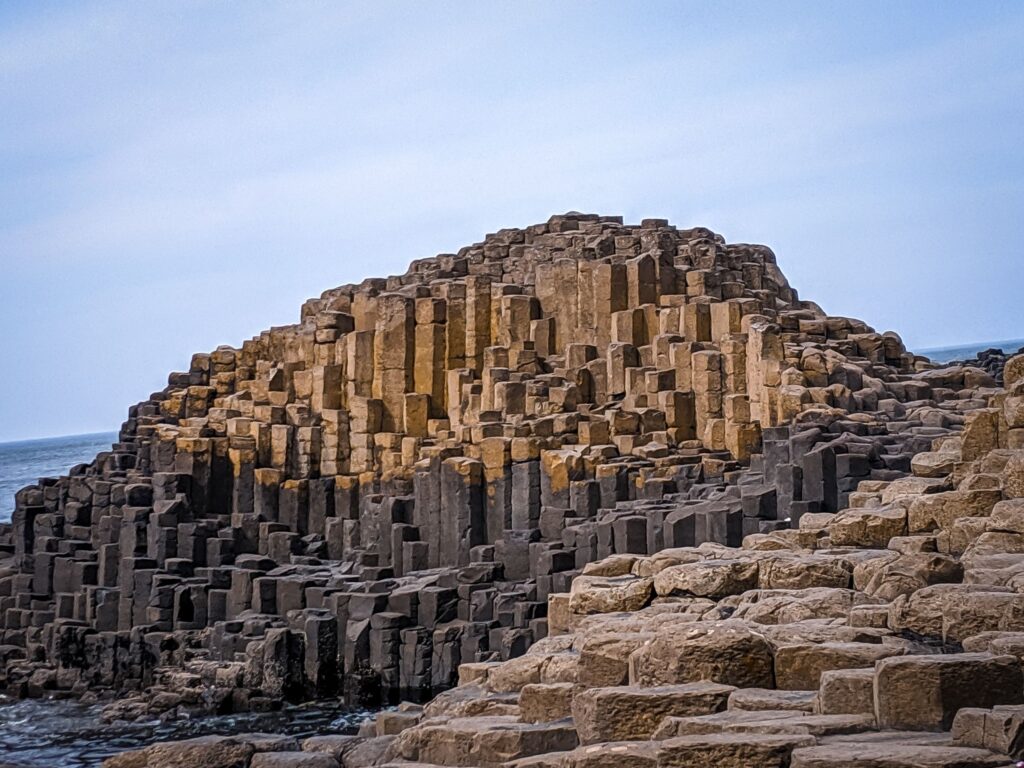
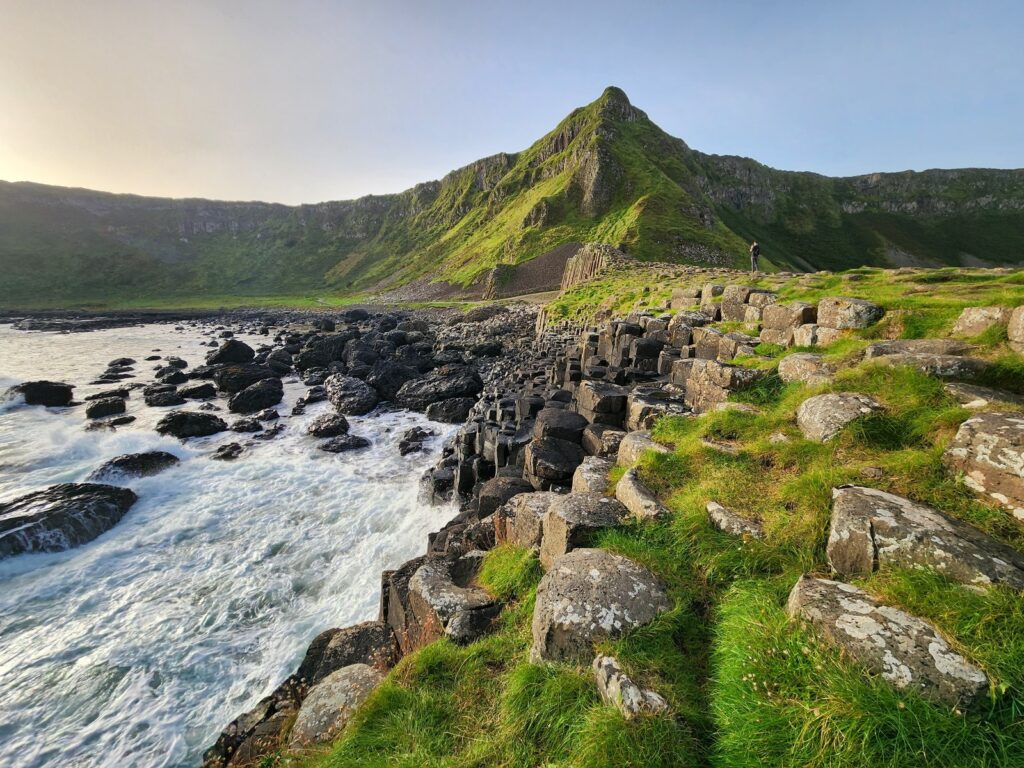
The Giant‘s Causeway is one of Ireland’s most extraordinary natural wonders — a sprawling formation of roughly 40,000 hexagonal basalt columns that jut from the sea along County Antrim‘s rugged north coast. Formed by volcanic activity some 60 million years ago, the columns look almost too geometric to be natural, which explains the legend: locals say the Irish giant Fionn mac Cumhaill built the causeway as a bridge to Scotland to fight his rival Benandonner.
Today, the site is a UNESCO World Heritage Site and Northern Ireland’s only natural World Heritage designation. It draws visitors year-round, but with a little planning, you can experience it without the peak-season crowds and make the most of this geological marvel.
Getting There and Parking
The Giant’s Causeway is located about 60 miles north of Belfast and roughly two miles north of the village of Bushmills. If you’re driving from Belfast, take the M2 and A26 north toward Ballymena, then follow the A44 and B146 to the coast — the journey takes about 90 minutes. From Derry, it’s about an hour via the A2 coastal route.
The official car park at the Giant’s Causeway Visitor Centre costs around $15 per vehicle and includes access to the site. Parking fills quickly between June and August, especially on weekends, so aim to arrive before 10 a.m. or after 4 p.m. if you’re visiting in high season. If the main lot is full, there’s overflow parking along Causeway Road, though it’s a slightly longer walk to the columns.
You can also reach the site by bus. The Causeway Rambler (route 402) runs seasonally along the Causeway Coastal Route, connecting Coleraine and Ballycastle and stopping at the visitor center. Ulsterbus route 172 runs year-round from Coleraine and Ballycastle as well.
What to See at the Causeway
From the visitor center, it’s about a half-mile walk downhill to the causeway itself — a gentle paved path that takes 10 to 15 minutes. If mobility is an issue, there’s a shuttle bus that runs every 15 minutes for a small fee (around $2 each way).
The main causeway area features three distinct formations: the Grand Causeway, the Middle Causeway, and the Little Causeway. The Grand Causeway is the most famous section, where thousands of columns step down into the sea. At low tide, you can walk out onto the columns themselves — wear sturdy shoes with good grip, as the basalt can be slippery when wet.
Beyond the main formations, follow the clifftop trail east toward Port Noffer and the Organ, a striking section of tall, vertical columns that resemble organ pipes. The trail continues to the Giant’s Boot, a basalt formation shaped roughly like a boot, and Shepherd’s Steps, a steep climb of 162 stone steps that rewards you with sweeping coastal views.
The full clifftop loop is about two miles and takes 60 to 90 minutes at a leisurely pace. It’s more dramatic than the paved lower path and offers perspectives of the causeway you won’t get from the main viewing area.
When to Visit
The Giant’s Causeway is open year-round, but the experience varies dramatically by season. Summer (June through August) brings the longest days and mildest weather, but also the largest crowds. Expect packed pathways and limited photo opportunities without other visitors in the frame.
Spring (April and May) and autumn (September and October) are ideal. The weather is generally mild, wildflowers bloom along the cliffs in spring, and crowds thin considerably after the school holidays end. October can be rainy, but the moody skies often make for stunning photos.
Winter offers the most solitude. The site is far quieter from November through March, and dramatic winter light can be spectacular, especially around sunset. Just be prepared for wind, rain, and shorter daylight hours — the visitor center closes earlier in winter, typically around 5 p.m.
Low tide is the best time to explore the columns up close and venture farther out onto the formations. Check tide tables in advance — the National Trust website and local weather apps provide accurate schedules.
Practical Tips
Admission to the Giant’s Causeway itself is free, but parking fees help fund site maintenance and the visitor center. If you’re a National Trust member, parking is included. The visitor center has exhibits on the geology and mythology of the causeway, restrooms, and a café serving decent coffee and light meals.
Wear layers and bring a windproof jacket, even in summer. The north Antrim coast is exposed, and weather changes quickly. Sturdy, waterproof walking shoes are essential — the basalt columns are uneven and can be slick.
If you’re exploring the Causeway Coastal Route, pair your visit with nearby attractions. The Carrick-a-Rede Rope Bridge is 20 minutes east, Dunluce Castle is 10 minutes west, and the Old Bushmills Distillery — Ireland’s oldest licensed whiskey distillery — is just two miles south in Bushmills village.
Viator offers guided day trips from Belfast that combine the Giant’s Causeway with other north coast highlights, a good option if you prefer not to drive or want expert commentary on the geology and folklore.
The Giant’s Causeway is one of those rare places that exceeds the hype. Whether you’re fascinated by geology, drawn to ancient legends, or simply chasing dramatic coastal views, this is a site that deserves a place on any Ireland itinerary.
Want more Ireland travel stories like this? Subscribe to The Ultimate Ireland Travel Guide newsletter and get one short story a day, delivered straight to your inbox.
Heads up — some links in this article are affiliate links. If you sign up through them, we may earn a small commission at no extra cost to you. We only recommend tools we use ourselves.