
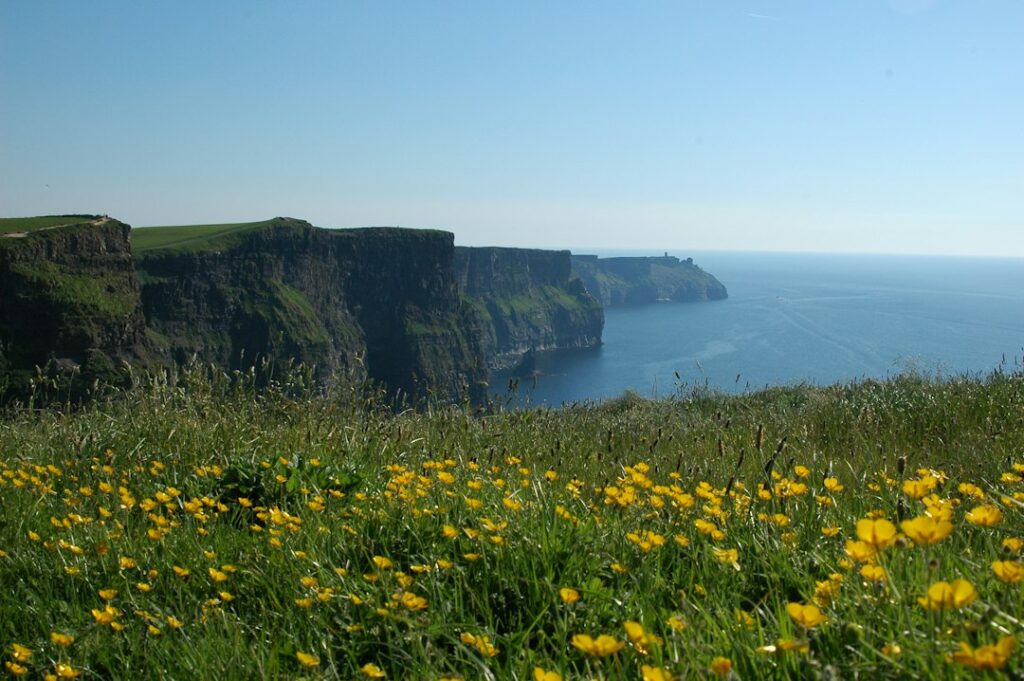
The Cliffs of Moher are Ireland’s most visited natural attraction, and for good reason. These sheer rock faces rise 702 feet above the Atlantic Ocean along five miles of County Clare’s western coast, offering views that stretch from the Aran Islands to the Twelve Bens of Connemara on a clear day.
More than a million visitors make the trip each year, but timing and strategy matter. Show up at noon in July and you’ll share O’Brien’s Tower with hundreds of others. Arrive at dawn or late afternoon, and you might have one of Ireland’s grandest landscapes nearly to yourself.
Getting There and Parking
The Cliffs of Moher Visitor Experience sits just off the R478, about 50 miles northwest of Shannon Airport and six miles from the village of Doolin. If you’re driving from Galway, it’s an hour south via the N18 and R476 through the Burren. From Limerick, count on 90 minutes northwest.
Parking at the official visitor center costs $8.50 per person (entrance and parking combined), and the fee includes access to the Atlantic Edge exhibition inside the clifftop building. The lot can fill by mid-morning in summer, so arrive before 9:00 a.m. or after 5:00 p.m. if you want space and breathing room.
If you’re staying in Doolin, you can walk the coastal path south to the cliffs in about 90 minutes—a far quieter approach that brings you in at the northern end, well away from the visitor center crowds.
What to See at the Cliffs
From the visitor center, paved pathways lead north and south along the cliff edge. The view south toward Hag’s Head is the most dramatic, with O’Brien’s Tower—a round stone lookout built in 1835—perched on the highest point. You can climb the tower for an extra $2.50, and the 360-degree perspective is worth it on a clear day.
The northern path toward Doolin is less crowded and offers equally stunning views, especially in late afternoon light when the cliffs glow amber and gold. Puffins nest in the rock crevices from April through July, and you’ll often spot them bobbing in the waves below or zipping past at eye level.
Don’t skip the Atlantic Edge exhibition inside the visitor center. It’s built into the hillside to minimize its footprint, and the displays on the cliffs’ geology, wildlife, and human history are genuinely informative—particularly the section on the layers of sandstone, shale, and siltstone that tell a 320-million-year-old story.
When to Visit
The best light for photography is early morning or late evening, when the sun angles across the cliff faces and the stone takes on warm, saturated color. Sunset in summer—around 9:30 p.m. in June—draws fewer people than midday and offers unforgettable conditions.
Winter and early spring bring wild Atlantic storms and enormous swells, and while the cliffs are open year-round, the raw power of the ocean against the rocks is something to witness if you don’t mind wind and rain. Pack waterproofs and prepare to be leaned on by the gusts.
Avoid weekends and school holidays if you can. Weekday mornings, especially outside July and August, offer the most space and quiet.
Practical Tips
The cliff edges are unfenced in many places, and the drop is sheer. Stay behind the stone walls where they exist, and don’t be tempted to lean out for a photo. Wind gusts are sudden and strong, particularly near O’Brien’s Tower.
Layers are essential. Even on calm days, the clifftop wind can be biting. Bring a windproof jacket, and if you’re visiting in cooler months, a hat and gloves make the experience far more enjoyable.
There’s a café inside the visitor center serving soup, sandwiches, and coffee, but the food is cafeteria-standard. If you want a better meal, head to Doolin afterward. Gus O’Connor’s Pub and McGann’s both serve solid traditional music sessions most nights along with hearty plates of fish and chips or seafood chowder.
If you’re booking a tour, Viator offers day trips from Galway and Dublin that combine the Cliffs of Moher with stops in the Burren or Doolin, ideal if you’re without a car.
The cliffs are one of Ireland’s essential sights, but they reward visitors who plan around the crowds and the light. Show up early, walk the paths in both directions, and give yourself time to simply stand and watch the Atlantic roll in far below.
Want more stories like this delivered to your inbox? Subscribe to The Ultimate Ireland Travel Guide newsletter—one short story a day, straight from the heart of Ireland.
Heads up — some links in this article are affiliate links. If you sign up through them, we may earn a small commission at no extra cost to you. We only recommend tools we use ourselves.