
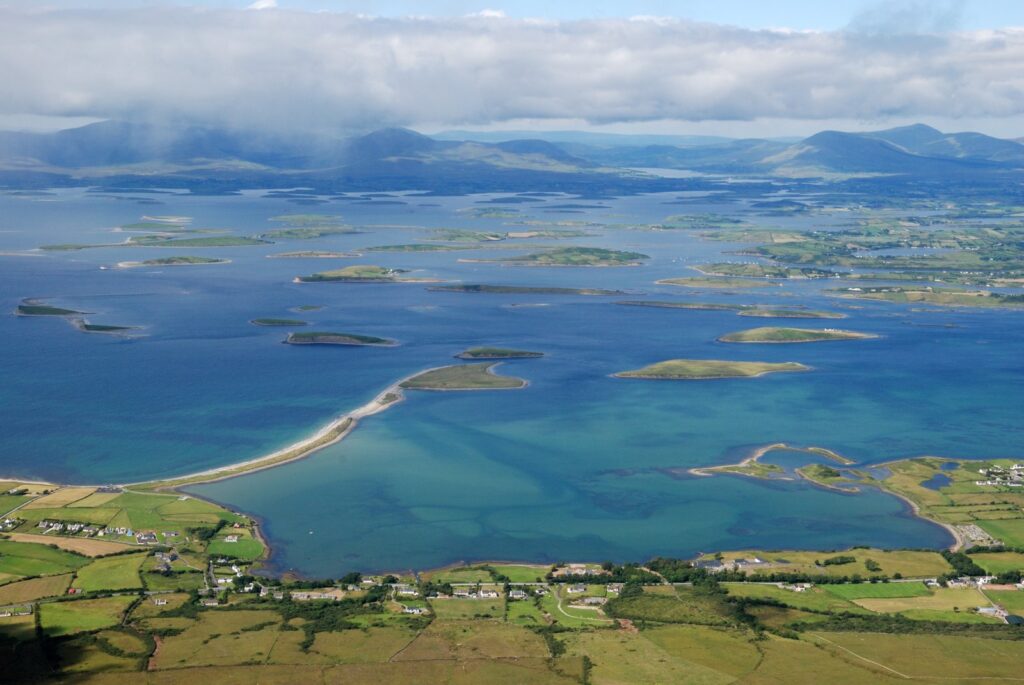
Croagh Patrick dominates the skyline of County Mayo, a perfect quartzite cone that rises sharply from the shores of Clew Bay. Known locally as ‘the Reek,’ this 2,507-foot mountain has been a site of pilgrimage for more than 1,500 years. Every year, tens of thousands climb to the summit—some barefoot, following ancient tradition—but you don’t need to be on a spiritual journey to appreciate one of Ireland’s most rewarding hikes.
The views from the top stretch across Clew Bay’s 365 islands, over the mountains of Connemara, and north toward the wild coast of Achill Island. On a clear day, it’s one of the finest panoramas in the country.
The Hike: What to Expect
The standard route begins at the car park in Murrisk, about five miles west of Westport on the R335. The trail is well-marked but steep and rocky, especially in the final third. Most people take between two and three hours to reach the summit, and another hour and a half to descend.
The first section climbs gradually across grassy slopes. You’ll pass a statue of Saint Patrick about 20 minutes in—a good spot to catch your breath and look back toward the bay. From there, the path steepens considerably. The middle section is a relentless uphill slog over loose stones and scree, and the final approach to the summit involves scrambling over sharp quartzite rock.
At the top, you’ll find a small chapel (open during the pilgrimage season) and a stone oratory marking the spot where, according to tradition, Saint Patrick fasted for 40 days in 441 AD. The summit plateau is exposed and often windy, but the views are worth every step.
When to Climb
Croagh Patrick can be climbed year-round, but conditions vary dramatically. Summer offers the longest daylight and the most stable weather, though the trail can be crowded on weekends. Early morning starts—before 9 a.m.—give you the mountain at its quietest and the best light for photography.
Avoid climbing in heavy rain or fog. The scree becomes slippery, and visibility at the summit drops to zero. Check the forecast before you go, and be prepared to postpone if conditions look poor. Spring and autumn bring fewer crowds and crisp, clear days, but expect cooler temperatures and the possibility of sudden weather changes.
The annual pilgrimage takes place on the last Sunday in July (Reek Sunday), when up to 25,000 people make the climb, many starting before dawn. It’s a powerful cultural experience, but not the day to go if you’re looking for solitude.
What to Bring
Good footwear is essential. Hiking boots with ankle support and grip are strongly recommended—the loose rock on the upper slopes can be treacherous in trail runners or worn-out soles. Bring layers, even in summer. The summit is often 10 to 15 degrees cooler than the base, and wind chill can be significant.
Pack water (at least a liter per person), snacks, and a rain jacket. Trekking poles help on the descent, especially if your knees protest steep downhills. There are no facilities on the mountain, but the visitor center at the base has toilets and a café.
Mobile coverage is decent on the lower slopes but patchy higher up. Let someone know your plans before you start, and don’t rely on your phone for navigation—the trail is obvious in good weather, but fog can disorient even experienced hikers.
Getting There and Where to Stay
Murrisk is a 10-minute drive from Westport on the R335 coastal road. The car park charges a small fee (around $5), and it fills up by mid-morning in summer. Arrive early or consider parking in Westport and taking a taxi to the trailhead.
Westport makes an ideal base. It’s a lively town with excellent pubs, restaurants, and accommodations ranging from hostels to boutique hotels. If you’re planning an early start, consider staying in Murrisk itself—there are a few guesthouses within walking distance of the trailhead.
Viator offers guided hikes and transport from Westport if you prefer not to drive or want local insight on the mountain’s history and folklore.
After the Climb
Your legs will thank you for a gentle afternoon. Campbell’s Pub in Murrisk, right at the base of the mountain, is the traditional post-hike stop for a pint and a bowl of seafood chowder. The National Famine Memorial, a haunting bronze sculpture of a coffin ship, stands just across the road and is worth a brief visit.
Back in Westport, Matt Molloy’s pub (owned by the flutist from The Chieftains) hosts nightly traditional music sessions. It’s the perfect way to end a day that began on Ireland’s holy mountain.
Want more stories like this delivered to your inbox? Subscribe to The Ultimate Ireland Travel Guide newsletter—one short story a day, Monday to Friday, with the places and experiences that make Ireland unforgettable.
Heads up — some links in this article are affiliate links. If you sign up through them, we may earn a small commission at no extra cost to you. We only recommend tools we use ourselves.