
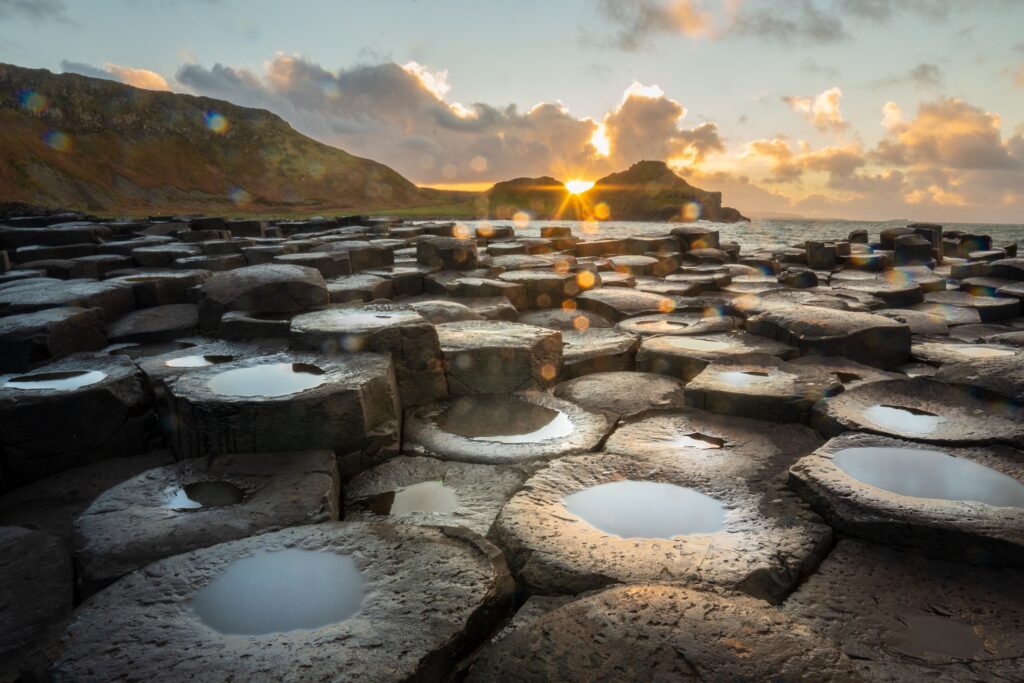
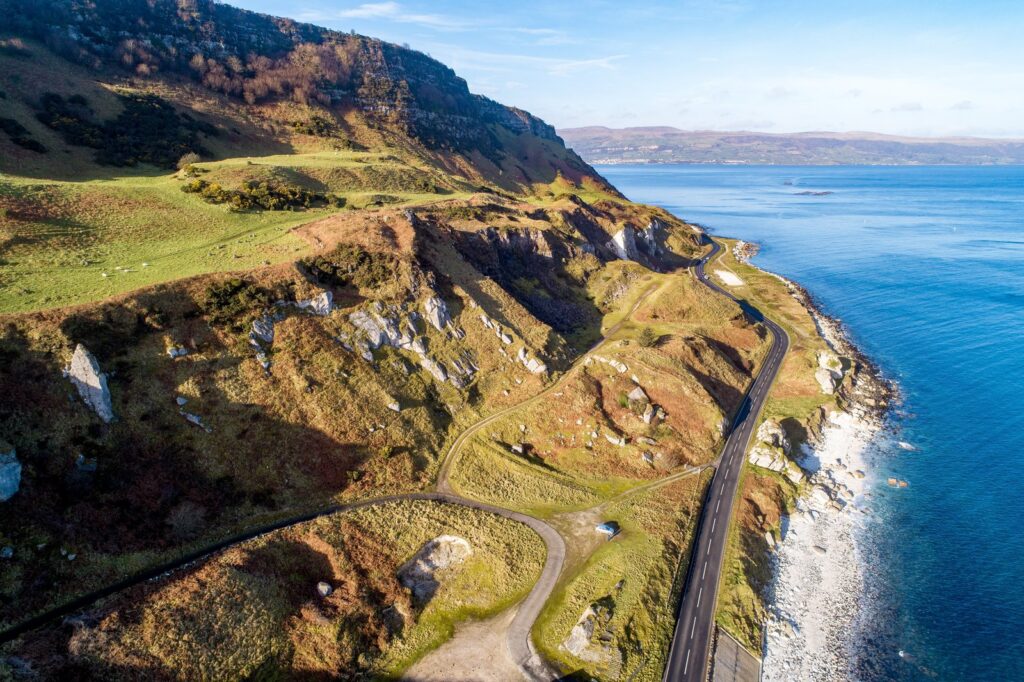
The Causeway Coastal Route stretches 120 miles along Northern Ireland’s Antrim coast from Belfast to Londonderry, threading together cliff-top vistas, medieval ruins, charming harbor towns, and the Giant’s Causeway itself. It’s less trafficked than the Wild Atlantic Way but every bit as spectacular, with tighter curves, closer views of the sea, and fewer tour buses.
Plan a full day minimum, though two or three days lets you explore properly without rushing past the best bits.
The Route and Key Stops
The official route follows the A2 coastal road. Starting from Belfast, you’ll pass through Carrickfergus, home to a Norman castle that juts into the harbor, then continue north through Larne. The scenery intensifies past Glenarm, where the Glens of Antrim meet the sea.
Carnlough and Cushendall are both worth a stop—small villages with stone harbors and decent pubs for lunch. The road climbs past Cushendun, a National Trust village with whitewashed cottages, before reaching the famous Torr Head viewpoint. On clear days, you can see Scotland just 12 miles across the North Channel.
Ballycastle marks the halfway point. This market town is the departure point for ferries to Rathlin Island and has several good spots for fish and chips. From here, it’s a short drive to Carrick-a-Rede Rope Bridge, where you can cross a swaying 66-foot bridge to a tiny island once used by salmon fishermen. Tickets run around $15 and sell out in summer—book ahead.
The Giant’s Causeway is next, roughly 60 miles from Belfast. Budget at least two hours to walk the basalt columns and coastal trails. Then continue west through the seaside resort of Portrush and past Dunluce Castle, a dramatic ruin perched on a cliff edge. The route officially ends in Londonderry, though many travelers turn around at the causeway and backtrack to Belfast.
Best Time to Drive It
May through September offers the longest daylight and most reliable weather, though summer weekends bring crowds to the Giant’s Causeway and rope bridge. April and October are quieter, with decent light and fewer buses, though you’ll need layers for wind and occasional rain.
Avoid winter unless you’re comfortable driving narrow roads in low light and frequent showers. Some attractions reduce hours or close entirely November through March.
Practical Driving Tips
The A2 is a single-lane road in many sections, with tight bends and stone walls close to the pavement. Take your time, use pullouts to let faster traffic pass, and watch for cyclists and walkers, especially near towns.
Fuel up in larger towns—Larne, Ballycastle, or Portrush. Stations are sparse along remote stretches. Parking at major attractions like the Giant’s Causeway and Carrick-a-Rede fills early in summer; arrive before 10 a.m. or after 3 p.m. to avoid the worst of it.
If you’re renting a car, collect it in Belfast. Most visitors drive the route as a long day trip from the city, though staying overnight in Ballycastle or Bushmills lets you explore at a gentler pace and catch the causeway at sunrise or sunset when the crowds thin.
Where to Eat and Sleep
Bushmills, home to the famous whiskey distillery, has several good guesthouses and B&Bs within walking distance of pubs and restaurants. The Bushmills Inn is a classic choice, with turf fires and solid local fare.
In Ballycastle, try Morton’s Fish & Chips on the harbor or stop by the Auld Lammas Fair Pub for a pint and a bowl of seafood chowder. Portrush has more options, including The Harbour Bistro for sit-down meals and Ramore Wine Bar for something a bit more upscale.
If you’re doing the route as a day trip, pack snacks and water. Coastal villages have shops and cafés, but they’re not always open outside peak season.
The Causeway Coastal Route rewards slow travel and spontaneous stops. Pull over when the light catches the cliffs just right, walk down to a quiet beach, and give yourself permission to linger. It’s one of Ireland’s finest drives, and it deserves more than a windshield view.
Want more stories like this delivered to your inbox? Subscribe to The Ultimate Ireland Travel Guide newsletter—one short story a day, straight from the island.